Sleep and Anxiety: How to Break the Cycle
Anxiety wrecks sleep. Bad sleep wrecks anxiety. Here's how the cycle works and what published research says about breaking it.

Anxiety and sleep have a bidirectional relationship that published research describes as one of the most robust findings in psychiatric sleep medicine: anxiety makes it harder to sleep, and poor sleep makes anxiety worse. The result is a self-reinforcing loop that can feel impossible to break — because neither side improves until the other side does.
This guide covers what the research says about why the loop happens, why common coping strategies (scrolling, alcohol, forcing yourself to relax) make it worse, and the approaches with the strongest evidence for actually breaking the cycle.
Why anxiety destroys sleep
The hyperarousal model
The dominant model in insomnia research is called hyperarousal — the idea that people with anxiety-related sleep problems don't have a sleep system that's broken. They have a wakefulness system that won't shut off.
In a well-functioning nervous system, the transition from wakefulness to sleep involves a shift from sympathetic dominance (alert, vigilant, ready) to parasympathetic dominance (calm, recovering, digesting). Anxiety keeps the sympathetic system active: heart rate stays elevated, cortisol stays up, the prefrontal cortex keeps spinning, and the amygdala — the brain's threat-detection center — stays vigilant.
You can be physically exhausted and still unable to sleep because your nervous system is stuck in "threat mode." The tiredness is real. The inability to sleep is also real. They're not contradictory — they're two systems in conflict.
The racing-mind problem
The most common subjective experience of anxiety-driven insomnia is the "racing mind" — an inability to stop thinking about worries, responsibilities, mistakes, or hypothetical disasters. This isn't a failure of willpower or discipline. It's the prefrontal cortex doing what it does under sympathetic activation: scanning for threats and generating contingency plans.
Telling someone with a racing mind to "just relax" is like telling someone with a fever to "just cool down." The symptom is a downstream effect of a system state, not a choice.
Why common coping strategies backfire
Scrolling your phone in bed
The most common anxiety-at-bedtime response is reaching for the phone. It feels like it helps because distraction temporarily suppresses the anxious thoughts. But it backfires on three levels:
- Content is arousing. Even "calm" scrolling activates the reward system and keeps the prefrontal cortex engaged.
- Light suppresses melatonin. Even at reduced brightness, the screen adds circadian-disrupting light at the worst time.
- It trains a habit loop. Over weeks, your brain associates "lying in bed anxious" with "phone solves it," which means you reach for the phone earlier and earlier in the evening.
Alcohol as a sleep aid
Alcohol is a sedative, and it does help people fall asleep faster. But it consistently fragments sleep architecture in the second half of the night, suppresses REM, and produces rebound wakefulness and anxiety between 2–4 AM as it metabolizes. For anxious sleepers, the middle-of-the-night wakefulness is often worse than the anxiety at bedtime was. See our alcohol section for more.
Trying harder to sleep
Sleep effort is paradoxical: the harder you try to fall asleep, the more the effort itself activates the wakefulness system. Lying in bed clenching your fists, monitoring your breathing, and checking the clock every 10 minutes is a recipe for further arousal, not sleep. This is why CBT-I (below) specifically targets sleep effort as one of the first things to reduce.
Napping to compensate
Daytime naps reduce sleep pressure, which means you arrive at bedtime with less biological drive to sleep — which means more time lying awake, which means more time for anxiety to fill the silence. For people with anxiety-driven insomnia, napping almost always makes the nighttime problem worse.
What actually works
1. CBT-I (the gold standard)
Cognitive Behavioral Therapy for Insomnia is the first-line treatment recommended by every major sleep medicine organization for chronic insomnia, including anxiety-driven insomnia. It typically involves 4–8 sessions with a trained therapist and addresses:
- Sleep restriction: Temporarily reducing time in bed to build sleep pressure, then gradually extending it. This sounds counterintuitive but is one of the most effective techniques in the protocol.
- Stimulus control: Rebuilding the association between bed and sleep. Go to bed only when sleepy. Get out of bed if you can't sleep within 20 minutes. Use the bed only for sleep.
- Cognitive restructuring: Identifying and challenging the catastrophic thoughts about sleep ("If I don't sleep tonight, tomorrow will be ruined") that fuel the anxiety cycle.
- Relaxation training: Systematic techniques (progressive muscle relaxation, guided imagery) that down-regulate the sympathetic system.
CBT-I outperforms sleep medications in long-term studies, has no side effects, and the benefits persist after treatment ends. If you have chronic insomnia, this is the single highest-value intervention available.
2. The 20-minute rule
If you've been lying awake for approximately 20 minutes, get out of bed. Go to another room, sit in dim light, and do something quiet and boring — read a dull book, fold laundry, sit with a cup of herbal tea. Return to bed only when you feel genuinely sleepy.
This is the most immediately actionable technique from CBT-I and can be used tonight. It breaks the association between bed and wakefulness, and it stops the clock-watching spiral. The 20 minutes is approximate — the goal is to leave before frustration and anxiety build.
3. Scheduled worry time
This sounds simplistic, but it has published support: set aside 15–20 minutes earlier in the evening (not at bedtime) to write down everything you're worried about. Make a list of concerns and, for each one, write one specific next action you'll take tomorrow.
A 2018 study by Scullin et al. in the Journal of Experimental Psychology found that writing a specific to-do list before bed reduced sleep onset latency significantly compared to writing about completed activities. The mechanism: offloading the open loops from your working memory onto paper reduces the prefrontal cortex's need to keep cycling through them.
4. Progressive muscle relaxation
PMR involves systematically tensing and releasing each muscle group, starting from the feet and moving up. A typical session takes 10–15 minutes. The mechanism is both physiological (muscle tension release) and attentional (it gives the mind something to focus on that isn't worry).
Multiple studies show PMR reduces self-reported anxiety and improves sleep onset when practiced consistently. It's not a one-night fix — the benefits build over 1–2 weeks of daily practice.
5. Temperature and environment
Anxiety elevates core body temperature (sympathetic activation). A cool bedroom (60–67°F) and a warm shower 60–90 minutes before bed both support the thermoregulatory cool-down that facilitates sleep onset — and both help counteract the thermal effects of anxiety. See our temperature guide.
6. Morning light
This doesn't target anxiety directly, but it stabilizes the circadian rhythm that anxiety disrupts. A well-anchored circadian system produces stronger sleep pressure at the right time, which can partially overpower the anxiety-driven wakefulness. Bright light within 30 minutes of waking is the strongest lever. See our schedule reset guide.
When to seek professional help
A note on medication
Sleep medications (benzodiazepines, Z-drugs like zolpidem) can provide short-term relief but are not recommended for long-term use by most sleep medicine guidelines. They don't address the underlying anxiety, they carry dependence risk, and they suppress the natural sleep architecture your brain needs for restoration. If medication is part of your treatment, it should ideally be used alongside CBT-I, not instead of it.
Anti-anxiety medications (SSRIs, SNRIs, buspirone) can improve sleep by addressing the underlying anxiety. These are prescription decisions for a doctor — not something to self-manage.
A helpful bedside tool
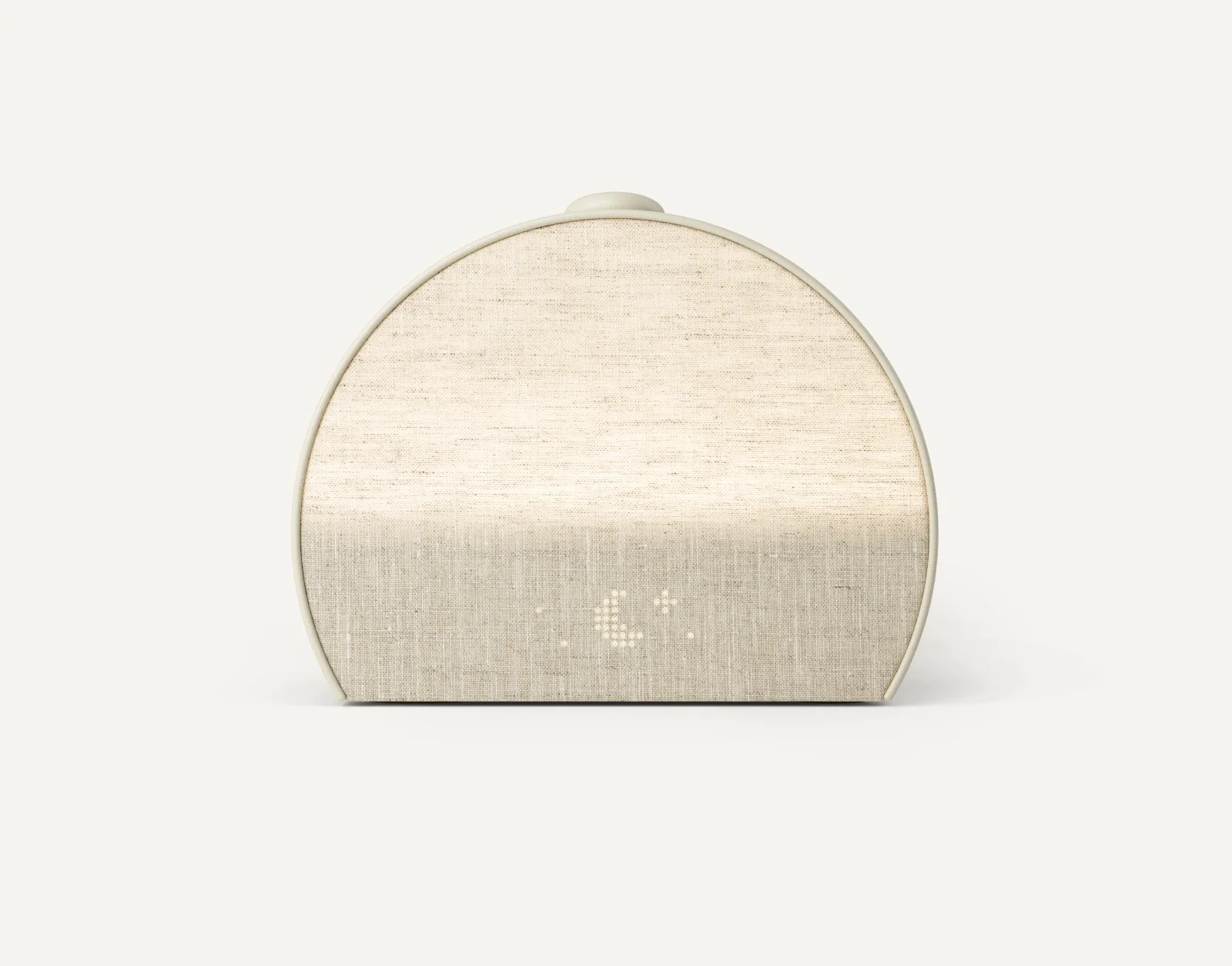
A programmable wind-down routine can serve as the behavioral anchor for the pre-sleep transition — dimming lights, playing calming sounds, and creating a consistent cue that tells your nervous system "the day is over."
Hatch
Hatch Restore 2
$169.99
Pros
- Programmable wind-down routines
- Gradual sunrise wake-up
- Wide library of sounds and meditations
Cons
- Premium content sits behind a subscription
- App required for setup
Frequently asked
Is my anxiety causing my insomnia, or is my insomnia causing my anxiety?+
Will melatonin help with anxiety-related insomnia?+
What about CBD for sleep anxiety?+
Can exercise help?+
I've had anxiety-related insomnia for years. Can CBT-I still help?+
References
- Baglioni C et al. Insomnia as a predictor of depression: a meta-analytic evaluation of longitudinal epidemiological studies. Journal of Affective Disorders, 2011.
- Harvey AG. A cognitive model of insomnia. Behaviour Research and Therapy, 2002.
- Scullin MK et al. The effects of bedtime writing on difficulty falling asleep. Journal of Experimental Psychology, 2018.
- Trauer JM et al. Cognitive behavioral therapy for chronic insomnia: a systematic review and meta-analysis. Annals of Internal Medicine, 2015.
Where to go next
- The perfect bedtime routine
- Why you wake up at 3 AM
- 12 evidence-based sleep tips
- Best sleep products for anxiety
- Best weighted blankets for anxiety
Related findings.
 Protocol
Why You Wake Up at 3 AM (And What You Can Do About It)
Middle-of-the-night wake-ups have a small set of common causes — and most of them are addressable. A writer-curated look at what's really happening at 3 AM.
 Protocol
Why We Dream: What Science Actually Knows (and Doesn't)
Dreams aren't random noise. Published neuroscience points to specific functions — memory, emotion, creativity. Here's what we know and what's still a mystery.
 Protocol
Sleep for Shift Workers: A Survival Guide
Night shifts fight your biology. Here's what published research says about managing sleep when your schedule won't cooperate.