The Perfect Bedtime Routine for Adults: A Research-Backed Blueprint
A step-by-step evening wind-down built from what sleep researchers actually recommend — not what lifestyle influencers sell.

The concept of a "bedtime routine" gets a lot of attention on social media — usually as an aesthetic montage of journaling, skincare, herbal tea, and candles. There's nothing wrong with any of those things. But the science of pre-sleep behavior is more specific, more practical, and more impactful than the lifestyle content suggests.
This guide builds a bedtime routine from the ground up, based on what published sleep research and clinical guidelines identify as the most effective pre-sleep interventions — ordered by impact, with specific timing, and with an honest assessment of what actually matters versus what just looks good in a TikTok.
Why routines matter at all
Sleep is not a switch. It's a transition — a gradual shift from sympathetic dominance (the "awake and alert" mode of your autonomic nervous system) to parasympathetic dominance (the "rest and digest" mode). This transition takes time, and it's strongly influenced by environmental and behavioral cues.
A consistent pre-sleep routine works because it creates a chain of conditioned cues that your nervous system learns to associate with sleep onset. Over time, starting the routine becomes itself a physiological trigger — your body begins the transition before you're even in bed.
This is the same mechanism behind stimulus control therapy, one of the core components of CBT-I: your brain associates certain behaviors and environments with sleep, and those associations either help or hinder the transition. A routine builds the helpful associations deliberately.
The 90-minute wind-down blueprint
Based on published research, here's a framework that covers the highest-impact interventions in chronological order. You don't need to do all of these — but the first three are the highest-leverage, and the order matters.
T-90 minutes: Dim the overhead lights
This is the single most impactful pre-sleep behavior change that most people aren't doing. Bright overhead lighting — especially cool-white LEDs — signals "daytime" to your circadian system and suppresses melatonin release.
Switch off ceiling lights and switch to warm, low table lamps or dim warm-toned LEDs. The goal is to create an environment that your retina interprets as "evening." If you share a space and can't control all the lights, blue-blocking glasses are a reasonable alternative (see our blue-blocking glasses roundup).
T-75 minutes: Warm shower or bath
A warm shower or bath 60–90 minutes before bed is one of the most consistently supported pre-sleep interventions in the literature. A 2019 meta-analysis by Haghayegh et al. in Sleep Medicine Reviews found that a warm bath/shower at this timing was associated with significantly faster sleep onset.
The mechanism is thermoregulatory: warm water dilates blood vessels at the skin surface. When you step out, heat radiates from the dilated vessels rapidly, accelerating the core body temperature drop that your brain associates with sleep onset. The result is a deeper, faster thermal transition than you'd get without the shower.
Timing matters. Too close to bedtime and your body is still warm when you lie down. The 60–90 minute window gives the cool-down time to work.
T-60 minutes: Phone out of the bedroom
Put your phone on a charger in another room. If you use it as an alarm, replace it with a dedicated alarm clock (see our smart alarm clock roundup).
This isn't primarily about blue light — screen brightness at arm's length is a relatively small circadian signal compared to overhead room lighting. It's about content. Algorithmic feeds, notifications, news, and social media are specifically designed to be engaging, and engagement is arousal — the exact opposite of what your nervous system needs to wind down.
The research on pre-bed phone use and sleep onset is strong: a 2019 meta-analysis found that screen use in the hour before bed was consistently associated with delayed sleep onset and reduced sleep quality across multiple studies and age groups.
T-45 minutes: Low-stimulation activity
Replace screen time with something your nervous system finds boring — or at least calming. Options supported by either research or consistent user reports:
- Reading a physical book. The most commonly cited alternative in CBT-I protocols. Fiction is better than non-fiction for most people because it doesn't trigger work-related thinking.
- Light stretching or gentle yoga. Activates the parasympathetic system without the cardiovascular arousal of intense exercise.
- Ambient listening. A sound machine, gentle music, or a podcast you've already heard. The key is low novelty — nothing that makes you think "what happens next?"
- Breathwork. Even a few minutes of slow, deliberate breathing (e.g., 4-7-8 pattern: inhale 4 counts, hold 7, exhale 8) can measurably shift autonomic balance toward parasympathetic dominance.
T-15 minutes: Into bed, lights out
Get into bed only when you're actually feeling sleepy — not just tired. The distinction matters. Tired is "I'm exhausted." Sleepy is "my eyelids are heavy and I'm struggling to stay awake." Getting into bed before you're sleepy increases the time you spend lying awake, which erodes the bed-sleep association.
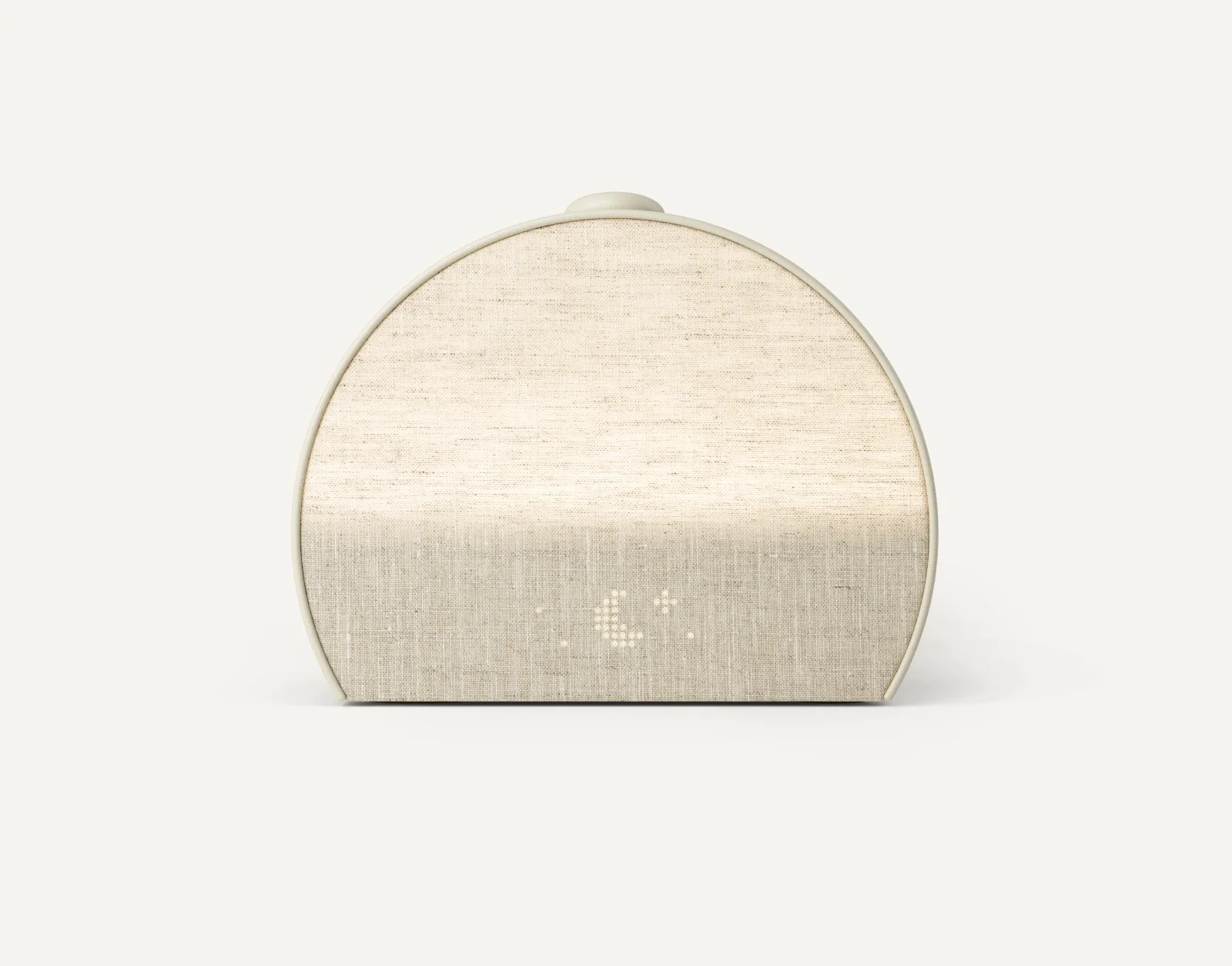
If a sunrise alarm or sleep sounds are part of your setup, start them now. The Hatch Restore 2 lets you build this as an automated routine — lights dim, sounds play, then lights out, all in sequence.
What actually matters vs. what doesn't
High impact (do these)
- Dim lighting 90 minutes before bed. The single biggest lever.
- Warm shower 60–90 minutes before bed. Consistently supported by meta-analytic evidence.
- Phone out of bedroom. Removes the #1 source of pre-sleep arousal for most adults.
- Consistent timing. Doing the same sequence at the same time trains conditioned associations.
Moderate impact (worth trying)
- Blue-blocking glasses if you can't control environmental lighting
- Breathwork or gentle stretching for people who run anxious at night
- Cool bedroom (60–67°F) — see our temperature guide
- Journaling or a written to-do list (research by Scullin et al. suggests that writing a to-do list before bed can reduce sleep onset latency by offloading mental load)
Low impact (but not harmful)
- Herbal teas (chamomile, valerian) — mild, limited evidence, mostly ritual value
- Essential oils (lavender) — small studies with modest effects, probably more about the relaxation ritual than the compound
- Skincare routines — no sleep impact, but if it's part of your wind-down ritual, it can serve as a behavioral cue
Counterproductive (avoid)
- Vigorous exercise within 1–2 hours of bed (raises core temperature and sympathetic activity)
- Heavy meals within 2 hours of bed (raises core temperature, can cause reflux)
- "Wind-down scrolling" on your phone in bed (arousing content masquerading as relaxation)
- Alcohol as a nightcap (fragments sleep architecture — see our tips guide)
Building consistency
The routine's power comes from repetition. Here's what the behavioral research suggests for building the habit:
- Start with one change. If you try all five steps on night one, you'll probably quit on night three. Pick the one you're not doing (usually dimming lights or removing the phone) and add it for two weeks.
- Anchor to an existing habit. Behavioral science calls this "habit stacking." If you already brush your teeth before bed, put the phone charger in the bathroom and start the dim-light transition when you pick up the toothbrush.
- Weekend consistency matters. The same routine, same timing, even on weekends. Weekend disruptions don't just affect one night — they shift circadian timing for 2–3 days afterward.
Frequently asked
How long until a routine starts working?+
What if my partner has a different schedule?+
Does it work for insomnia?+
What time should I start?+
What if I work late and only have 30 minutes?+
Recommended gear
Hatch
Hatch Restore 2
$169.99
Pros
- Programmable wind-down routines
- Gradual sunrise wake-up
- Wide library of sounds and meditations
Cons
- Premium content sits behind a subscription
- App required for setup
References
- Haghayegh S et al. Before-bedtime passive body heating by warm shower or bath to improve sleep: a systematic review and meta-analysis. Sleep Medicine Reviews, 2019.
- Scullin MK et al. The effects of bedtime writing on difficulty falling asleep: a polysomnographic study comparing to-do lists and completed activity lists. Journal of Experimental Psychology, 2018.
- Carter B et al. Association between portable screen-based media device access or use and sleep outcomes: a systematic review and meta-analysis. JAMA Pediatrics, 2016.
Where to go next
Related findings.
 Protocol
Why You Wake Up at 3 AM (And What You Can Do About It)
Middle-of-the-night wake-ups have a small set of common causes — and most of them are addressable. A writer-curated look at what's really happening at 3 AM.
 Protocol
Why We Dream: What Science Actually Knows (and Doesn't)
Dreams aren't random noise. Published neuroscience points to specific functions — memory, emotion, creativity. Here's what we know and what's still a mystery.
 Protocol
Sleep for Shift Workers: A Survival Guide
Night shifts fight your biology. Here's what published research says about managing sleep when your schedule won't cooperate.