The Best Blue Light Blocking Glasses for Evening Use
What the research says about blue light blocking glasses, what to look for in a quality pair, and the brands customers consistently rate highest for sleep.
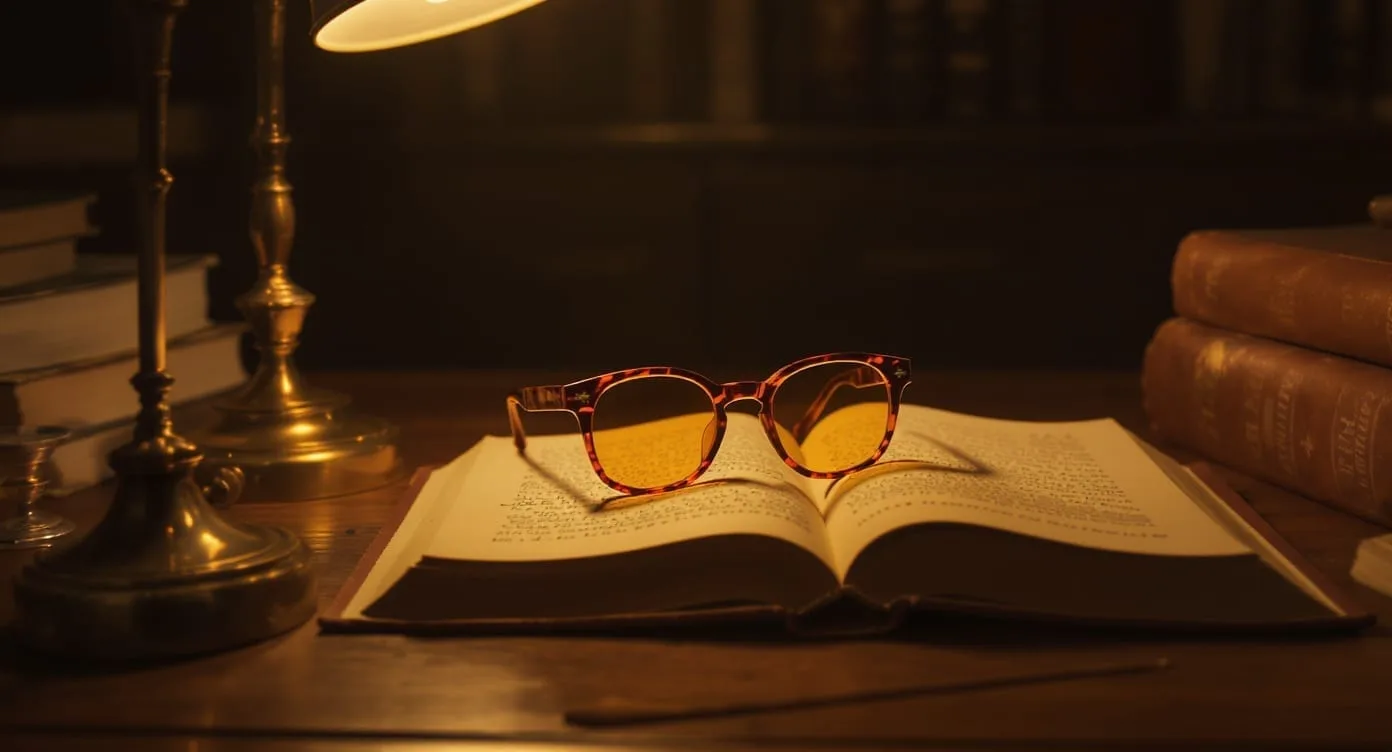
Blue light blocking glasses are one of the most over-marketed sleep products on the internet. The category spans everything from clear "computer glasses" marketed for office eye strain (which have almost no sleep relevance) to deeply amber-tinted lenses designed to filter the specific wavelengths that suppress melatonin production (which have legitimate, if modest, published support).
Understanding the difference — and knowing what to actually look for on a lens spec — is the difference between spending $80 on something useful and spending $80 on a placebo.
This guide covers what the published research says about light wavelengths and sleep, what a genuinely effective blue-blocking lens needs to do, and the three brands that consistently top verified buyer reviews in the sleep-focused tier of this category.
The science: why evening light matters
Your circadian rhythm — the roughly 24-hour cycle governing sleep-wake timing, hormone release, and body temperature — is set primarily by light hitting specialized cells in your retina called intrinsically photosensitive retinal ganglion cells (ipRGCs). These cells contain a photopigment called melanopsin that's most sensitive to short-wavelength visible light, peaking around 480nm — deep in the blue portion of the spectrum, but extending significantly into cyan and green wavelengths.
When melanopsin detects this light, it signals the suprachiasmatic nucleus (your master clock) that it's daytime. This suppresses melatonin release and shifts the circadian clock later. During the day, this is exactly what you want. In the evening — when your body should be ramping up melatonin to prepare for sleep — exposure to these wavelengths delays the process.
The key insight: it's not just blue light. Melanopsin sensitivity extends to roughly 400–550nm, covering blue through green. A lens that blocks only a narrow slice of blue (440–460nm, which is what most cheap "computer glasses" target) leaves the most impactful portion of the spectrum largely untouched. A genuinely sleep-effective lens needs to filter the full 400–550nm range, which is why effective sleep glasses are always strongly amber, orange, or red tinted — not subtly yellow.
The evidence: do they actually help?
The published research on evening blue-light blocking and sleep is mixed but generally supportive in certain contexts:
Studies showing positive effects:
- A 2009 study by Burkhart and Phelps in Chronobiology International found that participants wearing amber-tinted lenses for 3 hours before bed showed improvements in sleep quality and mood compared to a control group.
- A 2017 study by Shechter et al. in Journal of Psychiatric Research found that amber lenses worn for 2 hours before bed improved self-reported sleep quality in individuals with insomnia.
Caveats and limitations:
- Most studies are small (20–40 participants), short-term, and rely on self-reported sleep quality rather than polysomnography.
- The effect size is modest — meaningful for some people, negligible for others.
- The comparison condition matters enormously: if the control group is staring at bright screens in a well-lit room, almost any light reduction will help. The question is whether the glasses add benefit on top of already dimming overhead lights and reducing screen brightness.
The honest summary: Blue-blocking glasses are a real intervention with published support, but the effect is modest and works best as one component of a broader evening light-hygiene strategy — not as a standalone fix.
What to look for in a pair
1. Strong amber or red tint
If the lenses are clear or barely tinted, they're not blocking the right wavelengths. Genuine sleep-optimized lenses distort color perception significantly (everything looks warm/orange). This is a feature, not a flaw — it's the visual evidence that short wavelengths are being filtered.
2. Published spectrum data
Reputable manufacturers publish spectrophotometric data showing exactly which wavelengths the lens filters and by how much. If a brand doesn't publish this data, you're trusting marketing claims without verification.
3. Frame coverage
Light entering from the sides of the frame bypasses the lens entirely. Wraparound frames, wide temples, or fit-over styles provide better coverage than narrow, fashion-forward frames. The best lens in the world doesn't help if 30% of light reaches your retina around the edges.
4. Comfort for extended wear
You need to wear these for 2–3 hours before bed for the research-supported benefit. If they're uncomfortable after 20 minutes, they'll end up in a drawer. Light weight, adjustable nose pads, and frames that don't squeeze your temples are all important.
At a glance
1. Swanwick Sleep Swannies — Most Popular
Swannies are one of the most consistently top-rated pairs in sleep-focused reviews. They've been on the market for several years and have a broad base of long-term owner feedback.
What buyers like
- Comfort. Lightweight frames designed for 2+ hours of evening wear. Multiple reviewers mention wearing them while cooking, reading, or watching TV without discomfort.
- Strong amber tint. Effective wavelength blocking across the blue and into the green range.
- Frame variety. Multiple frame shapes for different face sizes, including styles that overlap with regular eyeglasses aesthetics.
- Noticeable evening wind-down effect. A high proportion of positive reviews specifically mention feeling "calmer" or "more ready for sleep" after a week of consistent use.
What buyers complain about
- Adjustment period. The strong amber tint takes 10–15 minutes to adjust to each evening. Some buyers never fully adapt.
- Price. At ~$79, they're significantly more expensive than drugstore blue-light glasses. Most positive reviewers consider it justified; most negative reviewers don't.
- Not a standalone fix. A handful of disappointed reviewers expected the glasses to solve their sleep problems entirely — which no single product can do.

Swanwick Sleep
Swannies Blue Light Blocking Glasses
$79.00
Pros
- Filters short-wavelength blue and green light
- Comfortable for extended evening wear
- Frame styles for different face shapes
Cons
- Strong amber tint takes adjustment
- Higher price than basic blue-light glasses
2. Uvex Skyper SCT-Orange — Best Budget Pick
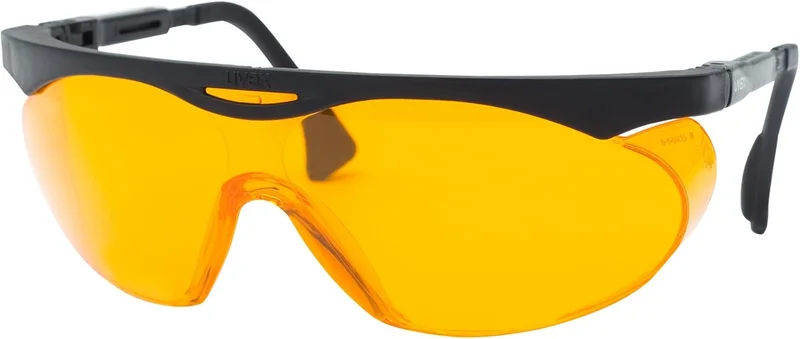
The Uvex Skyper is the cheapest credible blue blocker on the market — and one of the few sub-$15 options that actually has published lens spectrum data backing up its claims. Originally designed as industrial safety eyewear, the orange-tinted lens blocks 98% of blue light in the 400–530nm range, which is the same range targeted by premium sleep-focused brands.
What buyers like
- Lab-verified blocking. Uvex publishes spectrum data showing 98%+ blocking of short-wavelength light. This is rare at the budget tier.
- Fits over prescription glasses. The wraparound frame is large enough to wear over standard eyewear, eliminating the need for prescription blue blockers.
- Cheapest credible option. Under $15, often under $12 on sale. If you want to test the concept before committing to a $79 pair, this is the rational starting point.
- Wraparound coverage. Blocks side light better than narrow fashion frames.
What buyers complain about
- Industrial look. They're safety glasses. They're not stylish. If aesthetic matters, this isn't the right pick.
- Bulkier than fashion frames. Less comfortable than slim Swannies for some users.
- No multiple frame options. One style, period.
Uvex
Uvex Skyper SCT-Orange Blue Light Blocking Glasses
$11.99
Pros
- 98% blue light blocking — verified on lab spectrum tests
- Fits over prescription glasses
- Cheapest credible blue blockers on the market
Cons
- Industrial safety glasses look — not stylish
- Bulkier than fashion-frame alternatives
3. Ra Optics Twilight — Best Premium Pick
Ra Optics is the brand that data-driven buyers gravitate toward. They publish full spectrophotometric lens transmission data — not just marketing claims — showing their Twilight lenses block 100% of light below 550nm (covering the entire blue and green range that suppresses melatonin). Most competitors don't publish this level of detail, which makes Ra Optics the verifiable choice for buyers who want proof, not promises.
What buyers like
- Published lens data. Full spectrum transmission curves available on their site. Blocks 100% of blue and green light below 550nm — the full melatonin-suppressive range.
- Wraparound frame with side shields. Blocks peripheral light that bypasses the lens in open-frame designs. More effective coverage than fashion-forward alternatives.
- Premium build quality. Acetate frames that feel durable and well-made. Noticeably better construction than the Uvex and comparable to the Swannies.
- Prescription-compatible. Ra Optics offers prescription lens options, which is valuable for glasses wearers who don't want to wear fit-over styles.
What buyers complain about
- Expensive. At ~$89, they're the most expensive option in this guide. The price reflects the premium frame and verified lens data, but it's a significant jump from the $12 Uvex.
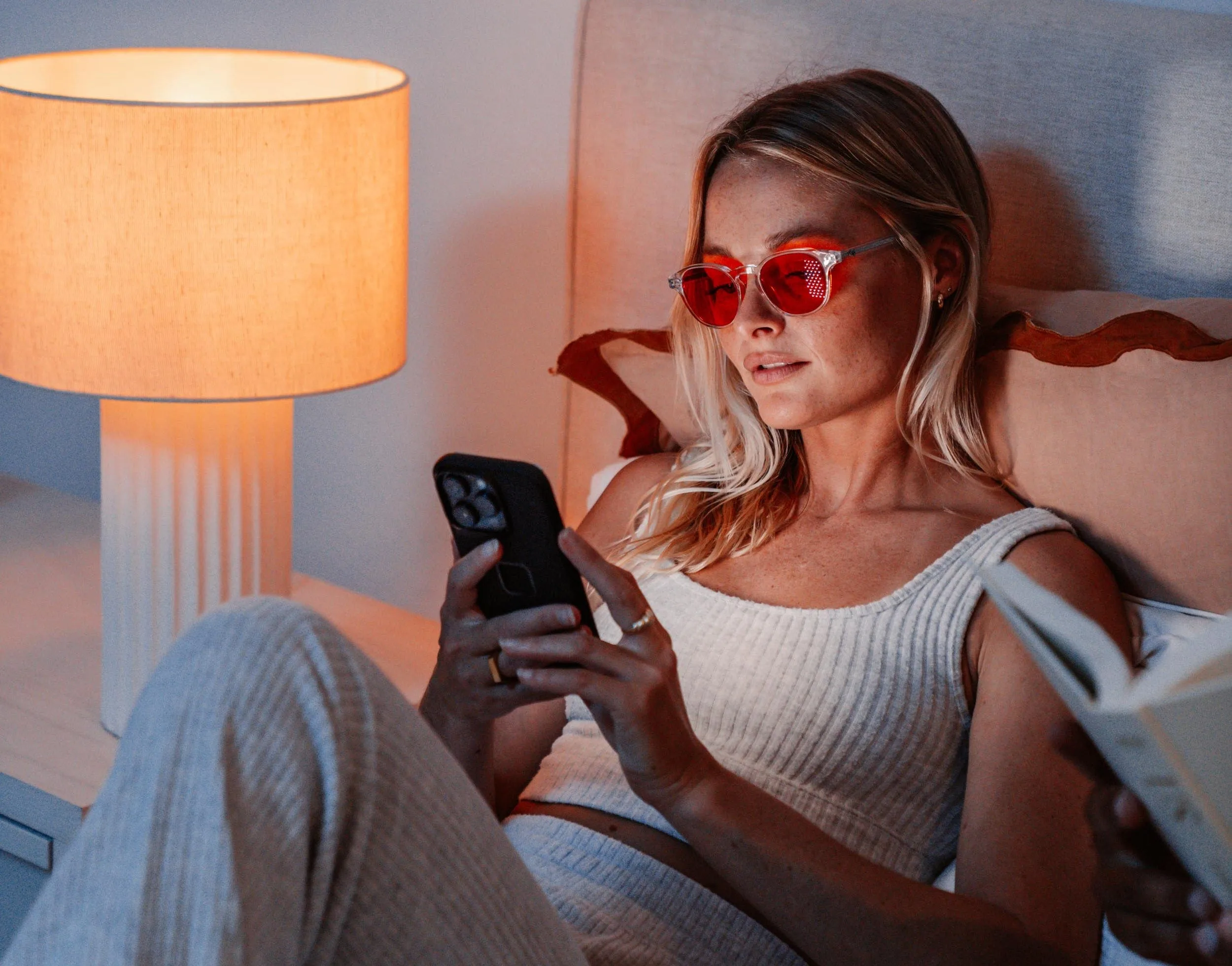
- Deep red tint. The Twilight lenses have a stronger tint than the Swannies' amber, which distorts color perception more aggressively. Everything looks deeply warm-toned. Effective for blocking, but some users find it disorienting.
- Overkill for casual use. If you're only wearing them for 30 minutes before bed, the premium specs don't matter much. The value shows up with consistent 2–3 hour evening wear.
Ra Optics
Ra Optics Twilight Glasses
$89.00
Pros
- Published lens transmission data — blocks 100% of blue and green light below 550nm
- Wraparound frame with side shields for full coverage
- Premium build quality with acetate frames
Cons
- Significantly more expensive than budget blue-blocking options
- Deep red tint heavily distorts color perception
When to wear them
What glasses can't do
- They can't fix a circadian rhythm that's broken by lack of morning light. Morning bright light is a bigger lever than evening light reduction — do both.
- They can't overcome bright overhead room lighting. If you're wearing amber glasses under fluorescent ceiling lights, you're blocking a fraction of the total light hitting your retina. Dim the overheads first.
- They can't replace good sleep hygiene. If your caffeine timing, bedroom temperature, and wake time are all wrong, glasses alone won't fix the problem.
The budget alternative
If you want to try blue blocking without spending $80–$120, here's a cheaper path:
- Buy basic amber safety glasses (the kind used in industrial settings) for ~$10–$15. They block a similar range of wavelengths.
- Wear them for 2 hours before bed for 1–2 weeks and see if you notice a difference.
- If the effect is valuable to you, upgrade to a pair with better comfort and aesthetics.
The cheapest way to get the effect is not to buy glasses at all: dim your overhead lights, switch to warm-toned lamps, and reduce screen brightness with a night-shift mode. Glasses add benefit on top of that — but they're not a substitute for it.
Frequently asked
Do they work, or is it placebo?+
Are amber gaming glasses the same thing?+
Will they help if I'm not on screens at night?+
Can I wear them with prescription glasses?+
Why not just use Night Shift / f.lux on my phone?+
References
- Burkhart K, Phelps JR. Amber lenses to block blue light and improve sleep: a randomized trial. Chronobiology International, 2009.
- Shechter A et al. Blocking nocturnal blue light for insomnia: a randomized controlled trial. Journal of Psychiatric Research, 2018.
- Brainard GC et al. Action spectrum for melatonin regulation in humans. Journal of Neuroscience, 2001.
- Berson DM et al. Phototransduction by retinal ganglion cells that set the circadian clock. Science, 2002.
Where to go next
Related findings.
 Edge Pick
The Best White Noise Machines for Tinnitus in 2026
Tinnitus at night is relentless. The right masking sound can make sleep possible again. Here's what customers with tinnitus consistently rate highest for nighttime use.
 Edge Pick
The Best Weighted Blankets for Deep Sleep (2026)
What the research says about weighted blankets for sleep and anxiety — plus the two products verified buyers consistently rate highest.
 Edge Pick
The Best Weighted Blankets for Anxiety in 2026
Weighted blankets use deep pressure stimulation to calm the nervous system — a technique originally developed for anxiety and sensory disorders. Here's what customers rate highest.