How to Reset Your Sleep Schedule in 7 Days
A research-backed, day-by-day plan to reset your circadian rhythm using the two strongest signals available to your body — light and dark.

If your sleep is out of phase with your life — you can't fall asleep until 2 AM, you can't wake before noon, or your schedule drifts a little later every week — the first thing to know is that willpower probably isn't the problem. Your circadian rhythm is set by environmental cues, not by wanting hard enough. Change the cues, and the rhythm follows.
This guide synthesizes what published sleep research generally recommends into a practical, day-by-day protocol for resetting a misaligned sleep schedule within one week. It works best for people who are 1–3 hours out of phase. Larger shifts (severe delayed sleep phase disorder, international jet lag) may take longer and may benefit from professional guidance.
How your circadian rhythm actually works
Your body's sleep-wake cycle is controlled by a cluster of about 20,000 neurons in the hypothalamus called the suprachiasmatic nucleus (SCN). The SCN generates a roughly 24-hour rhythm that controls when you feel alert, when you feel sleepy, when your body temperature rises and falls, and when hormones like melatonin and cortisol are released.
The SCN doesn't run on a perfect 24-hour cycle — in most people, the endogenous period is slightly longer than 24 hours (typically ~24.2 hours). This means that without external cues, your body's clock naturally drifts later over time. The reason most people don't drift indefinitely is that daily environmental cues — called zeitgebers ("time givers") — reset the clock every day.
The two most powerful zeitgebers are:
- Bright light in the morning — advances the clock (makes you sleepy earlier tonight)
- Darkness in the evening — protects the advancing signal and allows melatonin release
Everything else — meal timing, exercise, social activity, supplements — has a smaller effect. If you get the light right, most of the rest follows naturally. If you get the light wrong, no supplement will overcome the signal.
The seven-day protocol
Pre-work: choose your anchor times
Before day 1, pick two times:
- Wake time: The time you want to be awake, every day, including weekends. This is the anchor. Everything else orbits it.
- Light-off time: The time you'll dim overhead lights in the evening. Set this 2 hours before your target bedtime.
Do not pick a bedtime. Bedtimes are the output of the protocol, not the input. When your circadian rhythm is aligned, you'll feel sleepy at the right time naturally. If you force a bedtime before the rhythm has shifted, you'll lie in bed awake — which makes the problem worse.
Days 1–2: Anchor the wake time
Set an alarm for your chosen wake time. When it fires:
- Get out of bed immediately. Don't lie there. Don't snooze. The worst possible behavior for circadian shifting is lying awake in bed after your alarm fires — it trains your brain to associate the alarm with continued rest rather than waking.
- Get bright light in your eyes within 10 minutes. Outside is best — even overcast outdoor light is dramatically brighter (~10,000 lux) than indoor light (~300–500 lux). If it's too early for dawn, use a sunrise alarm or a 10,000-lux daylight therapy lamp. The light needs to hit your retina, not your skin — sunglasses delay the effect.
- Do not compensate with a later bedtime. You'll be tired today. That's the point — the sleep deprivation builds sleep pressure that you'll need tonight.
The first two mornings are the hardest. You're waking at a time your body doesn't yet consider "morning." The grogginess is real and temporary.
Days 3–4: Build the evening wind-down
Now add the second lever: evening darkness.
Two hours before your target bedtime, switch off all overhead and ceiling lights. Use only warm, low lamps — table lamps, candles, or dim warm-toned LEDs. The goal is to reduce the short-wavelength light hitting your retina, allowing your brain to ramp up melatonin production on schedule.
Specific guidelines:
- Overhead lights are the biggest offender. They hit your retina at a steep angle, which maximizes the circadian signal. Switching to low table lamps is the single most impactful lighting change.
- Screens are secondary. Phone screens contribute less total retinal illuminance than overhead room lighting, but they're still a factor. Use night-shift / warm-color modes at minimum. For the most aggressive approach, put the phone in another room and read a physical book.
- Blue-blocking glasses can help as an additional layer if you can't fully control your lighting environment (e.g., shared spaces, hotel rooms). See our blue-blocking glasses roundup.
Day 5: The hardest day
By day 5, accumulated sleep pressure from the forced wake time should be starting to make you genuinely sleepy at a reasonable hour. But this is also the day where the temptation to "catch up" by sleeping in is strongest — particularly if it's a weekend.
Do not sleep in. Sleeping even 90 minutes past your anchor wake time undoes 2–3 days of circadian progress. The weekend lie-in is the single most common reason this protocol fails.
If you're exhausted, go to bed slightly earlier tonight (30–45 minutes). That's acceptable. Sleeping later in the morning is not.
Days 6–7: Stabilize and protect
By now, most people notice that:
- They're feeling sleepy within an hour of their target bedtime (sleep pressure + circadian alignment)
- Waking up is getting easier (the internal clock is starting to match the alarm)
- The first few minutes after waking feel less groggy
Continue the protocol strictly through day 7. The circadian system is stabilizing, not yet stable. A single disruption (a late night out, a Sunday lie-in) can push the clock back.
What about supplements?
Melatonin (sometimes useful, often misused)
Melatonin can accelerate circadian shifting when used correctly. The published evidence for this use case is stronger than for most supplement applications. But the way most people take it — high dose, right at bedtime — is not what the research supports.
For circadian shifting specifically:
- Dose: 0.3–0.5mg. This is far less than the typical OTC product (3–10mg). Higher doses don't work better for timing shifts and can cause next-day grogginess.
- Timing: 2–4 hours before your current habitual bedtime (not your target bedtime). This is the timing window where melatonin has the strongest phase-advancing effect.
- Duration: 3–7 days. Melatonin is a timing tool, not a nightly supplement for most people.
Caffeine (control it, don't eliminate it)
You don't need to quit caffeine during this protocol — but you do need to move your last cup earlier. Caffeine's 5-hour half-life means an afternoon coffee is still ~25% active at bedtime and may interfere with the sleep pressure you need. Use our caffeine cutoff calculator to find your personal deadline.
Common mistakes that break the protocol
- Weekend lie-ins. The #1 failure point. Even one morning of sleeping 2+ hours past your wake time can push the clock back to square one.
- Forcing a bedtime too early. If you're not sleepy at your target bedtime, don't lie in bed waiting. Get up, stay in dim light, and go to bed when you actually feel sleepy. Lying awake teaches the brain to associate bed with wakefulness.
- Skipping morning light. The wake time alone isn't enough — light is the signal. Sitting in a dark apartment for an hour after waking wastes the most powerful part of the protocol.
- Using the phone as a "wind-down" tool. Scrolling in bed in the evening is the opposite of a wind-down. The content is activating, and the light — even at reduced brightness — is phase-delaying.
When to seek professional help
Frequently asked
Can I really fix my sleep in a week?+
Does coffee really matter that much?+
What if I work night shifts?+
Can I use a sunrise alarm instead of going outside?+
What if I feel sleepy at 7 PM after forcing a 6 AM wake time?+
Recommended bedside tool
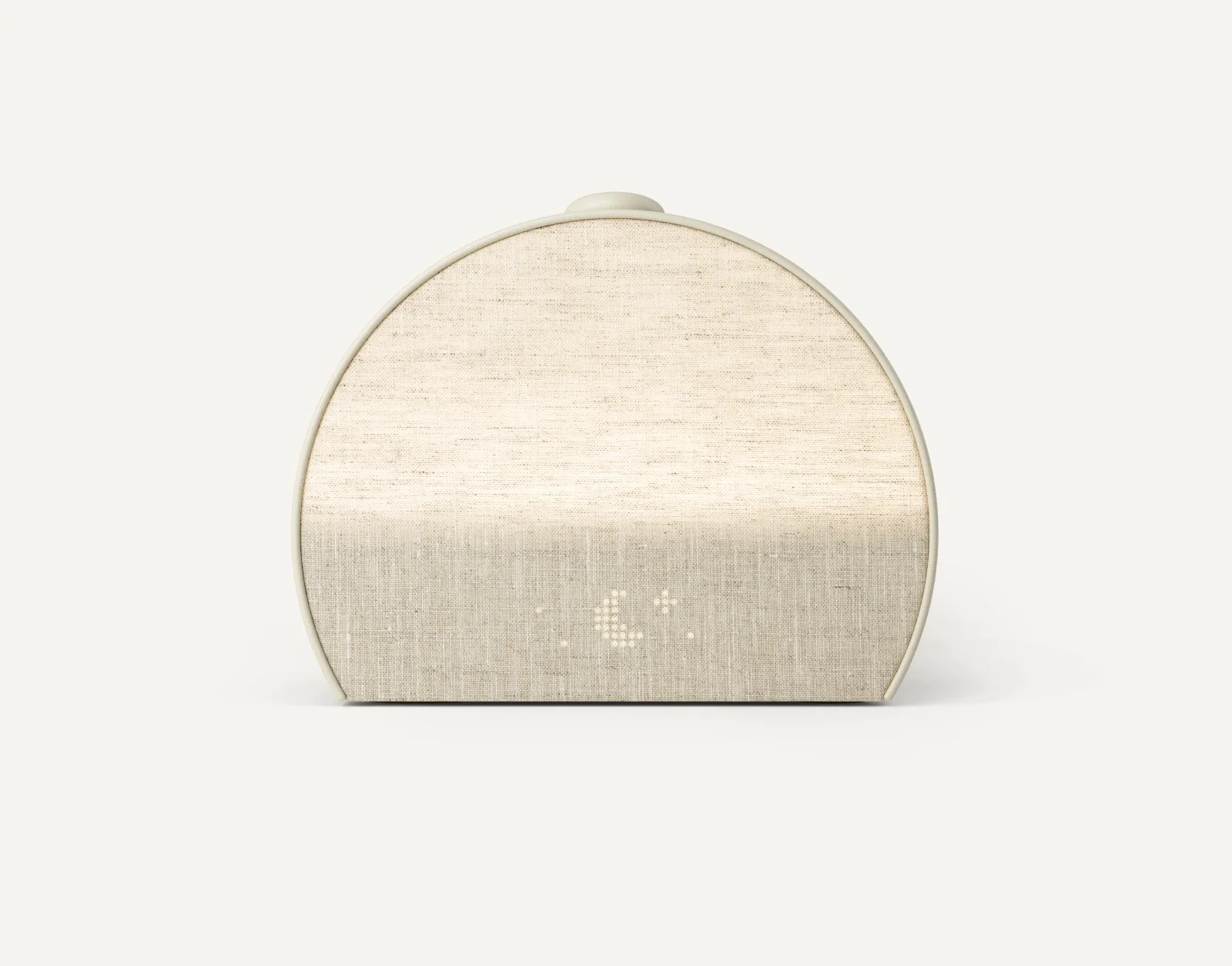
Hatch
Hatch Restore 2
$169.99
Pros
- Programmable wind-down routines
- Gradual sunrise wake-up
- Wide library of sounds and meditations
Cons
- Premium content sits behind a subscription
- App required for setup
References
- Czeisler CA et al. Stability, precision, and near-24-hour period of the human circadian pacemaker. Science, 1999.
- Phillips AJK et al. Irregular sleep/wake patterns are associated with poorer academic performance and delayed circadian and sleep/wake timing. Scientific Reports, 2017.
- Lewy AJ et al. Melatonin shifts human circadian rhythms according to a phase response curve. Chronobiology International, 1992.
- American Academy of Sleep Medicine. Clinical practice guideline for the treatment of intrinsic circadian rhythm sleep-wake disorders, 2015.
Where to go next
Related findings.
 Protocol
Why You Wake Up at 3 AM (And What You Can Do About It)
Middle-of-the-night wake-ups have a small set of common causes — and most of them are addressable. A writer-curated look at what's really happening at 3 AM.
 Protocol
Why We Dream: What Science Actually Knows (and Doesn't)
Dreams aren't random noise. Published neuroscience points to specific functions — memory, emotion, creativity. Here's what we know and what's still a mystery.
 Protocol
Sleep for Shift Workers: A Survival Guide
Night shifts fight your biology. Here's what published research says about managing sleep when your schedule won't cooperate.