How to Sleep Better Tonight: 12 Evidence-Based Tips
A research-backed checklist of the highest-leverage things you can do today to improve tonight's sleep — ranked by impact, not hype.

There's no shortage of sleep advice on the internet — but a lot of it is recycled, contradictory, or wishful thinking. This guide focuses on the changes that show up over and over in published sleep research and clinical guidelines, ordered roughly by how much impact most adults can expect from each one.
A word of caution before you read: don't try all twelve at once. The single biggest mistake people make with sleep advice is treating it like a checklist of optional add-ons. Instead, find the one or two things you're currently doing wrong and fix those first. The leverage on the highest-impact items is enormous compared to the polish-level tweaks at the bottom of the list.
How sleep actually works (in 90 seconds)
Before we get into the tips, it helps to understand the two systems your body uses to control sleep:
-
The circadian rhythm. Your body's ~24-hour internal clock, governed by a small cluster of neurons in your hypothalamus called the suprachiasmatic nucleus. It determines when you feel sleepy and when you feel alert across the 24-hour day. Its single most powerful input is light hitting your retina.
-
Sleep pressure. A separate biological drive that builds up the longer you've been awake, primarily through the accumulation of a molecule called adenosine. Sleep pressure is what makes you feel tired now. Caffeine works by temporarily blocking adenosine receptors, which is why it makes you feel less tired without actually clearing the chemical buildup.
Most sleep problems come from these two systems being out of sync — either with each other or with the schedule you're trying to keep. Almost every tip in this guide is really about one or the other.
The big three (do these first)
These three changes consistently produce the largest measurable improvements in sleep across published studies. If you only do three things on this list, do these.
1. Anchor your wake time
A consistent wake time — even on weekends — is the single most reliable lever for stabilizing your circadian rhythm. Most sleep researchers consider it more important than a consistent bedtime, because bedtimes are the result of a stable rhythm, not the cause. When your wake time floats around, your circadian system can't figure out what time zone you live in, and the downstream effects (when you feel sleepy, when you feel alert, when your body temperature drops) get noisier and less predictable.
The threshold most clinical sleep guidelines suggest: pick a wake time you can hit within 30 minutes, every day, for at least two weeks. This includes weekends. Yes, that's the hard part. Yes, it works.
2. Get bright light in your eyes within 30 minutes of waking
Light is the strongest signal your body uses to set its internal clock. Aim for at least 10 minutes of bright outdoor light (or a daylight lamp / sunrise alarm in winter). This single habit shifts the entire downstream cascade — including when you'll feel sleepy that night.
Two important details:
- Outdoor light is dramatically brighter than indoor light, even on cloudy days. The brightness of overcast outdoor light is roughly 1,000–10,000 lux. The brightness of a well-lit office is closer to 300–500 lux. The difference matters — research suggests circadian sensitivity is non-linear, with bigger effects at higher intensities.
- Through windows is better than nothing, but not nearly as effective as actually going outside. Glass filters out a meaningful chunk of the wavelengths that drive circadian shifting.
3. Cut bright overhead light 2 hours before bed
In the evening, switch off ceiling lights and use warm, low lamps. The goal is to lower the "daytime" signal your retina is sending to your hypothalamus. This is often more important than blocking your phone screen entirely, though doing both helps.
A useful rule of thumb: the closer to your eye level, the more impact a light source has. Bright overhead lighting hits your retina almost head-on; a low warm table lamp hits at a downward angle. This is one of the reasons traditional living rooms — with table lamps and dimmed warm fixtures — work better for sleep than modern open-plan kitchens with bright overhead LEDs.
The next layer: behavior and environment
These items aren't as universally impactful as the big three, but they consistently move the needle for many people.
4. Stop caffeine 8–10 hours before bed
Caffeine has a roughly 5-hour half-life. That afternoon coffee is still ~25% active at bedtime — and may suppress deep sleep architecture even if you fall asleep on time. People with the slow variant of the CYP1A2 enzyme can have half-lives closer to 8 hours; if afternoon coffee keeps you up, you may be one of them. See our caffeine cutoff calculator for a personalized estimate based on your bedtime and dose.
Two nuances worth knowing: tea contains less caffeine than coffee but it still counts, and decaf isn't actually decaffeinated — it typically contains 2–15mg of caffeine per cup, which is enough to matter for very sensitive sleepers.
5. Cool your bedroom
Most sleep organizations recommend a bedroom in the 60–67°F (15.5–19.5°C) range. Cooler air supports the natural drop in core body temperature that your brain associates with deep sleep onset. Hot bedrooms are one of the most common reversible causes of fragmented sleep, particularly in summer or in tightly-sealed modern homes.
If you can't adjust the AC, the next-best lever is the surface in direct contact with your skin: a breathable mattress topper, lighter bedding, or — if you want to spend money — an actively cooled sleep system. Read our temperature guide for the full breakdown.
6. Block light in your bedroom
Even small amounts of light hitting your retina at night can suppress melatonin and fragment sleep architecture. The fix is simple and cheap: blackout curtains or a quality eye mask. The Manta Sleep Mask is a popular choice for people who travel or whose partners use lights at different times — see our detailed review for what owners actually report.
7. Keep screens out of bed
Not because of blue light — that's a smaller factor than the marketing implies — but because of content. Your phone is engineered to keep you awake. Algorithmic feeds, notifications, and the dopaminergic pull of scrolling all activate the wrong systems at the wrong time. The cleanest fix is the blunt one: charge your phone in another room and use a dedicated bedside clock. We cover the best ones in our smart alarm clock roundup.
The fine-tuning layer
These items make a difference for some people in some situations. They're worth experimenting with after the bigger levers are in place.
8. Limit alcohol within 3 hours of bed
Alcohol can help you fall asleep but consistently shows up in research as a fragmenter of sleep architecture. It particularly suppresses REM sleep in the first half of the night, which often produces the "I slept eight hours and feel terrible" pattern after a few drinks. The effect is dose-dependent and strongest when alcohol is consumed close to bedtime.
9. Eat your last large meal 2–3 hours before bed
Large, fatty, or spicy meals close to bedtime are associated with reduced sleep quality and reflux symptoms in many people. This isn't about calories — it's about digestion. Your body raises core temperature to digest food, and elevated core temperature works against the cool-down your brain expects at bedtime. A small protein-rich snack is fine and may even help.
10. Move during the day — but not too late
Daytime exercise consistently improves sleep quality across studies, particularly aerobic exercise of moderate intensity. Vigorous exercise within an hour or two of bed can be activating for some people, though others tolerate it fine — individual variation is large here. If you have a sleep problem and you're also a late-night gym person, this is worth experimenting with as a variable.
11. Use the bedroom for sleep
The behavioral principle is called stimulus control, and it's a core technique in CBT-I (cognitive behavioral therapy for insomnia, the gold-standard treatment for chronic insomnia). The principle is simple: the more your bedroom is associated with non-sleep activities (work, scrolling, eating, watching TV), the harder it becomes for your brain to drop into sleep mode there. Over time, the bed itself becomes a wakefulness cue.
The rule: bed is for sleep and intimacy. Everything else happens elsewhere. If you live in a small apartment and the bed is the only comfortable place to sit, this is genuinely harder — but worth working around.
12. Get out of bed if you can't sleep within ~20 minutes
Lying awake reinforces the association between "in bed" and "awake." Get up, do something quiet and dim, and return to bed only when you actually feel sleepy. This is another core technique in CBT-I — and one of the most effective single interventions for people with chronic sleep onset problems. The hard part is psychological: it feels counterproductive. Do it anyway.
When tips aren't enough
There's no shame in asking for help. CBT-I — the first-line treatment for chronic insomnia — is highly effective and short-term, typically delivered in 4–8 sessions. It outperforms sleep medications in long-term studies, with no side effects. If you've tried the basics and they're not enough, talking to a sleep specialist is the highest-leverage next move.
Frequently asked
Which tip should I start with?+
Do these work for shift workers?+
How fast will I see results?+
Is melatonin a shortcut?+
What about weighted blankets?+
A useful bedside tool
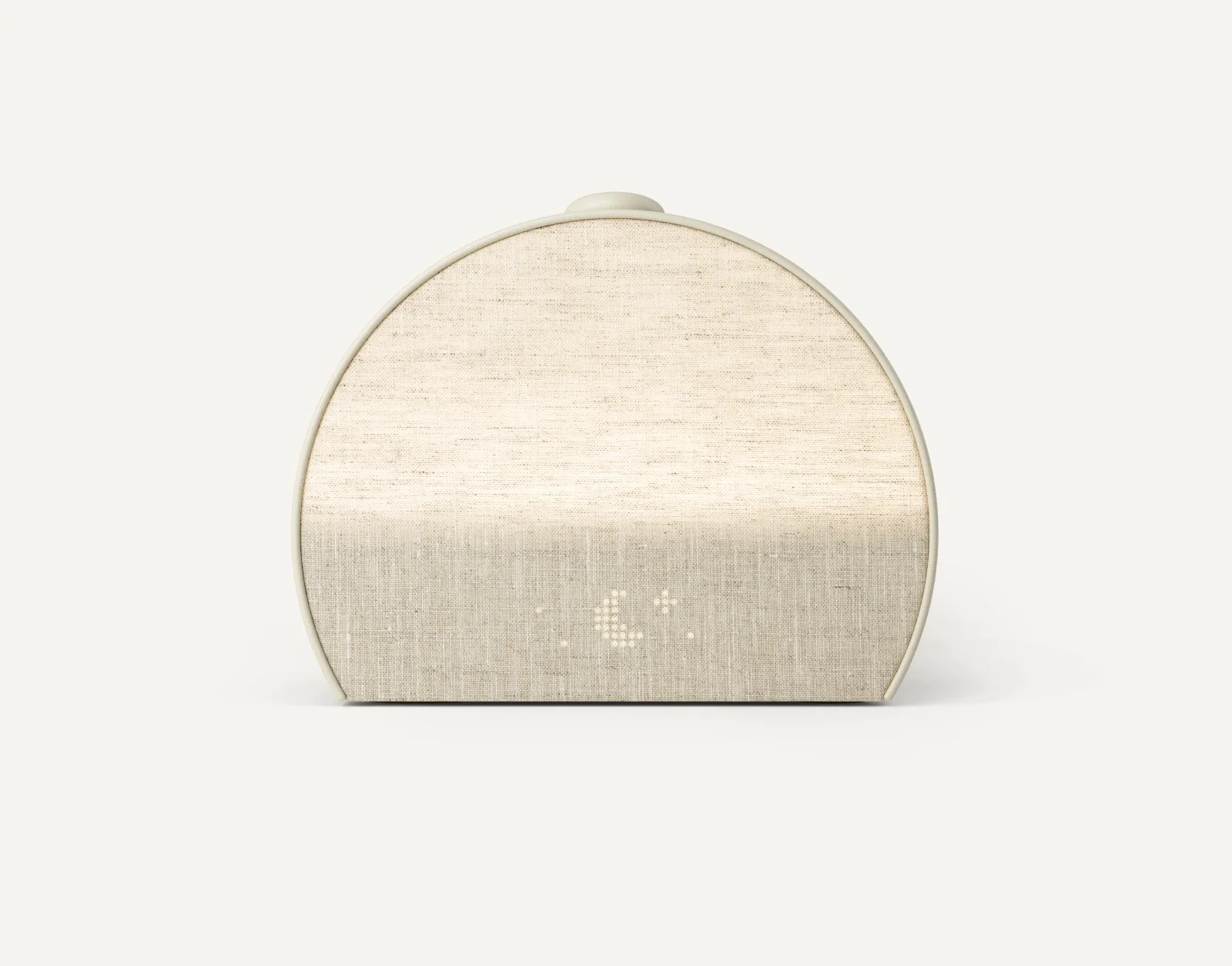
If you're working on the "phone out of the bedroom" tip and need something to replace your phone alarm, the Hatch Restore 2 is one of the most consistently top-rated all-in-one bedside devices in detailed reviews:
Hatch
Hatch Restore 2
$169.99
Pros
- Programmable wind-down routines
- Gradual sunrise wake-up
- Wide library of sounds and meditations
Cons
- Premium content sits behind a subscription
- App required for setup
Where to go next
If this guide gave you a lot of new ideas, the highest-leverage next step is taking our Sleep Edge Quiz — it'll point you at the specific article or tool best matched to whichever problem is bothering you most. Or, if you already know what to focus on, here are the deeper dives:
- How to reset your sleep schedule in 7 days
- The optimal bedroom temperature for deep sleep
- Why you wake up at 3 AM (and what to do about it)
Related findings.
 Protocol
Why You Wake Up at 3 AM (And What You Can Do About It)
Middle-of-the-night wake-ups have a small set of common causes — and most of them are addressable. A writer-curated look at what's really happening at 3 AM.
 Protocol
Why We Dream: What Science Actually Knows (and Doesn't)
Dreams aren't random noise. Published neuroscience points to specific functions — memory, emotion, creativity. Here's what we know and what's still a mystery.
 Protocol
Sleep for Shift Workers: A Survival Guide
Night shifts fight your biology. Here's what published research says about managing sleep when your schedule won't cooperate.