The Best Sunrise Alarm Clocks in 2026
Sunrise alarms wake you with gradually brightening light instead of a jarring sound. Here are the ones customers consistently rate highest on Amazon and Walmart — and who each one is actually for.
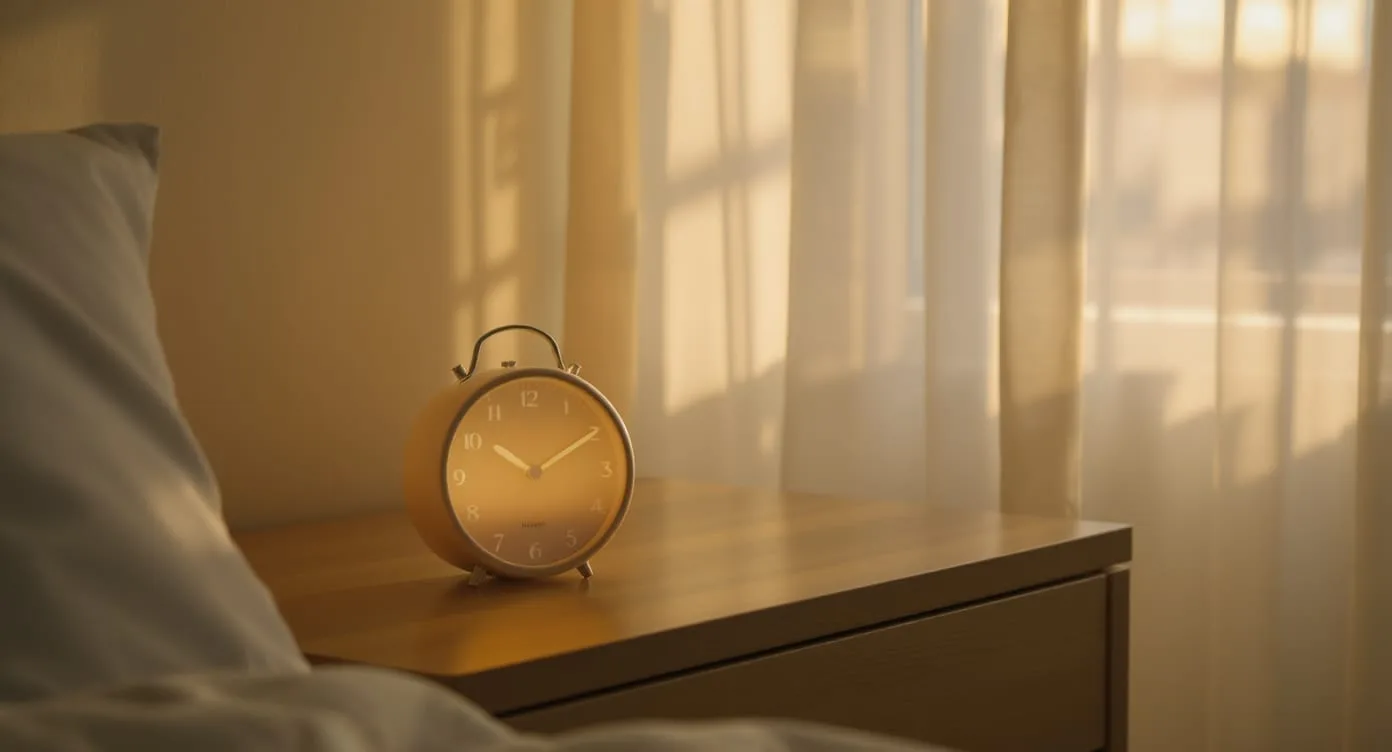
If you hate how your phone alarm rips you out of sleep, a sunrise alarm clock is the single most frequently recommended swap in verified buyer reviews. Instead of a sudden sound, the clock gradually brightens over 20–40 minutes — mimicking natural sunrise — so your cortisol rises on its own and you're closer to being awake when the actual alarm sound kicks in.
This guide covers the four sunrise alarms that consistently lead Amazon and Walmart review patterns, from premium app-connected picks to budget-friendly basics.
What to look for
1. Peak brightness. Cheap units top out around 100 lux, which barely registers through closed eyelids. Serious units hit 300+ lux, which is what you actually need to trigger the wake response. If you're a deep sleeper, this matters a lot.
2. Ramp time. Most units let you pick between 15, 30, and 60 minutes. Longer ramps feel gentler; shorter ramps are more effective at pulling light sleepers out of REM.
3. Color temperature. The best units shift from warm amber (which is non-disruptive to melatonin) at the start to cool daylight by the end. This is closer to real sunrise and less jarring on your eyes.
4. Sound options. Most sunrise alarms let you pick natural sounds, radio, or a traditional beep as the backup alarm if the light isn't enough on its own.
5. Non-light features. Some clocks add wind-down routines, guided meditations, sleep sounds, or smart home integration — worth paying for if you'd actually use them, useless if you wouldn't.
1. Hatch Restore 2 — Best Overall
Hatch
Hatch Restore 2
$169.99
Pros
- Programmable wind-down routines
- Gradual sunrise wake-up
- Wide library of sounds and meditations
Cons
- Premium content sits behind a subscription
- App required for setup
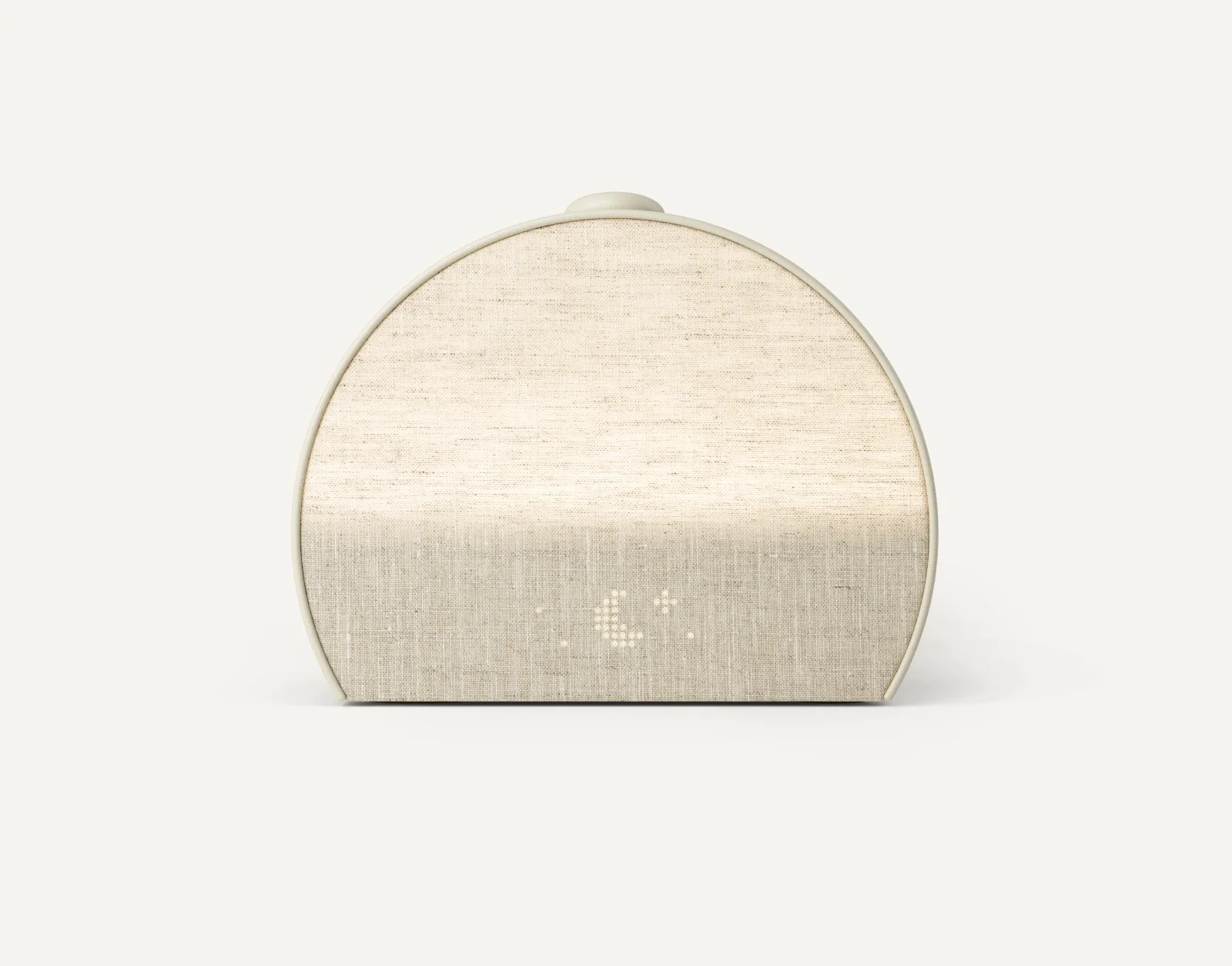
The Hatch Restore 2 is the most-recommended sunrise alarm in detailed reviews by a significant margin. It's not the brightest or the cheapest, but it's the most complete bedside device: sunrise + sunset, programmable wind-down routines, a library of sleep sounds, and a soft ambient nightlight all in one.
What buyers consistently like
- All-in-one bedside. Owners routinely describe replacing 2–3 separate devices (white noise machine, nightlight, alarm clock) with the Hatch.
- Wind-down routines. You can program a custom sequence — dimming light, sleep story, white noise — that runs automatically at bedtime. Most long-term reviewers cite this as the feature they actually use every night, not just the sunrise alarm.
- Gentle sunrise. 20–60 minute ramp, color temperature shifts from warm to cool.
- Phone-free. Once set up via the app, you can leave your phone in another room — the clock handles everything.
Trade-offs
- Subscription for premium content. The sleep stories and meditations sit behind Hatch+ ($5/mo). The free tier has enough content to use the alarm and basic sounds, but the "best" content requires paying.
- Not the brightest. Peak brightness is good but not as high as a dedicated light therapy device. Deep sleepers may need to combine with a backup sound alarm.
- Setup via app only. You cannot configure it without a smartphone.
2. Philips SmartSleep Wake-Up Light HF3520 — Best for Light Intensity
Philips
Philips SmartSleep Wake-Up Light HF3520
$169.95
Pros
- 30-minute gradual sunrise simulation
- Multiple natural wake-up sounds plus FM radio
- Doubles as a bedside lamp with adjustable warm light
Cons
- Premium price for a single-purpose device
- No app or routine programming like the Hatch
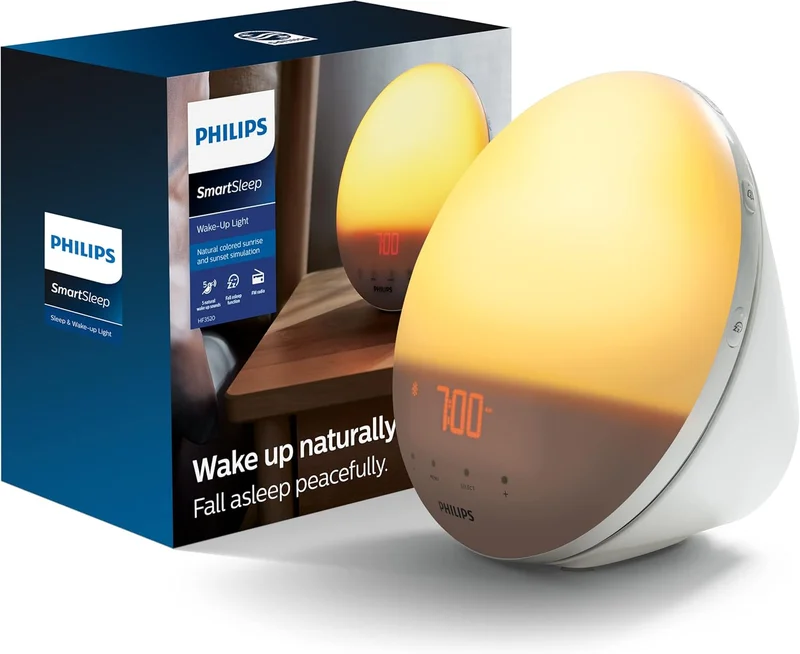
Philips invented the sunrise alarm category and has refined it over 20+ years. The HF3520 is the mid-range model that consistently leads reviews from people who specifically want bright light. It hits 300 lux at the pillow — enough to trigger light-sensitive morning hormones even in a dark bedroom.
What buyers consistently like
- Brightness. The #1 reason people choose Philips over Hatch. Deep sleepers who needed a better wake-up consistently mention the brightness as the difference-maker.
- Simple physical controls. Tap to snooze, dial to set — no app required. Great for people who don't want another smart device.
- FM radio option. Alongside natural sounds, you can wake to the radio.
- Proven longevity. Philips has sold sunrise alarms for decades and 3–5 year reviews consistently report reliable operation.
Trade-offs
- No routines or sleep sounds. If you want an all-in-one bedside, this isn't it. It's purely a sunrise alarm clock.
- Simpler aesthetic. The physical dome design is functional but not a design statement, unlike the Hatch.
- Older interface. Compared to app-driven devices, it feels dated — though many owners consider that a feature.
3. JALL Wake Up Light — Best Budget Pick
JALL
JALL Wake Up Light Sunrise Alarm Clock
$34.99
Pros
- Full-screen LED panel with 20 brightness levels rivals lights costing 2-3x more
- Adjustable 10-to-60-minute sunrise simulation with dual alarm presets
- 25 built-in sounds plus Bluetooth speaker and FM radio
Cons
- 12 side buttons and many settings create a learning curve
- No smartphone app or voice assistant integration
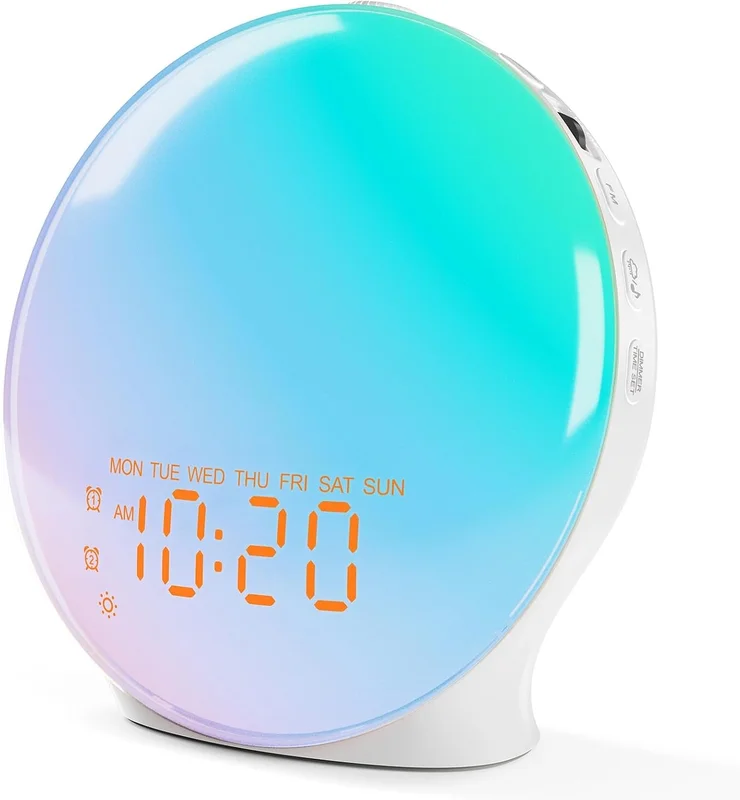
The JALL Wake Up Light is the budget sunrise alarm that consistently surprises buyers. Its full-screen LED panel produces room-filling light that rivals the Philips at a fraction of the price, and a 25-sound library plus Bluetooth speaker makes it one of the most feature-packed budget options available.
What buyers consistently like
- Surprisingly bright. The large full-screen LED panel produces strong, room-filling light with 20 adjustable brightness levels — enough to trigger the wake-up response even for moderate sleepers.
- Adjustable sunrise ramp. Choose anywhere from 10 to 60 minutes for the sunrise simulation. The dual alarm feature is a standout for different weekday/weekend schedules or couples.
- Sound variety. 25 built-in soothing sounds plus a 5W Bluetooth speaker for streaming your own audio — far more versatile than most budget picks.
Trade-offs
- Controls take practice. 12 side buttons and many settings mean you'll need the instruction manual for initial setup. Not as intuitive as the Hatch app or the Philips dial.
- No app or smart-home integration. All configuration is done via physical buttons. If you want voice control or phone-based scheduling, look at the Hatch.
4. Carex Day-Light Classic Plus — Best for Seasonal Depression (Dual-Purpose)

Carex
Carex Day-Light Classic Plus
$144.95
Pros
- Delivers 10,000 lux at the recommended 12-inch distance
- Recommended in published SAD treatment studies
- Adjustable height and angle for hands-free use
Cons
- Bulky compared to compact light therapy lamps
- Plastic build feels less premium than the price suggests
Technically the Carex Day-Light Classic is a 10,000-lux light therapy lamp, not a traditional sunrise alarm. We're including it because a significant subset of buyers uses it as a bright-light wake-up tool during dark winters — set it on a timer, have it turn on 15 minutes before your alarm, and use it as a brighter-than-bright substitute for natural morning sunlight.
What buyers consistently like
- True therapeutic brightness. 10,000 lux is the standard used in published seasonal affective disorder (SAD) research. No traditional sunrise alarm even comes close.
- Dual-purpose. Use it as a wake-up tool in the morning, then use it for 20–30 minutes of light therapy before work if you have winter blues.
- Medical-grade UV filtering. Unlike generic bright lamps, it filters out UV while keeping the visible spectrum that matters for circadian entrainment.
Trade-offs
- Not a clock. You'll need a separate alarm or a smart plug to make it function as a wake-up tool.
- Size. It's a desk lamp, not a nightstand device. Plan the placement.
- Price. More expensive than dedicated sunrise alarms, and overkill if you only want a gentler wake-up.
How they compare
Which one should you buy?
- You want an all-in-one bedside sleep platform → Hatch Restore 2
- You're a deep sleeper and need serious brightness → Philips SmartSleep HF3520
- You want to try a sunrise alarm cheaply → JALL Wake Up Light
- You want a sunrise alarm AND a SAD lamp in one → Carex Day-Light Classic Plus
Frequently asked
Do sunrise alarms actually work?+
How bright does a sunrise alarm need to be?+
Is a sunrise alarm better than a phone alarm?+
Can I use a sunrise alarm with blackout curtains?+
Where to go next
Related findings.
 Edge Pick
The Best White Noise Machines for Tinnitus in 2026
Tinnitus at night is relentless. The right masking sound can make sleep possible again. Here's what customers with tinnitus consistently rate highest for nighttime use.
 Edge Pick
The Best Weighted Blankets for Deep Sleep (2026)
What the research says about weighted blankets for sleep and anxiety — plus the two products verified buyers consistently rate highest.
 Edge Pick
The Best Weighted Blankets for Anxiety in 2026
Weighted blankets use deep pressure stimulation to calm the nervous system — a technique originally developed for anxiety and sensory disorders. Here's what customers rate highest.