How to Share a Bed and Still Sleep Well
Different schedules, different temperatures, snoring, blanket stealing. A practical guide to the most common couples sleep problems — and what actually fixes them.
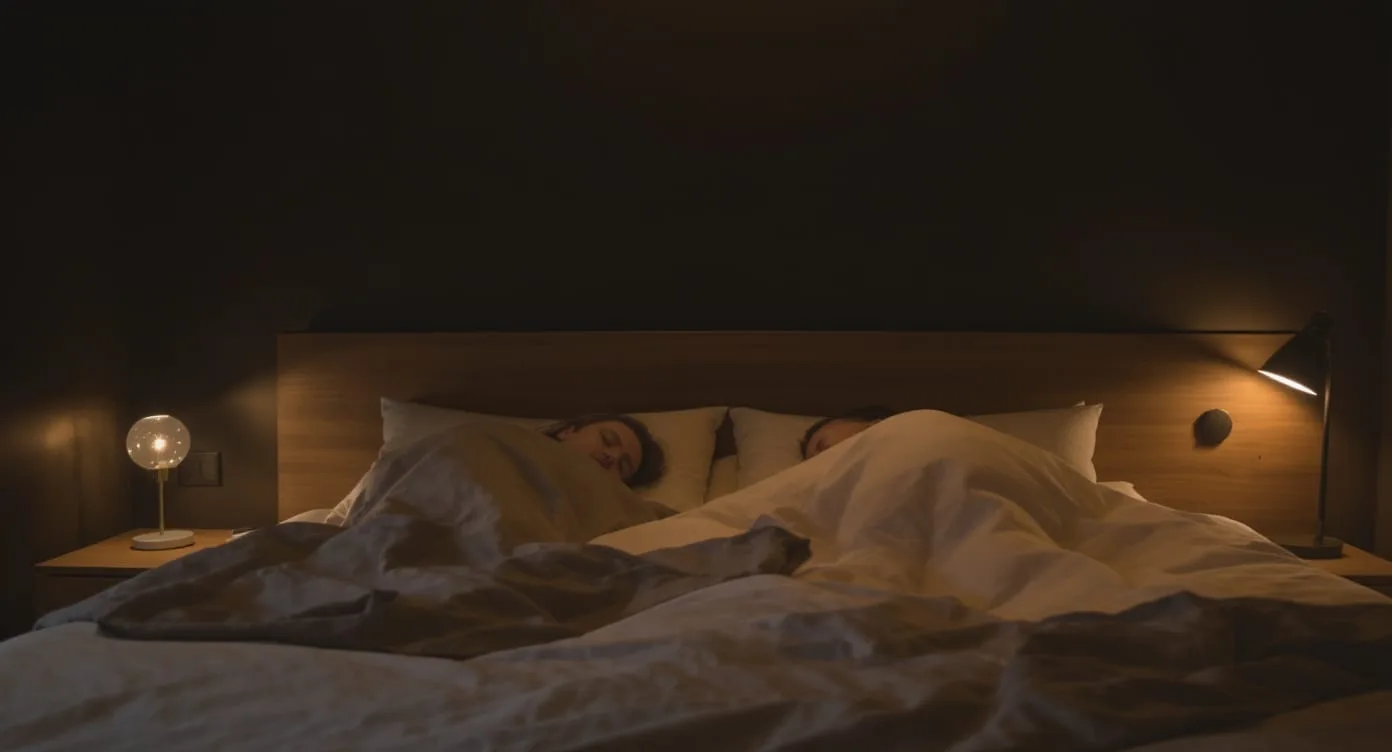
Sharing a bed is one of the most intimate things two people do — and one of the most sleep-destructive, when it goes wrong. Published research shows that bed partners are one of the most commonly reported causes of sleep disruption, right alongside noise, light, and stress. And yet the cultural expectation that couples should sleep in the same bed often prevents people from addressing the problem.
This guide covers the most common couples sleep problems, what the evidence says about each one, and practical solutions ranked from cheapest to most effective.
The most common problems
1. Different schedules
One partner is a night owl; the other wakes at dawn. The early sleeper is awakened when the night owl comes to bed. The night owl is awakened when the early bird's alarm fires.
What helps:
- Separate alarm strategies. The early riser uses a vibrating wrist alarm or a sunrise alarm (like the Hatch Restore 2) that wakes with light rather than sound. The light can be aimed at one side of the bed.
- The night owl enters quietly. Red or amber nightlight in the bedroom. Clothes laid out the night before. No overhead light.
- Separate blankets. If the night owl coming to bed involves rearranging shared covers, separate blankets eliminate the disturbance entirely.
2. Different temperatures
One partner runs hot; the other runs cold. The thermostat wars are a cliché because they're universal.
What helps (ranked by cost):
- Separate blankets ($0). The hot partner uses a thin sheet; the cold partner uses a heavy duvet. This is the standard approach in Scandinavian countries and eliminates the entire argument.
- A fan on one side ($20–$40). Pointed at the hot sleeper, it creates a microclimate without cooling the whole room.
- Dual-zone cooling pad ($500–$1,000). The BedJet 3 dual-zone system lets each side of the bed run at independent temperatures. In detailed reviews, this is the single most praised solution for thermally mismatched couples.
3. Snoring
Snoring affects the snorer's sleep quality, but it destroys the partner's. Published research estimates that a snorer's bed partner loses an average of 1 hour of sleep per night — more than enough to accumulate significant sleep debt over weeks and months.
What the partner can do (harm reduction):
- Earplugs — the most effective cheap fix. See our earplugs roundup.
- White noise machine — masks the irregular peaks of snoring with consistent sound. See our Dohm review.
- Combination: earplugs + white noise together is more effective than either alone.
What the snorer should do:
- Sleep on their side — positional snoring (back sleeping) is the most common type
- Avoid alcohol within 3 hours of bed — alcohol relaxes airway muscles and worsens snoring
- Evaluate for sleep apnea — if the snoring includes pauses, gasps, or is "room-shaking" loud, this is a medical issue, not a nuisance issue. See our snoring guide and apnea warning signs.
4. Blanket stealing
One partner pulls the covers; the other wakes up cold. This is the simplest problem to solve and one of the most effective upgrades in couples sleep.
The fix: separate blankets. Two individual duvets or comforters, one per person. Each person wraps themselves independently. No stealing is physically possible.
This is standard practice in Germany, Scandinavia, Austria, and much of Northern Europe. It's sometimes called the "Scandinavian sleep method" in English-speaking media. It costs nothing, works immediately, and has no downsides except a slightly less "made bed" look (which a decorative top throw solves).
5. Movement and mattress transfer
One partner tosses and turns, and the motion travels through the mattress to wake the other. This is a mattress problem, not a behavior problem.
What helps:
- Memory foam or latex mattresses transfer less motion than spring mattresses. If you have a traditional spring mattress and motion transfer is a problem, a foam topper can reduce it meaningfully.
- A bigger bed. A queen bed gives each partner 30 inches of width — the same as a single crib. A king gives each partner 38 inches. The extra space alone reduces motion-related awakenings.
- Separate mattresses on one frame. Two twin XL mattresses on a king frame gives each partner a fully independent sleep surface with zero motion transfer. This is the "sleep divorce" compromise that keeps you in the same bed.
6. Light sensitivity differences
One partner reads before bed; the other needs total darkness.
What helps:
- A book light for the reader instead of a bedside lamp — dramatically reduces ambient light
- A sleep mask for the dark-needer — blocks all light regardless of what the partner is doing. See our Manta review.
- An e-ink reader (Kindle Paperwhite) for the reader — emits far less light than a tablet or phone
The "sleep divorce" conversation
Sleeping in separate rooms — sometimes called a "sleep divorce" — is increasingly common and increasingly destigmatized. Published surveys suggest that 15–25% of American couples sleep in separate rooms at least some of the time.
The research on this is clear: sleeping separately does not harm a relationship unless one partner interprets it as rejection. When both partners agree that separate sleeping improves their health and their daytime relationship, outcomes are positive.
The conversation framework:
- Frame it as a health decision, not a relationship statement
- Try it as an experiment — "Let's try this for two weeks and see how we both feel"
- Maintain intimacy rituals — spend time together before separating for sleep
- Reassess together — if it's working, keep going. If it's not, adjust.
The hierarchy of fixes (cheapest to most expensive)
| Fix | Cost | Problem solved | |---|---|---| | Separate blankets | $0 | Temperature, blanket stealing | | Earplugs | $15–$25 | Snoring, noise | | Sleep mask | $25–$35 | Light differences | | White noise machine | $50 | Snoring, noise, schedule differences | | Fan on one side | $20–$40 | Temperature mismatch | | Sunrise alarm | $165–$200 | Schedule differences, harsh alarm | | Bigger mattress | $500–$2,000 | Motion transfer, space | | Dual-zone cooling | $500–$1,000 | Temperature mismatch | | Separate rooms | $0 (or cost of a second bed) | Everything |
Frequently asked
Is it normal for couples to sleep in separate rooms?+
My partner's snoring wakes me but they refuse to see a doctor. What do I do?+
Will separate blankets make our bed look weird?+
We have a queen bed. Should we upgrade to a king?+
How do we maintain intimacy if we sleep separately?+
References
- Troxel WM. It's more than sex: exploring the dyadic nature of sleep and implications for health. Psychosomatic Medicine, 2010.
- Pankhurst FP, Horne JA. The influence of bed partners on movement during sleep. Sleep, 1994.
- Beninati W et al. Effects of a snoring spouse on the sleep of the bed partner. Journal of Clinical Sleep Medicine, 2008.
Where to go next
- How to stop snoring
- Optimal bedroom temperature
- Best earplugs for sleeping
- Best sleep accessories for couples
Related findings.
 Protocol
Why You Wake Up at 3 AM (And What You Can Do About It)
Middle-of-the-night wake-ups have a small set of common causes — and most of them are addressable. A writer-curated look at what's really happening at 3 AM.
 Protocol
Why We Dream: What Science Actually Knows (and Doesn't)
Dreams aren't random noise. Published neuroscience points to specific functions — memory, emotion, creativity. Here's what we know and what's still a mystery.
 Protocol
Sleep for Shift Workers: A Survival Guide
Night shifts fight your biology. Here's what published research says about managing sleep when your schedule won't cooperate.