Yogasleep Dohm Review: The 60-Year-Old Design That Still Wins
A detailed review of the Yogasleep Dohm — why a real-fan noise machine from 1962 still outsells digital alternatives, and who it's for.
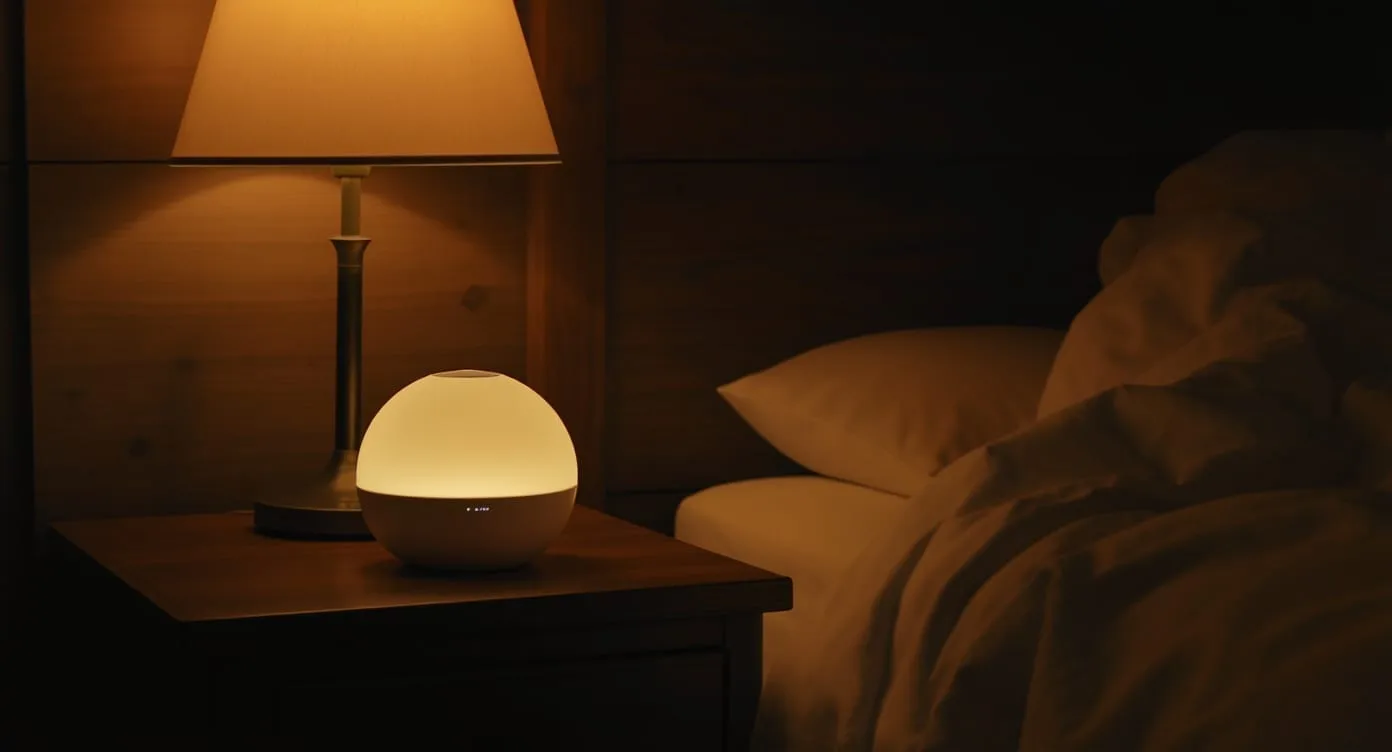
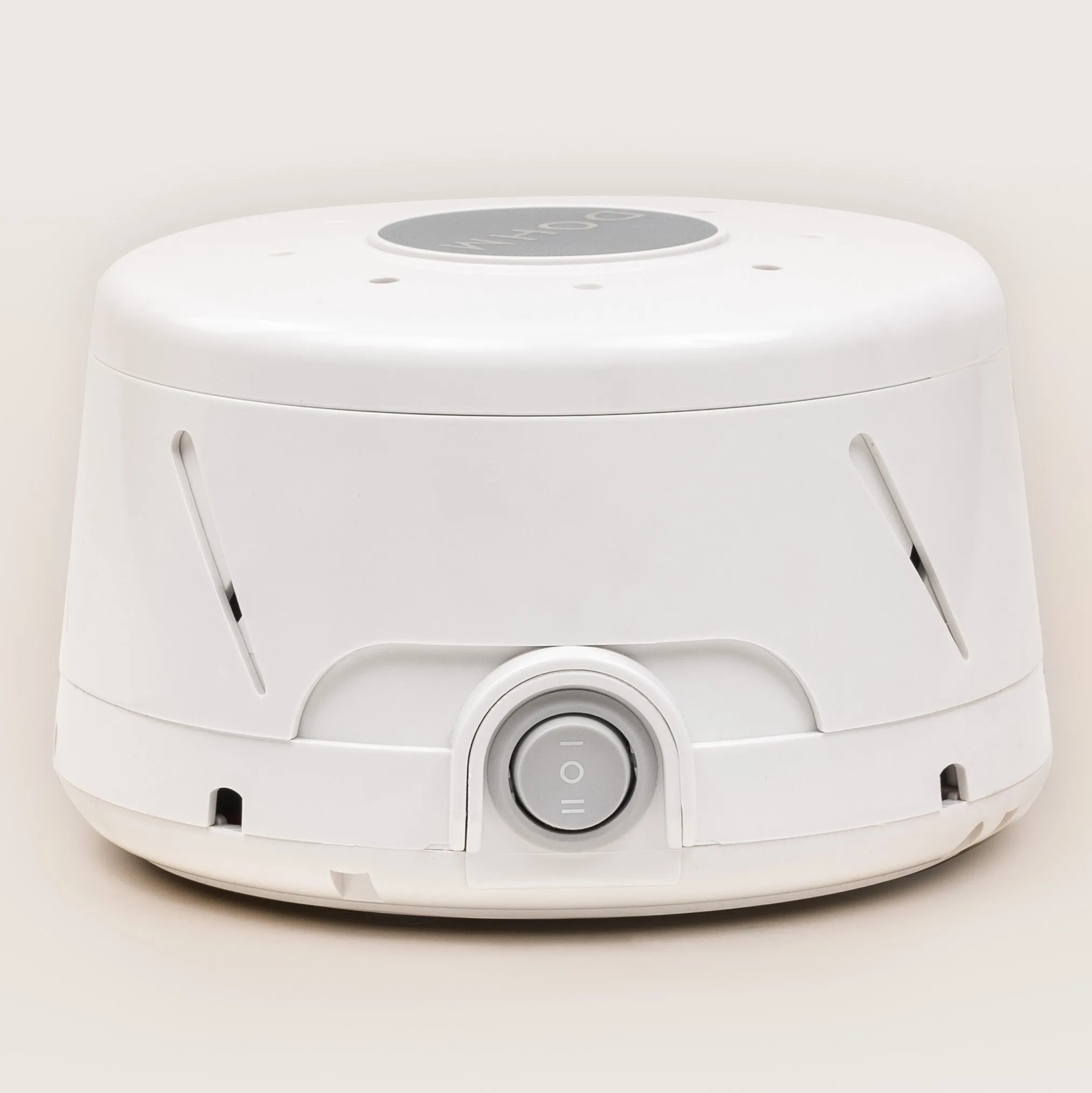
The Yogasleep Dohm Classic is a white noise machine that was first designed in 1962. It uses a real internal fan — not a digital recording, not a Bluetooth speaker playing a loop — to generate sound. More than sixty years later, it remains one of the highest-rated and best-selling sound machines on Amazon, with an buyer review profile that most modern smart devices can't match.
This review covers what thousands of verified buyers consistently report about the Dohm, why they choose it over newer alternatives, and where it falls short compared to modern smart sound machines.
Yogasleep
Yogasleep Dohm Classic
$49.99
Pros
- Real fan-based white noise with natural texture
- Tunable pitch and tone
- Durable build, made in USA
Cons
- Single sound only — no nature or ambient options
- No timer or alarm
What makes the Dohm different
Every other sound machine on the market — apps, smart speakers, digital devices — generates sound by playing a recorded audio file on a loop. The Dohm uses a physical fan inside a plastic housing. You twist the outer shell to open or close air vents, which changes the pitch and volume of the fan noise.
The result is a continuous, non-repeating sound that never loops. This distinction matters more than most marketing acknowledges:
- Loop detection. The human auditory system is remarkably good at detecting repeating patterns, even subconsciously. Many digital white noise machines use loops that are 30–60 seconds long, and sensitive listeners report hearing the "seam" where the loop restarts. The Dohm doesn't loop because the sound isn't recorded — it's generated in real-time by moving air.
- Frequency richness. A real fan produces a broad-spectrum sound that includes subtle variation — air turbulence creates micro-fluctuations that a recorded loop doesn't have. Buyers consistently describe this as "more natural," "warmer," and "less fatiguing" than digital alternatives.
- Simplicity. There's no app, no WiFi, no Bluetooth, no firmware updates, no subscription, and no settings beyond the physical pitch and volume adjusters. You plug it in and twist.
What buyers consistently like
Sound quality
This is the #1 reason people buy the Dohm, and it's the #1 theme across positive reviews. Buyers who switch from phone apps or digital machines to the Dohm almost universally comment on the difference in sound quality. Common descriptions:
- "It sounds like real air moving, because it is"
- "No loop, no seam, no digital artifacts"
- "I can finally stop noticing the background noise"
For people whose primary goal is masking environmental noise (traffic, neighbors, snoring partners, barking dogs), the broad-spectrum, continuous nature of the Dohm is particularly effective because it covers a wide range of frequencies without drawing attention to itself.
Simplicity and reliability
The second most-praised attribute: there's nothing to break, update, or configure. Long-term owners (2+ years) consistently mention that the Dohm just works — night after night, year after year. There are no apps to crash, no firmware to update, no batteries to charge. It's an appliance, not a gadget.
Price
At ~$50, the Dohm is significantly cheaper than smart sound machines (Hatch at ~$200, Loftie at ~$165) while outperforming them on the one thing it does: raw sound quality. For buyers who want white noise and nothing else, the value proposition is strong.
Durability
Multiple reviews come from buyers who owned a previous Dohm for 5, 10, even 15+ years before eventually replacing it. The mechanism is simple enough that there's very little to fail. The fan motor and housing are the only moving parts.
What buyers consistently complain about
One sound only
The Dohm generates fan noise and nothing else. There are no nature sounds, no rain, no ocean waves, no meditations. If you want variety, this isn't the device. Yogasleep makes a digital companion product (the Yogasleep Nod) for buyers who want variety, but the Dohm itself is single-purpose by design.
No timer
The Dohm is either on or off. There's no auto-shutoff timer. Most owners run it all night, but some reviewers want the option to have it turn off after falling asleep. A simple outlet timer ($5–$10) solves this, but it's not built in.
No alarm
Unlike the Hatch or Loftie, the Dohm is purely a sound machine. There's no alarm, no sunrise light, no smart features. If you need both a sound machine and an alarm, you need two devices.
Volume range
Some reviewers in very noisy environments (city apartments, thin walls) report that the Dohm doesn't get loud enough to fully mask heavy traffic or construction noise. For most residential environments, the volume is adequate. For extreme noise, a digital device with higher max output may be needed.
How it compares
vs. Hatch Restore 2
The Hatch does everything the Dohm does and more — plus sunrise alarm, routines, meditations, and app control. But its digital sounds don't match the Dohm's real-fan quality, and it costs 4x as much. If sound quality is your priority and you don't need an alarm or routines, the Dohm wins. If you want an all-in-one bedside device, the Hatch wins.
vs. phone apps
Sound apps (Calm, Headspace, Rain Rain, etc.) are free or cheap and offer variety. But they play through phone speakers (poor audio quality), require keeping your phone in the bedroom (behavioral risk), and use looping recordings that sensitive listeners notice. The Dohm beats apps on sound quality and eliminates the phone-in-bedroom problem.
vs. other fan-based machines
There are a few competitors that use real fans (LectroFan, SNOOZ). The LectroFan uses a smaller fan with digital enhancement; the SNOOZ uses a similar real-fan approach with a slightly different housing design and app control. The Dohm's advantage is the longest track record, the simplest design, and the lowest price.
Who it's for
Where to buy
Frequently asked
How loud is it?+
Does it use a lot of electricity?+
Can I travel with it?+
How is it different from the Dohm DS vs. Dohm Uno?+
Is it safe around kids and pets?+
Where to go next
- Compare all smart alarm clocks and sound machines
- Optimal bedroom temperature guide
- 12 evidence-based sleep tips
Related findings.
 Lab Report
Zinus Green Tea Memory Foam Mattress Review: The $400 Mattress Most People Actually Need
A detailed review of the Zinus 12-Inch Green Tea Memory Foam Mattress — the most-reviewed budget mattress on Amazon, and why it satisfies 80% of sleepers at 25% of the premium price.
Yogasleep Rohm Travel White Noise Machine Review: The Pocket-Sized Sleep Saver
A detailed review of the Yogasleep Rohm — portability, battery life, sound quality, and how it compares to plug-in alternatives.
YnM Cooling Bamboo Weighted Blanket Review: The Mid-Range Pick for Hot Sleepers
A detailed review of the YnM Cooling Bamboo Weighted Blanket (15 lb) — bamboo viscose construction, glass bead fill, 7-layer design, and how it compares to cotton alternatives.