The Best Minimalist Bedside Clocks in 2026
If you're trying to get your phone out of the bedroom, you need a real clock. Here are the minimalist bedside clocks customers consistently rate highest for the phone-free nightstand.
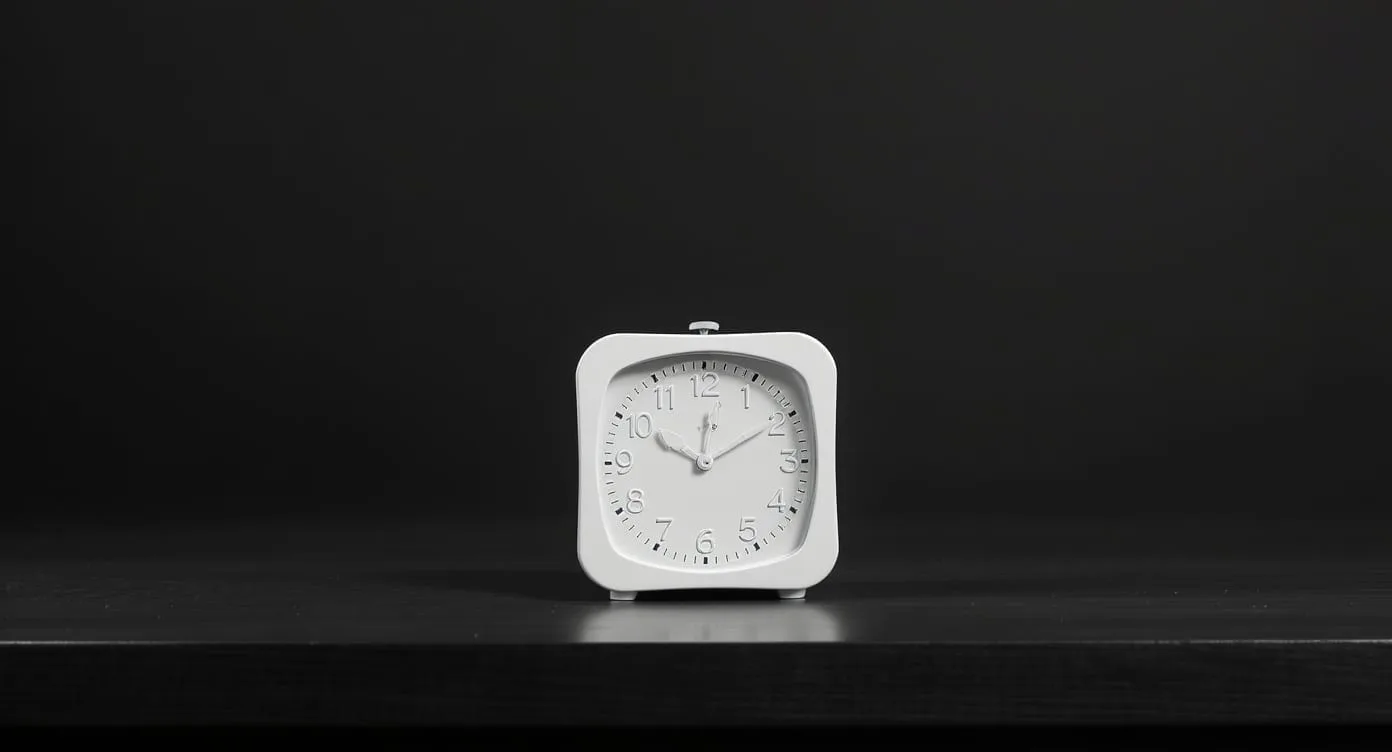
Getting your phone out of the bedroom is the single highest-impact sleep habit change most adults can make — and it fails constantly because "but I use my phone as an alarm" becomes a reason to keep it on the nightstand. The fix is a bedside clock that's actually worth using instead of just a functional alarm. This guide covers the two clocks that consistently lead detailed reviews from people who've successfully transitioned to phone-free sleep — one minimalist design-first pick, one smart-routine-first pick.
Why replacing the phone alarm matters
The phone-in-bedroom problem isn't really about the alarm. It's about the fact that having a phone within arm's reach creates temptations that wreck sleep:
1. Late-night scrolling. "I'll just check one thing" at 11 PM becomes 1 AM. Your bedtime slides by 2+ hours and you don't even notice.
2. Middle-of-night wake-ups. When you wake at 3 AM and the phone is right there, you check notifications, then you're wide awake, then you're scrolling, then it's 4 AM.
3. Morning doomscrolling. The alarm fires, you silence it, and instead of getting up you spend 20 minutes scrolling in bed. Your morning cortisol rise gets replaced with social media.
4. Blue light exposure. Even in "night mode," screens emit alerting light right at the time your body should be quieting down.
The indirect effect of removing the phone from the bedroom is often bigger than any direct sleep product. But it requires an alternative alarm that's actually pleasant to use.
What to look for in a minimalist bedside clock
1. Pleasant alarm sounds. Jarring beeps are the reason you prefer your phone alarm. Look for gradual sound escalation, nature sounds, or multi-stage alarms.
2. Dimmable display. A bright LCD in a dark room is worse than a phone screen. Dimmable-to-near-off is essential.
3. Simple one-button interface. If setting the alarm is harder than on your phone, you'll give up. Physical buttons > app-only.
4. No phone dependency during use. App for initial setup is fine. App required to change an alarm at 11 PM is not — the whole point is to keep the phone out of the bedroom.
5. Aesthetic that makes you want to keep it visible. This matters more than you'd think. A clock that looks good ends up on the nightstand and gets used. A clock that looks ugly ends up in a closet.
1. Loftie Clock — Best Minimalist Design
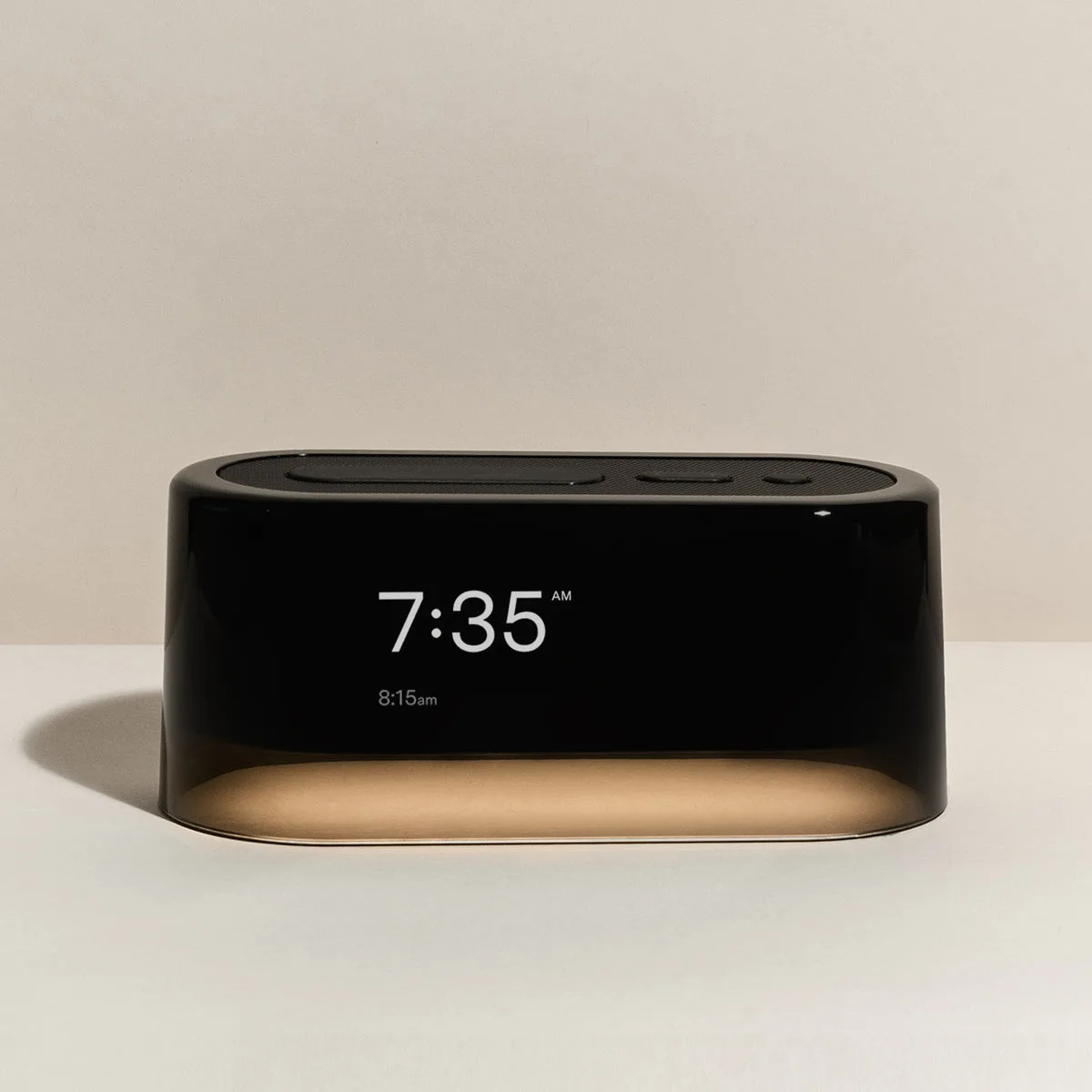
Loftie
Loftie Clock
$165.00
Pros
- Two-phase gentle alarm
- Designed to keep your phone out of the bedroom
- Curated content library
Cons
- App required for setup
- No sunrise light
The Loftie Clock is the design-first bedside clock built specifically for the "get the phone out of the bedroom" use case. It's a sleek minimalist device that actually looks good on a nightstand, with a two-stage alarm that wakes you gently, a library of sleep sounds for wind-down, and — critically — zero phone dependency during day-to-day use.
What buyers consistently like
- Two-stage alarm. A gentle first alarm gives you time to gradually wake up, then a louder second alarm fires a few minutes later if you're still asleep. For heavy sleepers, this reduces the jolt of a single loud alarm.
- Looks genuinely good. The #1 reason users keep it on the nightstand instead of hiding it. Minimalist design that fits any bedroom aesthetic.
- Built-in sleep sounds. Rain, ocean, white noise — replaces a separate sound machine for many users.
- Dimmable-to-near-off display. Won't light up the room at night.
- Phone-free after setup. You can use it without touching your phone, which is the entire point.
- Wind-down content. Guided breathing and sleep stories available directly on the clock.
Trade-offs
- Price. ~$165. More expensive than a basic alarm clock. You're paying for the design and the phone-free experience.
- Less bright light than dedicated sunrise alarms. Has a glow but isn't a true sunrise lamp. For heavy sleepers who need bright light to wake, the Philips HF3520 is a better pick.
- Wi-Fi required for setup and updates. One-time setup needs Wi-Fi, but day-to-day use is offline.
- Some features require a subscription. Basic functions are free; advanced content library is behind Loftie+.
2. Hatch Restore 2 — Best All-in-One Bedside Platform
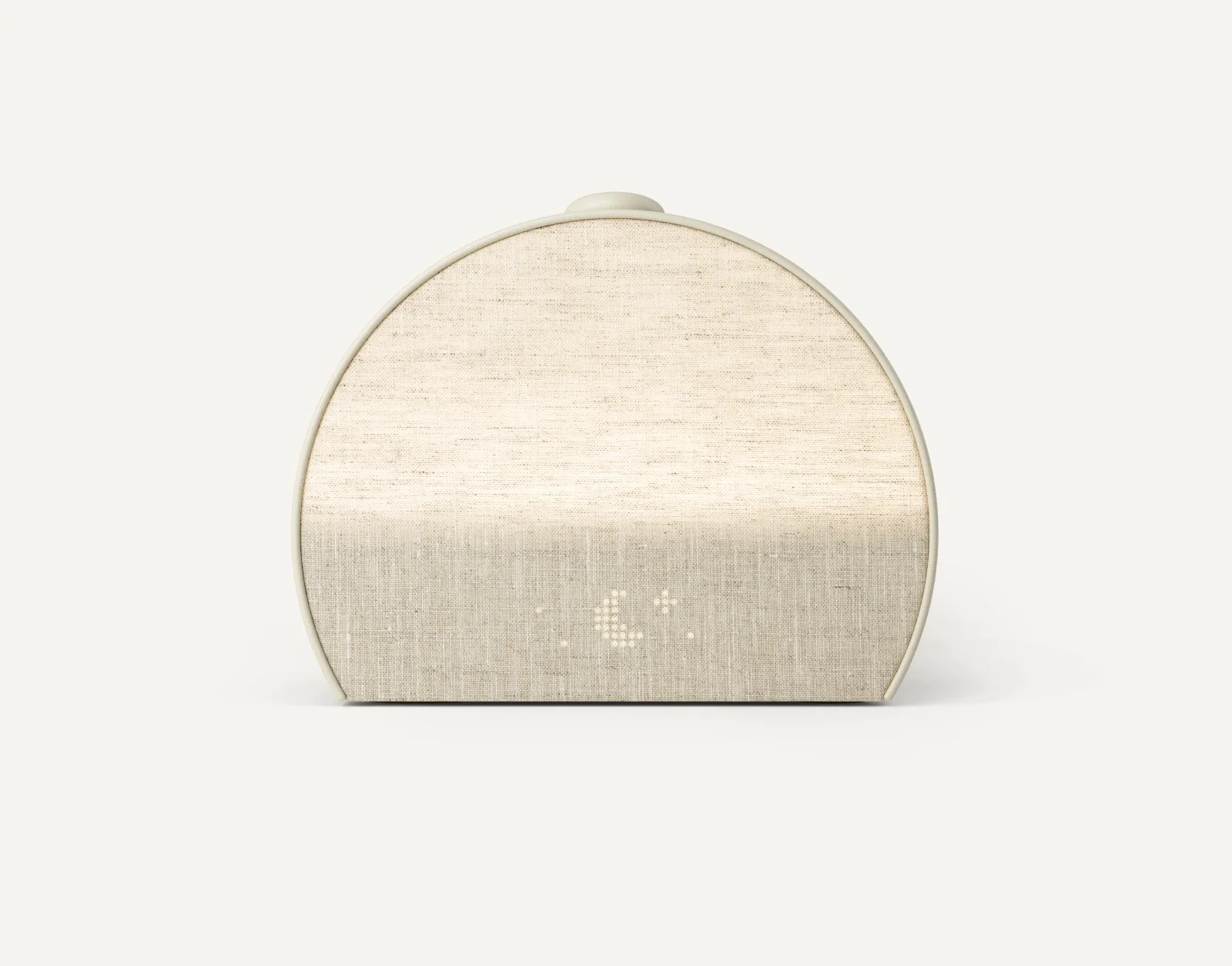
Hatch
Hatch Restore 2
$169.99
Pros
- Programmable wind-down routines
- Gradual sunrise wake-up
- Wide library of sounds and meditations
Cons
- Premium content sits behind a subscription
- App required for setup
The Hatch Restore 2 is less a "minimalist clock" and more a "complete bedside sleep platform" — sunrise alarm, smart clock, sound machine, night light, and wind-down routine tool all in one device. For users who want minimalist nightstand (one device instead of three) rather than minimalist aesthetic, the Hatch is the pick.
What buyers consistently like
- Replaces 3–4 devices. Sound machine, sunrise alarm, night light, and wind-down timer — all in one unit. Reduces nightstand clutter.
- Programmable wind-down routines. Set dim warm light + soft sleep sound to start at 9 PM every night automatically. Creates a consistent bedtime cue without you thinking about it.
- Sunrise wake-up. Gradual light starts 30 minutes before your target wake time.
- Custom sound library. Multiple options prevent auditory adaptation.
- Smart home integration. Works with Alexa, Google Home.
- Soft nightlight for middle-of-night. No harsh light if you need to use the bathroom.
Trade-offs
- App dependency for full use. Initial setup needs a smartphone, and changing complex routines often requires the app. Less "phone-free" than the Loftie.
- Subscription for premium content. Some stories and meditations sit behind Hatch+.
- Larger than the Loftie. Takes up more nightstand real estate.
Design-first or platform-first: which to pick
Choose the Loftie Clock if:
- You care about how your nightstand looks
- You want minimal phone dependency
- You want a focused clock + gentle alarm + basic sounds
- You already have a separate sound machine or don't need one
Choose the Hatch Restore 2 if:
- You want one device to replace several
- You value programmable routines
- You want sunrise light + sound + night light in one
- You don't mind opening an app occasionally
Either one is a significant upgrade over a phone alarm for the "remove the phone from bedroom" goal. The Loftie is cleaner; the Hatch is more featureful.
How they compare
The phone-free bedroom protocol
Just buying the clock doesn't automatically remove the phone from the bedroom. A few habits help:
1. Plug the phone in outside the bedroom. Kitchen, living room, hallway. Anywhere that isn't the nightstand. Make it physically harder to grab.
2. Use Do Not Disturb through the night. If you're worried about emergencies, configure exceptions for family members only.
3. Put the clock where the phone used to be. Visible, charged, ready. Replaces the phone visually as well as functionally.
4. Give it 2 weeks. The first 3–5 nights feel weird. By night 10, most users don't miss the phone. By night 20, the thought of putting the phone back in the bedroom feels strange.
5. Keep a paper notebook nearby. For the 3 AM "I need to remember this" thought that would otherwise become a phone note, a paper notebook serves the same purpose without the scrolling temptation.
Frequently asked
Why not just use a cheap $15 digital alarm clock?+
Is the Loftie or Hatch better for deep sleepers?+
Do either of them work without Wi-Fi?+
Is the subscription required?+
Will a clock alone fix my phone addiction?+
Where to go next
Related findings.
 Edge Pick
The Best White Noise Machines for Tinnitus in 2026
Tinnitus at night is relentless. The right masking sound can make sleep possible again. Here's what customers with tinnitus consistently rate highest for nighttime use.
 Edge Pick
The Best Weighted Blankets for Deep Sleep (2026)
What the research says about weighted blankets for sleep and anxiety — plus the two products verified buyers consistently rate highest.
 Edge Pick
The Best Weighted Blankets for Anxiety in 2026
Weighted blankets use deep pressure stimulation to calm the nervous system — a technique originally developed for anxiety and sensory disorders. Here's what customers rate highest.