Loftie Clock Review: A Phone-Free Bedside Companion
A detailed review of the Loftie Clock — the two-phase alarm, the content library, and whether it actually keeps your phone out of the bedroom.
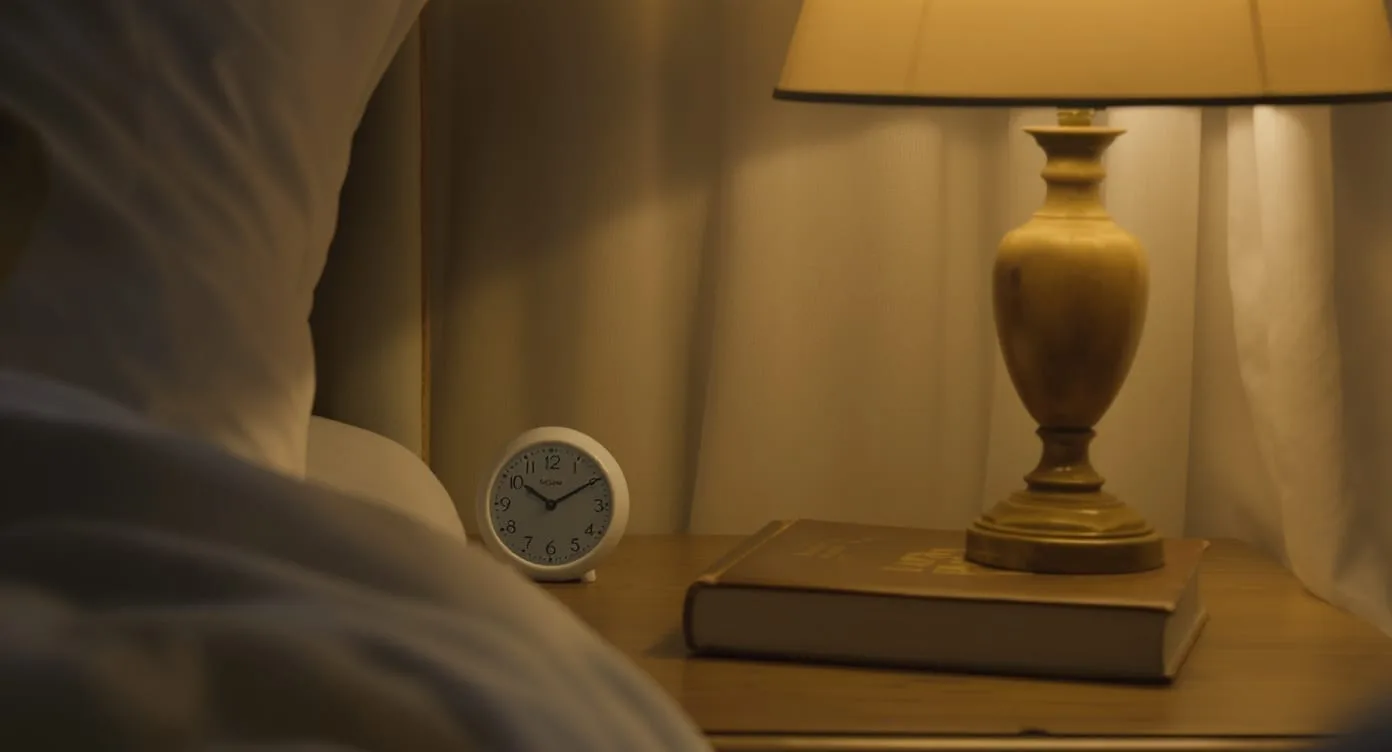
The Loftie Clock exists because of a single behavioral insight: most people use their phone as their alarm clock, which means their phone has to be on the nightstand, which means Instagram, email, and TikTok are one tap away at the moment they're supposed to be winding down.
Loftie's proposition is a dedicated bedside device that replaces every function you actually need from your phone at bedtime — alarm, sounds, gentle wake-up — without the functions you don't (infinite scroll, notifications, blue-lit screens). This review summarizes what thousands of verified buyers report about whether that proposition actually delivers.
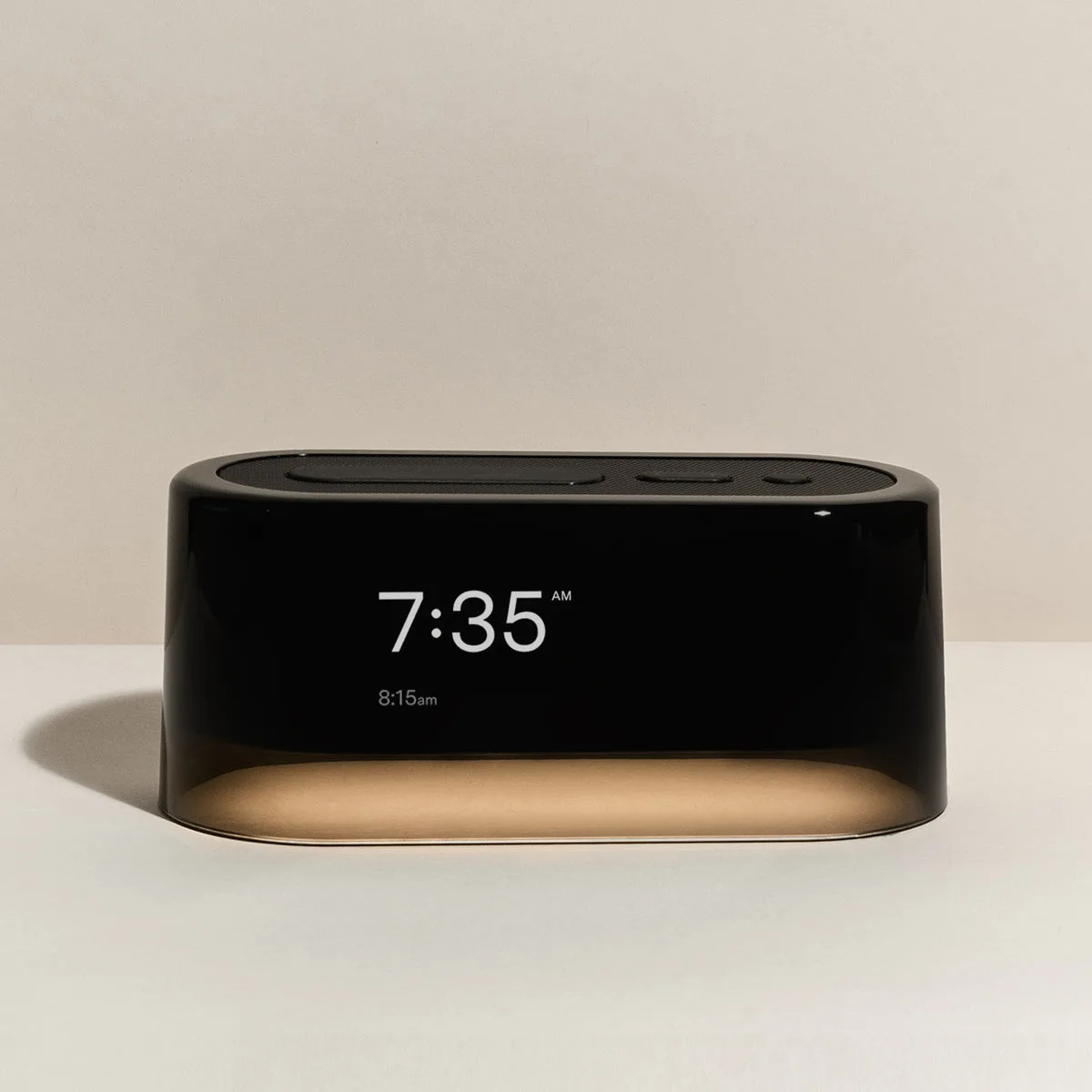
Loftie
Loftie Clock
$165.00
Pros
- Two-phase gentle alarm
- Designed to keep your phone out of the bedroom
- Curated content library
Cons
- App required for setup
- No sunrise light
What is the Loftie Clock?
The Loftie is a compact bedside clock (~4 inches wide) with a minimal LED display, a built-in speaker, and WiFi connectivity. It runs a curated content library that includes:
- Sound machines: white noise, nature sounds, ambient loops
- Breathwork sessions: guided breathing exercises for wind-down
- Sleep stories: narrated content designed to bore you to sleep (that's the design intent)
- Two-phase alarm: a gentle chime sounds several minutes before the main alarm, giving you a softer transition out of sleep
There's no camera, no social feed, no notifications, and no algorithmic content. The design philosophy is explicitly anti-phone.
What buyers consistently like
The two-phase alarm
This is the most-cited feature in positive reviews, and the concept is straightforward: a gentle chime (birdsong, soft tones) plays 3–9 minutes before the actual alarm. If you're in light sleep, the chime wakes you gently. If you're in deep sleep, you sleep through it and the main alarm handles the job.
Owners repeatedly describe this as a qualitatively different experience from a single abrupt alarm — less jarring, less cortisol-spiking, and less morning resentment toward the device.
The behavioral shift
A surprisingly large share of 5-star reviews aren't primarily about the clock's features — they're about the behavior change. Owners describe keeping their phone in another room for the first time in years. The removal of the phone from the nightstand is the actual product; the clock is just the enabler.
Common phrases in these reviews: "I didn't realize how much my phone was ruining my evenings," "I read an actual book for the first time in months," "My partner noticed the difference before I did."
The content library
Breathwork sessions and sleep stories are mentioned frequently as features people initially dismissed but grew to rely on. The library is curated (not user-uploaded or algorithmic), which means it's finite but intentionally low-dopamine. Users describe it as background for winding down rather than content for engaging with.
Sound quality
For a small device, the speaker quality gets consistent praise. It's not Sonos-level, but owners describe it as significantly better than phone speakers and adequate for ambient sound and spoken content across a quiet bedroom.
What buyers consistently complain about
No sunrise light
This is the single most-requested feature in buyer reviews and Q&A sections. Unlike the Hatch Restore 2, the Loftie has no light component — no sunrise simulation, no nightlight, no ambient glow. For buyers who specifically want a sunrise wake-up, this is a deal-breaker and the Hatch is the obvious alternative.
App required for initial setup
You can't configure the clock out of the box without downloading the Loftie app and creating an account. Once routines and alarms are set, the device operates independently — but the initial setup friction is real, and a small subset of buyers specifically object to the account requirement.
Price
At ~$165, the Loftie is meaningfully more expensive than a basic alarm clock ($10–$30). The buyer reviews that rate it highly almost always acknowledge the price and describe the value as coming from daily use, not occasional alarms. Buyers who rate it 1–2 stars frequently cite price as a contributing factor, usually in combination with unmet expectations.
Limited customization
Compared to the Hatch, the Loftie's routine system is simpler. You can schedule alarms and choose sounds, but you can't build multi-step wind-down sequences the way the Hatch allows. For users who want deep customization, the Hatch may be a better fit.
How it compares
vs. Hatch Restore 2
The most common comparison, and the answer depends on what you prioritize:
| Feature | Loftie | Hatch Restore 2 | |---|---|---| | Sunrise light | No | Yes | | Two-phase alarm | Yes | No (single alarm with sunrise) | | Content library | Curated, included | Larger, partially gated by subscription | | Phone-free design | Core mission | Secondary benefit | | Price | ~$165 | ~$200 |
If sunrise is important: Hatch. If phone-free simplicity is the priority: Loftie.
vs. your phone
The honest answer: your phone can do everything the Loftie does, functionally. The Loftie's value is 100% behavioral. If you have the discipline to put your phone in airplane mode, face down, on a shelf across the room at 9 PM every night — you don't need the Loftie. Most people don't have that discipline. The Loftie is the commitment device that makes the good behavior the default.
vs. a basic alarm clock ($10–$30)
A basic alarm clock gives you the "phone out of the bedroom" benefit at a fraction of the price. What it doesn't give you: ambient sounds, breathwork, sleep stories, the two-phase alarm, or the same build quality. For people who just need to wake up and don't care about wind-down features, a $15 clock and a separate sound machine is the budget-conscious path.
Who it's for
Where to buy
Frequently asked
Does it work without WiFi after setup?+
Can I add my own audio?+
Is the display bright at night?+
Does the alarm get loud enough for heavy sleepers?+
How does it compare to the Loftie Lamp (newer product)?+
Where to go next
Related findings.
 Lab Report
Zinus Green Tea Memory Foam Mattress Review: The $400 Mattress Most People Actually Need
A detailed review of the Zinus 12-Inch Green Tea Memory Foam Mattress — the most-reviewed budget mattress on Amazon, and why it satisfies 80% of sleepers at 25% of the premium price.
Yogasleep Rohm Travel White Noise Machine Review: The Pocket-Sized Sleep Saver
A detailed review of the Yogasleep Rohm — portability, battery life, sound quality, and how it compares to plug-in alternatives.
 Lab Report
Yogasleep Dohm Review: The 60-Year-Old Design That Still Wins
A detailed review of the Yogasleep Dohm — why a real-fan noise machine from 1962 still outsells digital alternatives, and who it's for.