Conair True Glow Sunrise Alarm Clock Review: Budget Sunrise Done Right
An aggregated review of the Conair True Glow Sunrise Alarm Clock — 30-minute sunrise at a budget price, with 5 nature sounds, FM radio, and 20 brightness levels.
The Conair True Glow Sunrise Alarm Clock is the product that raises a fair question: do you need to spend $170 on a Philips sunrise alarm when a $45 device delivers the same core experience? Based on aggregated buyer reviews across Amazon and Walmart, the answer is more nuanced than the price gap suggests — but for many buyers, the Conair delivers surprisingly well for the money.
This review covers what verified buyers consistently report about the Conair True Glow: the sunrise quality, the sound options, the build quality, and the specific trade-offs you accept at the budget price point. If you're curious about sunrise waking but not ready to invest $170+, this is the product most buyers try first.
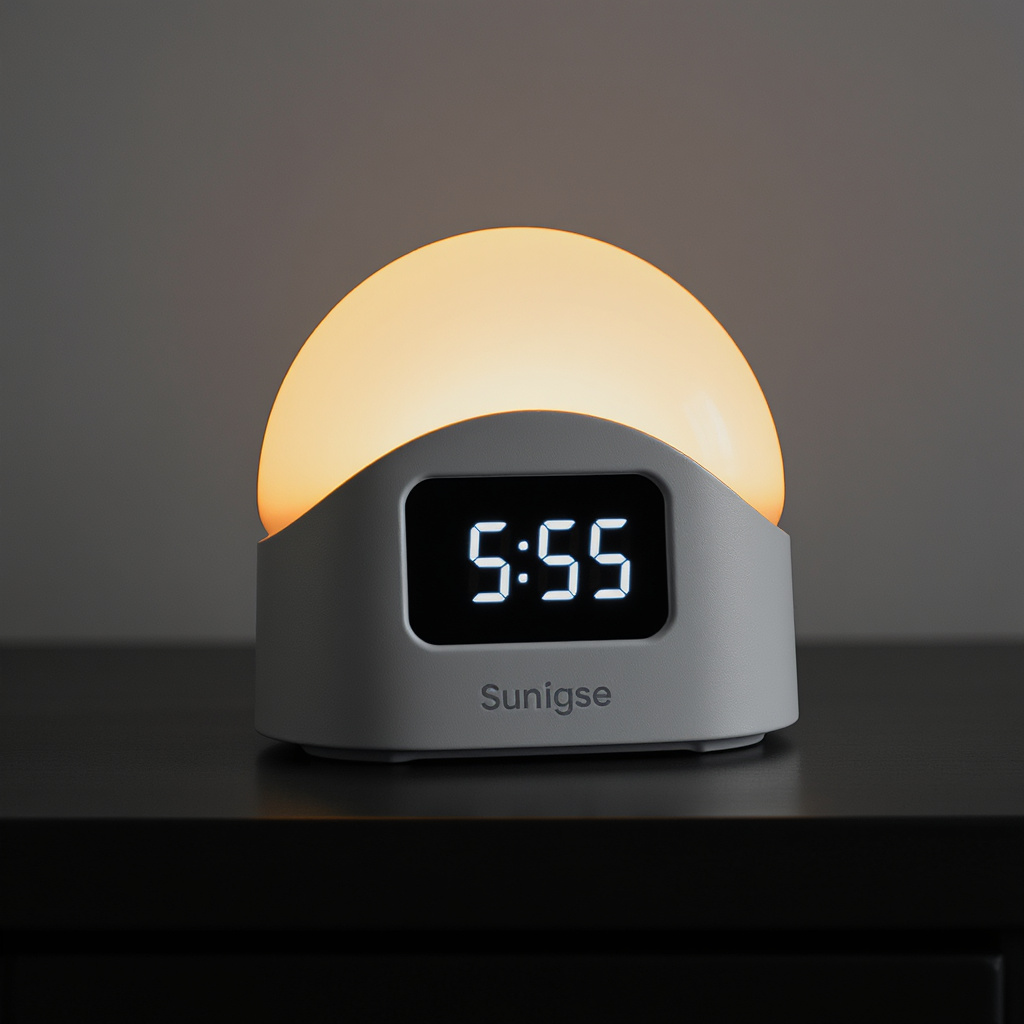
Conair
Conair True Glow Sunrise Alarm Clock
$44.99
Pros
- 30-minute gradual sunrise simulation at a budget price
- Five wake-up sounds plus FM radio
- Doubles as a bedside lamp with 20 brightness levels
Cons
- Less polished build than the Philips SmartSleep
- Display can be slightly bright at lowest setting
What it is
The Conair True Glow is a bedside alarm clock with a built-in sunrise simulation light. Key specs:
- Sunrise simulation: Light gradually increases over 30 minutes before your alarm time
- Brightness levels: 20 settings, from dim nightlight to full brightness
- Alarm sounds: 5 nature sounds (birds, ocean, rain, brook, forest) plus FM radio
- Sunset simulation: Gradual dimming over 30 minutes for falling asleep
- Display: LCD clock face with adjustable brightness
- Power: AC powered (wall outlet)
- Dual alarms: Two separate alarm time settings
- Price: $44.99
- Brand: Conair, primarily known for personal care products but with an expanding wellness line
The value proposition is straightforward: core sunrise alarm functionality at roughly one-quarter the price of the Philips SmartSleep HF3520. The 30-minute ramp time, 20 brightness levels, nature sounds, and sunset mode are all present. What differs is the execution quality — the light spectrum, the build materials, and the polish of the overall experience.
What buyers consistently like
The price-to-function ratio
This is the dominant theme in positive reviews. Verified buyers consistently describe the Conair True Glow as "shockingly good for the price" and "90% of the Philips experience for a quarter of the cost." For first-time sunrise alarm buyers who aren't sure the concept will work for them, the low price removes the risk of a $170 experiment.
Many 5-star reviews specifically mention that the buyer was considering the Philips HF3520, researched the Conair as a budget alternative, and found it sufficient. This "good enough" positioning is the product's strongest selling point.
The 30-minute sunrise ramp
The core function works. Verified buyers report that the gradual light increase over 30 minutes successfully creates a gentler wake-up experience compared to a sudden alarm. The light starts dim and warm and progresses to a brighter white. Multiple reviewers describe the same outcome that premium sunrise alarm users report: waking before the alarm sound fires, feeling less groggy, and starting the morning in a calmer state.
The 30-minute window matches what sleep researchers generally recommend for sunrise simulation effectiveness. Shorter ramps (10–15 minutes) are less likely to progressively shift sleep stages, while 30 minutes gives the circadian system enough time to respond.
Dual alarm settings
Unlike the Philips HF3520, which requires manual alarm changes for different wake times, the Conair offers two independent alarm presets. This is highlighted in reviews from buyers with different weekday and weekend schedules. It's a simple feature, but one that eliminates a genuine daily annoyance. Couples who wake at different times can use both alarms on the same device.
Nature sounds are decent
The five included sounds are described by most reviewers as "pleasant" and "adequate." The bird sounds and rain are the most popular based on review mentions. They loop smoothly enough that buyers generally don't notice a jarring restart point. The sound quality isn't audiophile-grade — these are alarm sounds, not a sound machine — but they serve the purpose of providing a gentle audio wake-up after the light ramp.
The FM radio option adds flexibility for buyers who prefer waking to music or talk radio. Signal quality depends on local reception, but several reviewers describe it as a valued bonus feature.
Sunset simulation for falling asleep
Like the Philips, the Conair includes a reverse sunset mode that dims the light over 30 minutes. Buyers who use this feature report similar benefits: it creates a natural "lights out" cue that removes the need to actively decide when to turn off the light. Reading in bed while the light gradually fades is described as a surprisingly effective sleep-onset routine.
What buyers consistently complain about
Display brightness at night
The most common complaint in negative reviews is the LCD clock display. Even at its lowest brightness setting, verified buyers describe it as too bright in a dark bedroom. The display does not fully turn off — it merely dims. For light-sensitive sleepers, this is a meaningful issue. The most common workaround mentioned in reviews is covering the display with tape or a cloth, which works but shouldn't be necessary.
The Philips HF3520 handles this better with a display that dims to near-invisible levels. This is one of the tangible quality differences between the budget and premium options.
Light quality and color progression
The Conair's sunrise light is functional but less refined than the Philips. Verified buyers who have used both devices note that the Conair's color progression feels less natural — the transition from warm to cool is more abrupt, and the final brightness is lower. The light is described as "more LED-ish" and "less sun-like" compared to the Philips.
For first-time sunrise alarm users who have no reference point, this rarely matters — the light ramp still works as intended. For buyers upgrading from a Philips or Hatch, the quality difference is noticeable.
Plastic build quality
The Conair feels like a $45 product. The plastic housing is lightweight, the buttons feel less precise than premium alternatives, and several reviewers mention a "cheap" aesthetic. The dome shape is functional but not particularly elegant on a nightstand. Long-term reviews (1+ years) generally report that the device holds up physically despite the budget materials, but it won't win any design awards.
Button interface learning curve
The alarm-setting process uses physical buttons and requires navigating an interface that several reviewers describe as "unintuitive." Setting the dual alarms, choosing sounds, and configuring sunrise duration involves a sequence of button presses that takes a few tries to learn. The instruction manual is reportedly helpful but necessary — this isn't a device you can set up without reading it.
Who should buy the Conair True Glow
Best for:
- First-time sunrise alarm buyers who want to try the concept without a big investment
- Budget-conscious shoppers who want core sunrise functionality under $50
- People with different weekday/weekend wake times who need dual alarms
- Students and renters who want a sunrise alarm but can't justify $170+
- Anyone buying a gift for someone curious about sunrise waking
Not great for:
- Light-sensitive sleepers who need a display that fully turns off at night
- Buyers who prioritize premium build quality and refined light progression
- Smart-home users who want app control or device integration
- People upgrading from a Philips or Hatch who will notice the quality gap
How it compares to alternatives
vs. Philips SmartSleep HF3520
The Philips has a better light (more natural color progression, higher peak brightness), a display that dims lower, and better build quality. The Conair has dual alarms, costs $125 less, and delivers the fundamental sunrise experience at a fraction of the price. If the sunrise concept is new to you, start with the Conair. If you know you love sunrise waking and want the best light quality available, the Philips is the upgrade.
vs. Hatch Restore 2
The Hatch is a connected smart device with app control, routines, sound machine libraries, and guided content. It's in a different category than the Conair — more versatile but also more complex and more expensive ($200+). The Conair is a simpler, cheaper device for people who just want a sunrise alarm without the smart-home layer.
vs. phone-based sunrise apps
Apps like Sleep Cycle can increase screen brightness gradually to simulate a sunrise. The effectiveness is limited by phone screen brightness (much dimmer than a dedicated lamp) and by the fact that your phone is now in bed with you — which contradicts sleep-hygiene recommendations. The Conair's dedicated light is meaningfully brighter and keeps your phone out of the equation.
vs. smart plug + regular lamp on a timer
A smart plug ($10–15) with a regular lamp can turn on at a set time, simulating a crude sunrise. The difference: no gradual ramp (it's off-or-on), no warm-to-cool color shift, and no alarm sounds. The Conair's 30-minute gradual ramp is the entire point — a sudden light-on is much less effective for natural wake-up than a progressive brightening.
Where to buy
Frequently asked
Where to go next
- Best sunrise alarm clocks compared
- Best alarm clocks for heavy sleepers
- Philips SmartSleep HF3520 review (the premium alternative)
Related findings.
Mellanni Iconic Collection Microfiber Sheet Set Review: 400,000+ Reviews Can't Be Wrong (Or Can They?)
An aggregated review of the Mellanni Iconic Collection Microfiber Sheet Set — the #1 best-selling sheets on Amazon, with 400K+ ratings and a price under $30.
 Lab Report
Coop Home Goods Eden Pillow Review: The Only Pillow With a Refund Window You'll Actually Use
An aggregated review of the Coop Home Goods Eden Pillow — why adjustability matters, how it compares to fixed-loft alternatives, and who it's genuinely worth it for.
 Lab Report
Loftie Clock Review: A Phone-Free Bedside Companion
An aggregated review of the Loftie Clock — the two-phase alarm, the content library, and whether it actually keeps your phone out of the bedroom.