The Best Wedge Pillow for Acid Reflux in 2026
Acid reflux at night is usually a gravity problem — and a wedge pillow is the simplest, cheapest fix. Here's the wedge pillow customers consistently rate highest for GERD, reflux, and heartburn.
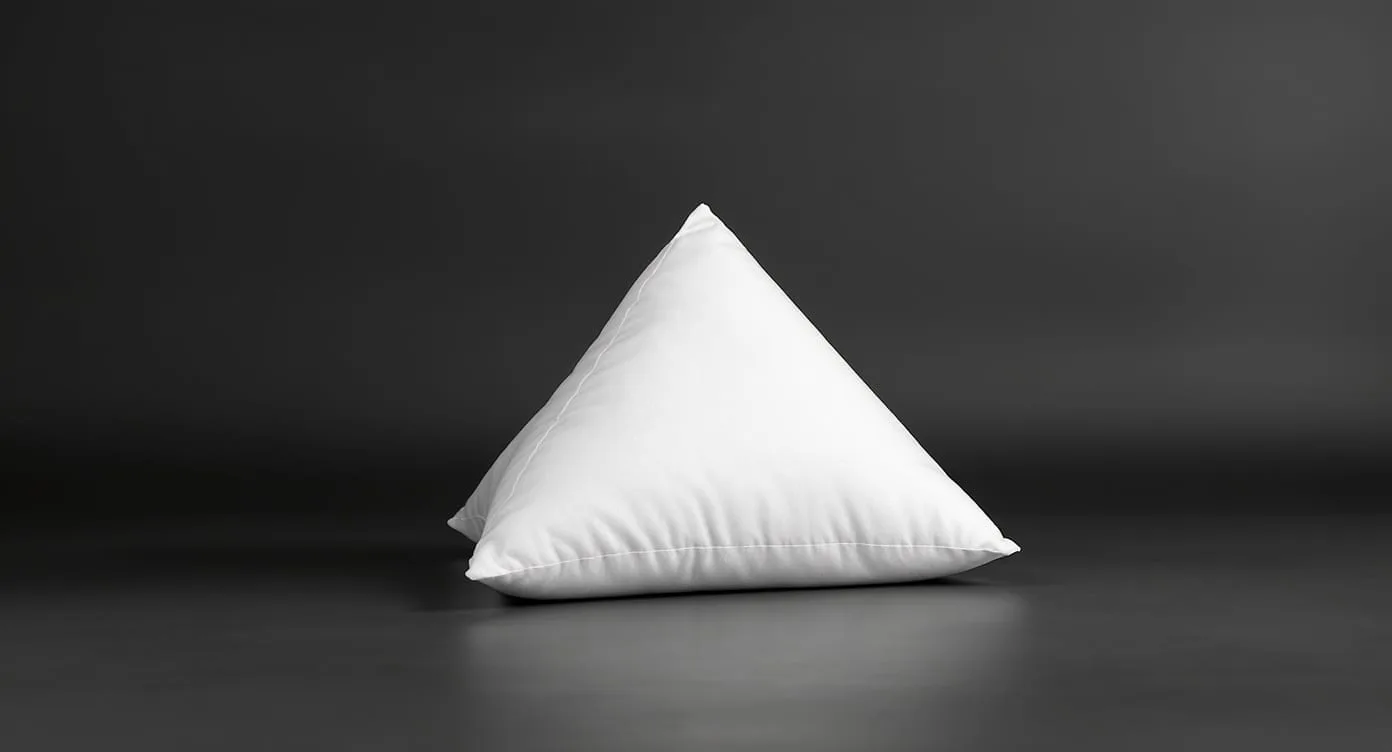
If you've ever tried to solve nighttime acid reflux by stacking two pillows under your head, you've probably discovered why it doesn't work: stacking pillows bends your neck forward without actually elevating your torso, which creates neck pain without solving the reflux. Real reflux relief requires elevating the entire upper body — not just the head — so gravity keeps stomach acid where it belongs. That's what a wedge pillow does, and it's the single most cost-effective non-medication intervention for GERD in detailed reviews.
This guide covers the wedge pillow that consistently leads detailed reviews for acid reflux use — with attention to the incline angle, foam density, and sizing details that actually matter.
Why a wedge pillow works for acid reflux
The physiology is simple: when you lie flat, the junction between your esophagus and stomach is horizontal, which lets stomach acid easily flow backward into the esophagus. When you elevate your upper body by 6–8 inches, gravity keeps that junction angled downward — acid physically cannot flow uphill.
Published clinical guidelines from gastroenterology organizations routinely recommend elevating the head of the bed as a first-line non-medication intervention for GERD. A wedge pillow is the simplest way to do that — no construction, no bed modifications, no permanent changes.
What to look for in a reflux wedge pillow
1. Height/angle. The target is 6–8 inches of elevation at your upper back, which produces roughly a 30–45 degree incline. Lower wedges (4 inches) are less effective; higher wedges (12+ inches) can feel uncomfortable and may cause you to slide down.
2. Length. A wedge that's too short ends at your shoulders and leaves your head dangling off the edge — which creates neck pain. Look for a wedge at least 24 inches long so your entire torso and head are supported.
3. Firmness. Too soft and the wedge compresses under your weight, defeating the elevation. Too firm and it feels like lying on plywood. Medium-firm foam is the sweet spot — supportive but not harsh.
4. Cover. Removable, machine-washable cover is essential. Reflux can mean occasional stomach-acid exposure; you want to be able to wash it.
5. Dual-purpose value. A wedge that only works for reflux is less valuable than one that also works for back support, leg elevation, and pregnancy — all of which use the same basic geometry.
1. InteVision Foam Bed Wedge Pillow — Best Overall
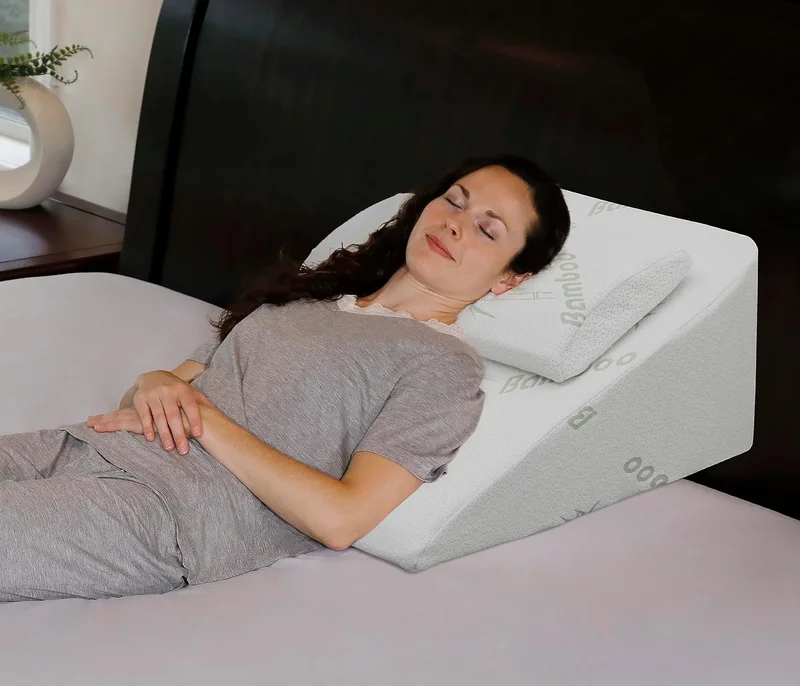
InteVision
InteVision Foam Bed Wedge Pillow
$45.99
Pros
- Helps with acid reflux, snoring, and post-surgery recovery
- Memory foam top layer for comfort
- Removable, washable bamboo cover
Cons
- Off-gassing smell on first unboxing
- Fixed height may not suit all body sizes
The InteVision Foam Bed Wedge is the most-reviewed wedge pillow on Amazon and consistently leads detailed reviews for acid reflux use. It's a two-layer foam wedge — a firmer base for support plus a 2-inch memory foam top for comfort — with a 24-inch length, 12-inch height, and a removable cover. For roughly $50, it's the clear entry point for reflux sufferers who want to avoid or reduce their reliance on medication.
What buyers consistently like
- Actually works for reflux. The #1 cited benefit in detailed reviews from GERD sufferers. Owners who were taking daily acid-reflux medications frequently report being able to reduce or eliminate them after adding the wedge. (Note: always consult your doctor before changing medication.)
- Firm foam that doesn't compress. Unlike soft pillows that collapse under body weight, the InteVision uses a firm base layer that maintains the full elevation angle all night.
- Memory foam top for comfort. The 2-inch soft top layer makes the wedge comfortable to sleep on — without it, firm foam alone would be too harsh.
- 24-inch length. Long enough to support the full torso and head without leaving the head dangling.
- Removable washable cover. Essential for hygiene in a reflux-prone sleeper.
- Multi-purpose use. Also works for back elevation, leg elevation (for circulation), pregnancy belly support, and post-surgery recovery.
Trade-offs
- Takes adjustment. Most reflux sufferers take 1–2 weeks to get used to sleeping on an inclined surface. The first few nights often feel awkward; by night 5–7 it becomes normal.
- Bed partner considerations. The wedge only covers one side of the bed. Your partner sleeps flat while you sleep inclined. For couples this is fine; for shared sleeping positions, it's a compromise.
- Foam off-gassing. Mild chemical smell for the first 24–48 hours. Air it out before use.
- Not ideal for side sleepers. A wedge assumes you sleep on your back. Side sleepers can still use it, but the angle is less effective and can feel awkward.
- Fixed angle. Unlike adjustable bed frames, the wedge has one angle. If you need to customize, look into an adjustable frame — but expect to pay 10–20x the price.
How to actually use a wedge pillow for reflux
1. Position it with the tallest end at the head of the bed. Your shoulders and head rest on the higher end; your hips should be near the shorter end.
2. Sleep on your back initially. The wedge is most effective with back sleeping. Side sleeping on a wedge is possible but reduces effectiveness.
3. Use a regular pillow on top of the wedge for your head. A thin pillow (not another high one) between your head and the wedge provides comfort without bending the neck.
4. Don't combine with head-of-bed raisers. If you're already elevating the whole bed with risers, adding a wedge creates an excessive angle. Pick one approach.
5. Give it 1–2 weeks. Most detailed reviews describe the first few nights as uncomfortable and the adjustment period as real. Don't give up on night two.
6. Combine with other reflux interventions. Elevation works best alongside not eating 3 hours before bed, sleeping on your left side (which positions the stomach below the esophagus), and avoiding common trigger foods. The wedge plus these behavioral changes is often more effective than either alone.
When a wedge pillow isn't enough
For mild-to-moderate GERD, a wedge pillow plus behavioral changes is often sufficient. For severe GERD, it's a useful adjunct to medication, not a replacement.
Other uses for a wedge pillow
- Pregnancy belly support. Elevates the upper body during late-pregnancy sleep and reduces pregnancy-related reflux (which is extremely common in the third trimester).
- Breathing issues / sleep apnea. For mild sleep apnea, elevation can reduce severity. It does not replace CPAP therapy — talk to a doctor — but many mild OSA sufferers find it helpful as a supplement.
- Snoring. Elevation reduces positional snoring by keeping the airway more open.
- Post-surgery recovery. Post-abdominal, post-cardiac, and post-sinus surgery patients are often told to sleep elevated during recovery.
- Leg elevation. Flipping the wedge and placing it under your legs improves circulation and reduces swelling.
Frequently asked
How high should the wedge be for acid reflux?+
Will I slide off the wedge during the night?+
Can I side-sleep on a wedge pillow?+
How long until I notice reflux improvement?+
Is sleeping inclined bad for my back?+
Where to go next
Related findings.
 Edge Pick
The Best White Noise Machines for Tinnitus in 2026
Tinnitus at night is relentless. The right masking sound can make sleep possible again. Here's what customers with tinnitus consistently rate highest for nighttime use.
 Edge Pick
The Best Weighted Blankets for Deep Sleep (2026)
What the research says about weighted blankets for sleep and anxiety — plus the two products verified buyers consistently rate highest.
 Edge Pick
The Best Weighted Blankets for Anxiety in 2026
Weighted blankets use deep pressure stimulation to calm the nervous system — a technique originally developed for anxiety and sensory disorders. Here's what customers rate highest.