The Best Pillows for Neck Pain in 2026
Waking up with neck pain is usually a pillow problem, not a mattress problem. Here are the pillows customers consistently rate highest for cervical support and chronic neck pain.
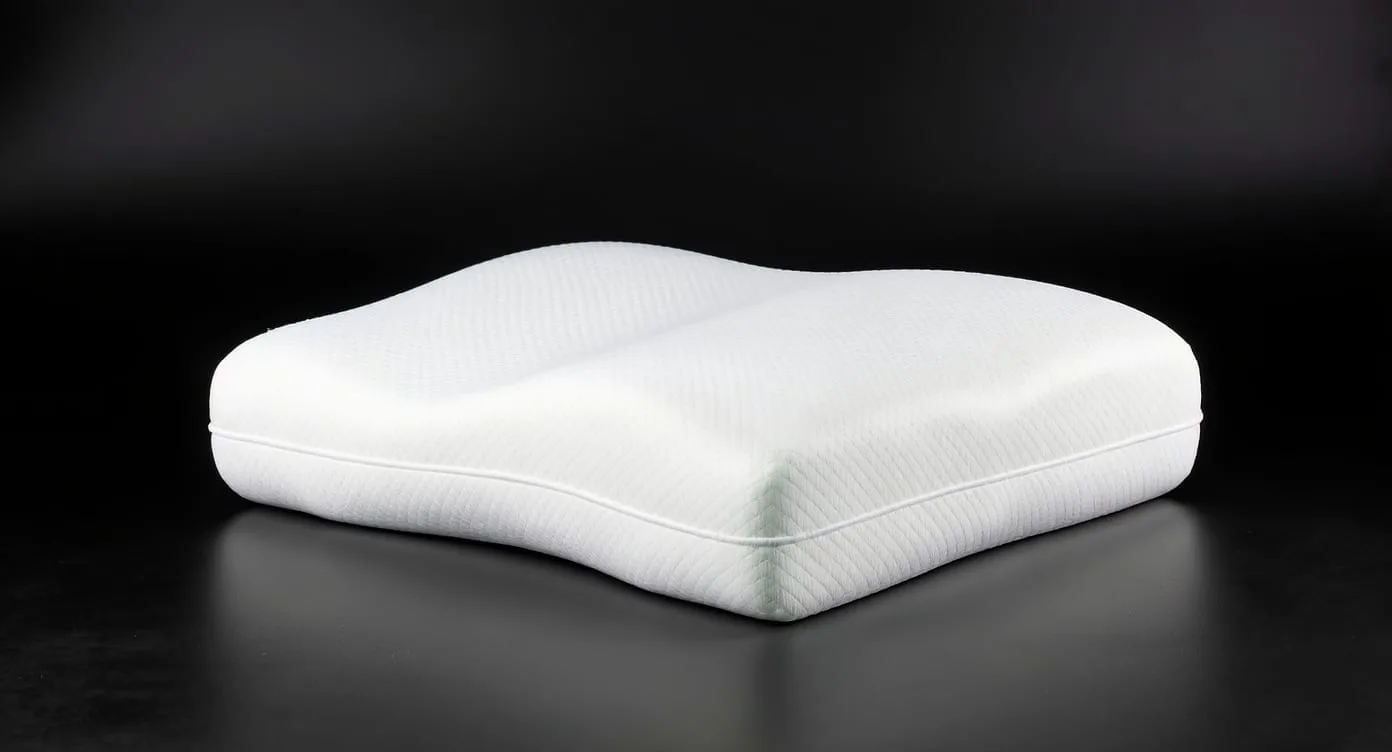
If you wake up every morning with a stiff neck that loosens up after an hour, there's a 90% chance the problem is your pillow — not your posture, not your mattress, not tension. The cervical spine is most vulnerable to misalignment during sleep because you're in one position for hours. A pillow that's too low lets your head droop; one that's too high pushes it up; one that's too soft collapses under weight. Any of those three, repeated nightly, will reliably produce morning neck pain.
This guide covers the three pillows that consistently lead detailed reviews for neck pain specifically — with attention to the loft, firmness, and construction details that actually matter.
What matters for neck pain
1. Correct loft (pillow height). The single biggest variable. Your head needs to stay roughly parallel to the mattress — no tilt up or down. Side sleepers need more loft (4–6 inches) than back sleepers (3–4 inches) because the shoulder-to-ear gap is bigger on your side.
2. Firmness. A pillow for neck pain needs to hold its shape under the weight of your head. Too soft = collapses flat, head drops, neck bends. Medium-firm to firm is the right zone for chronic neck pain.
3. Adjustability. Because the "right" loft depends on your shoulder width and sleeping position, an adjustable pillow (where you can add or remove fill) is the safest purchase. It lets you find your exact loft without guessing.
4. Cervical contour. Some pillows have a dedicated neck ridge — a raised edge that fills the gap between shoulder and head. Not required, but consistently praised by people with chronic cervical pain.
5. Heat management. Chronic pain sufferers are often already restless sleepers. Adding an overheating pillow to the equation makes things worse. Breathable fills — shredded foam, latex, down alternative — beat solid foam for heat.
1. TEMPUR-Neck Pillow — Best for Chronic Cervical Pain
Tempur-Pedic
TEMPUR-Neck Pillow (Medium)
$99.00
Pros
- Contoured cervical support for back and side sleepers
- Original TEMPUR memory foam — durable and supportive
- Three sizes for different shoulder widths
Cons
- Firmer feel takes adjustment for soft-pillow lovers
- Not machine washable — spot clean only
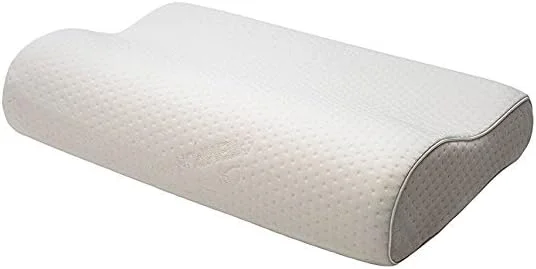
The TEMPUR-Neck Pillow is the most-recommended pillow in detailed reviews for people with chronic neck pain, cervical strain, or post-injury recovery. The contoured design has a raised neck ridge that fills the shoulder-to-head gap, a slightly lower central zone for the head, and medium-firm memory foam that holds shape under pressure instead of compressing flat.
What buyers consistently like
- Structured support that holds. The #1 cited benefit by chronic pain sufferers. Unlike soft pillows that collapse, the Tempur foam maintains its shape all night, which is what actually keeps the spine aligned.
- Dedicated neck ridge. The raised contour fills the gap between shoulder and head when you're on your side — which is exactly where most cervical pain originates.
- Long lifespan. Tempur foam is famously durable. 5+ year reviews routinely report no change in shape or support, which means the pain relief stays consistent.
- Firmness that's right for pain. Medium-firm is the zone most recommended for cervical pain. This pillow lands there.
- Proven track record. Tempur has sold variants of this pillow for decades. If it didn't work, the pain community would have moved on.
Trade-offs
- Heat. Solid memory foam retains heat more than shredded-fill or latex alternatives. Hot sleepers consistently flag this.
- Fixed geometry. Unlike adjustable pillows, you can't modify the loft. If the size isn't right for your body, returning it is your only option.
- Break-in period. The foam is stiff out of the box. Most reviews suggest 1–2 weeks of use before it softens to your body.
- Price. Roughly 2–3x the cost of basic pillows.
2. Coop Home Goods Eden Pillow — Best Adjustable
Coop Home Goods
Coop Home Goods Eden Pillow (Queen)
$96.00
Pros
- Adjustable fill — add or remove to match your loft preference
- Gel-infused memory foam for cooling
- CertiPUR-US certified foam, OEKO-TEX shell
Cons
- Off-gassing smell for first 24–48 hours
- Adjustable design requires trial and error
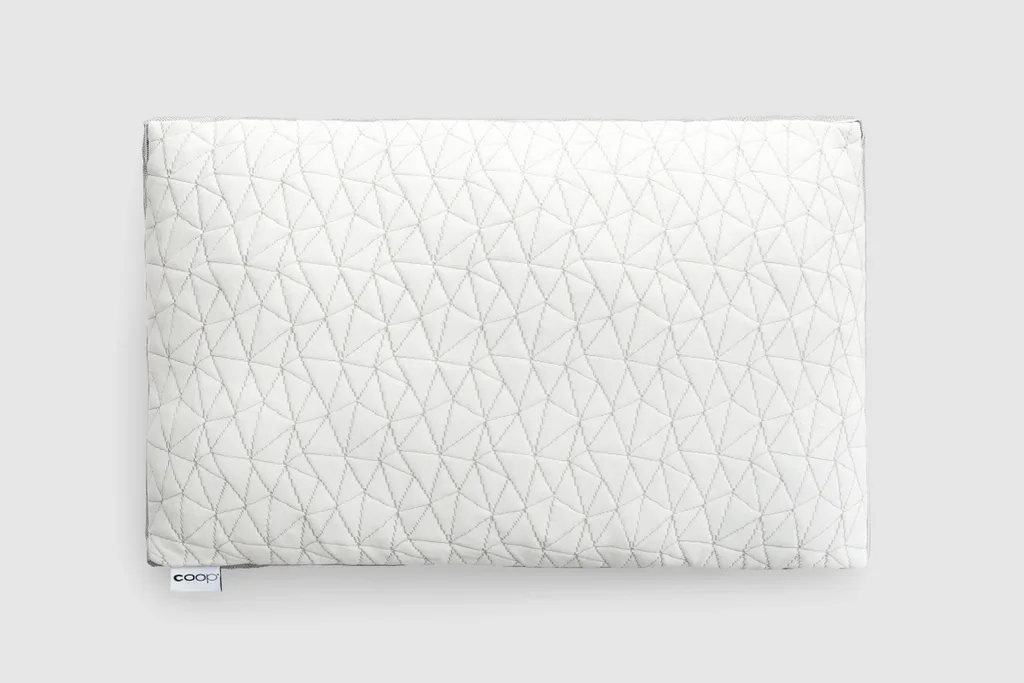
If you're not sure what loft you need or your sleeping position varies, the Coop Eden is the safest purchase in the category. It ships stuffed with shredded memory foam + microfiber, and Coop includes an extra half-pound of fill in the box. You add or remove fill until the pillow matches your shoulder width exactly — which means you're not guessing at the right loft.
What buyers consistently like
- Dialing in exact loft. The #1 reason this pillow works for neck pain. You can iterate — try it, adjust, sleep a few nights, adjust again — until the loft is right. Fixed pillows give you one shot.
- Shredded fill breathes. Unlike solid foam, shredded fill moves air and doesn't trap heat.
- Gel-infused cover. Machine-washable, mildly cooling.
- Medium-firm when filled properly. Firm enough to hold shape, soft enough to conform around the head and neck.
- Long lifespan with adjustability. 3–5 year owners report still being able to fluff and re-fill to maintain original feel.
Trade-offs
- Initial off-gassing. Mild chemical smell for the first 24–48 hours. Air it out before the first night.
- Looser feel. Some pain sufferers who need highly structured support prefer solid foam's stability. The Coop is conforming, not rigid.
- Adjustment takes effort. You'll spend 1–2 nights learning what loft feels right. Worth the effort, but not instant.
3. Casper Original Pillow — Best for Mild Neck Pain + Position Shifting
Casper
Casper Original Pillow (Standard)
$65.00
Pros
- Pillow-in-pillow design with breathable polyester microfiber
- Machine-washable cover
- Mid-range price for premium feel
Cons
- Loft may be too low for tall side sleepers
- Less customization than fully adjustable pillows
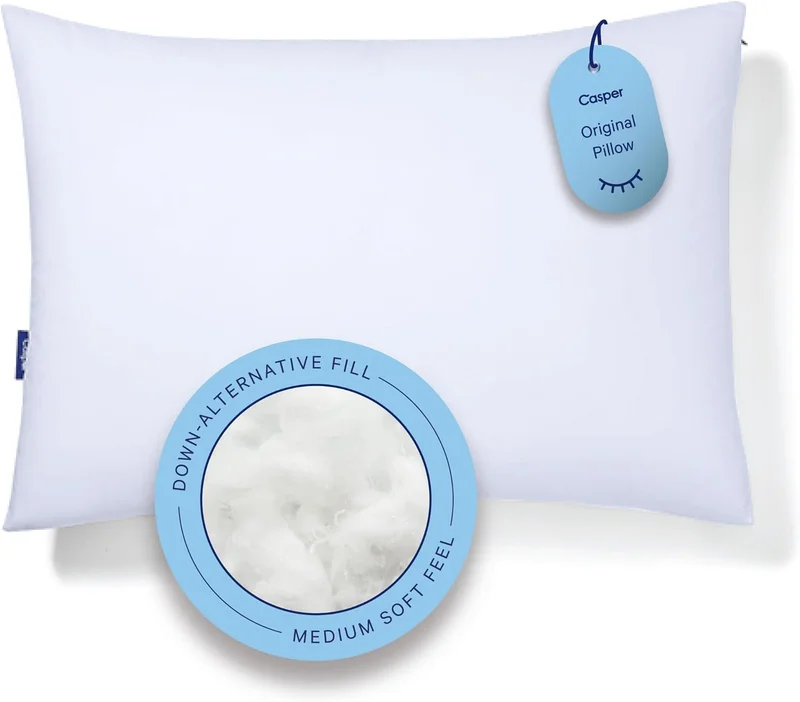
If your neck pain is mild and you shift positions during the night (primarily side but occasionally back or stomach), a fully structured cervical pillow can be too restrictive. The Casper Original is a two-layer pillow — a microfiber outer for softness, a denser polyester inner for support — that handles multi-position sleep without compromising on support.
What buyers consistently like
- Position versatility. Supports side sleeping without being too firm for back or stomach moments.
- Cool-to-the-touch cover. Breathable, noticeably cooler than memory foam pillows.
- Consistent shape. Bounces back to its neutral shape instantly. Doesn't flatten, doesn't clump.
- Appropriate for mild-to-moderate pain. For people whose pain is intermittent rather than chronic, this is a gentler intervention than a structured cervical pillow.
Trade-offs
- Not ideal for severe chronic pain. If your pain is daily and severe, the TEMPUR-Neck or a firmer adjustable pillow is a better fit.
- Fixed loft. Medium — which is right for most average-build adults but may be too low for broad-shouldered sleepers or too high for petite ones.
- Price. More expensive than basic pillows; cheaper than Tempur.
How to troubleshoot pillow-related neck pain
1. Identify your primary sleep position. If you wake up consistently on your side, you need side-sleeper loft (4–6 inches). If you wake up on your back, you need back-sleeper loft (3–4 inches). Most people sleep on their side.
2. Measure your shoulder width. Broader shoulders = more loft needed. Narrower shoulders = less loft.
3. Check the firmness. Press your head into the pillow. If it bottoms out and your head touches the mattress, it's too soft. If your head feels propped up, it's too firm.
4. Sleep on a new pillow for at least 1 week. Your body adapts over several nights. A pillow that feels wrong on night one may feel right by night five.
5. If the pain persists after pillow changes, see a doctor. Chronic neck pain can also indicate a mattress problem, an underlying cervical issue, or referred pain from another source. Don't assume it's always the pillow.
Frequently asked
How high should a pillow be for neck pain?+
Is memory foam better than down for neck pain?+
How often should I replace a pillow?+
Can the wrong pillow actually cause neck pain?+
Where to go next
Related findings.
 Edge Pick
The Best White Noise Machines for Tinnitus in 2026
Tinnitus at night is relentless. The right masking sound can make sleep possible again. Here's what customers with tinnitus consistently rate highest for nighttime use.
 Edge Pick
The Best Weighted Blankets for Deep Sleep (2026)
What the research says about weighted blankets for sleep and anxiety — plus the two products verified buyers consistently rate highest.
 Edge Pick
The Best Weighted Blankets for Anxiety in 2026
Weighted blankets use deep pressure stimulation to calm the nervous system — a technique originally developed for anxiety and sensory disorders. Here's what customers rate highest.