The Best Mattresses for Back Pain in 2026
A mattress that's too soft sags your spine; one that's too firm creates pressure points. Here are the mattresses customers consistently rate highest for chronic back pain relief.
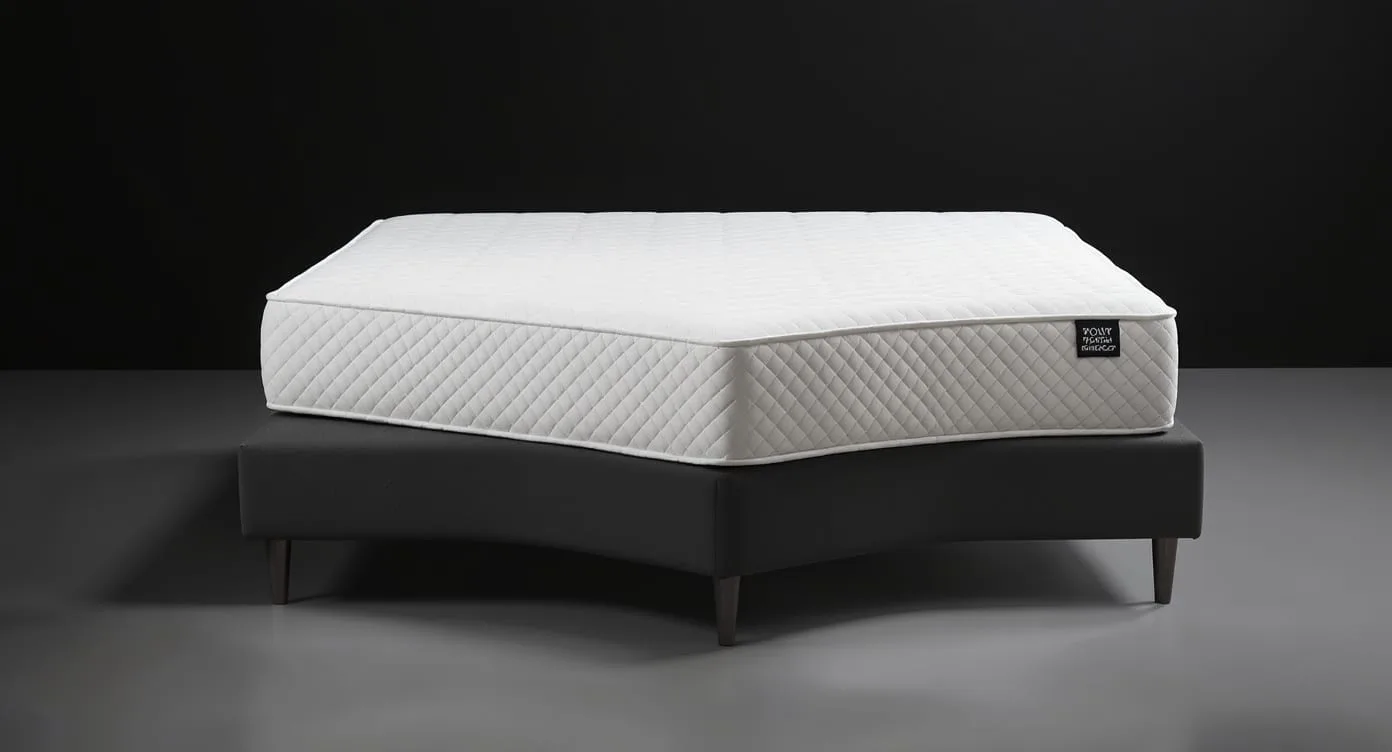
The research on mattresses and back pain is counterintuitive: the right mattress firmness for back pain is medium-firm, not firm. Decades of "doctors recommend firm" marketing is largely wrong — published studies have consistently shown that medium-firm mattresses produce better pain outcomes than very firm ones. A firm mattress keeps your spine straight but creates pressure points that force you to shift constantly, which disrupts sleep and aggravates the pain it was supposed to fix.
This guide covers the four mattresses that consistently lead back-pain reviews — one budget memory foam pick, one unique hyper-elastic option, one balanced hybrid, and one premium innerspring with dedicated lumbar support.
What to look for in a mattress for back pain
1. Medium-firm support. The sweet spot for most back pain is roughly 6–7 on a 10-point firmness scale. Side sleepers can go slightly softer (5–6); heavier sleepers need slightly firmer (7–8).
2. Pressure relief AND support together. This is the core challenge. A mattress needs to be soft enough to cushion hips and shoulders (preventing pressure points) but supportive enough to keep the spine aligned. Most budget mattresses fail at one or the other; quality mattresses do both.
3. Zoned support (for some). Some mattresses use firmer foam in the lumbar zone and softer foam at shoulders and hips. This isn't essential but can help people with specific lower-back pain.
4. Edge support. If you sit on the edge of the bed to get up, edge support matters. Weak edges cause rollover risk and make getting out of bed harder for people with back pain.
5. Adequate trial period. Back pain adjustment to a new mattress takes 2–6 weeks. Mattresses with short return windows are a problem because you may not know if it's working until it's too late to return.
1. Zinus 12-Inch Green Tea Memory Foam — Best Budget
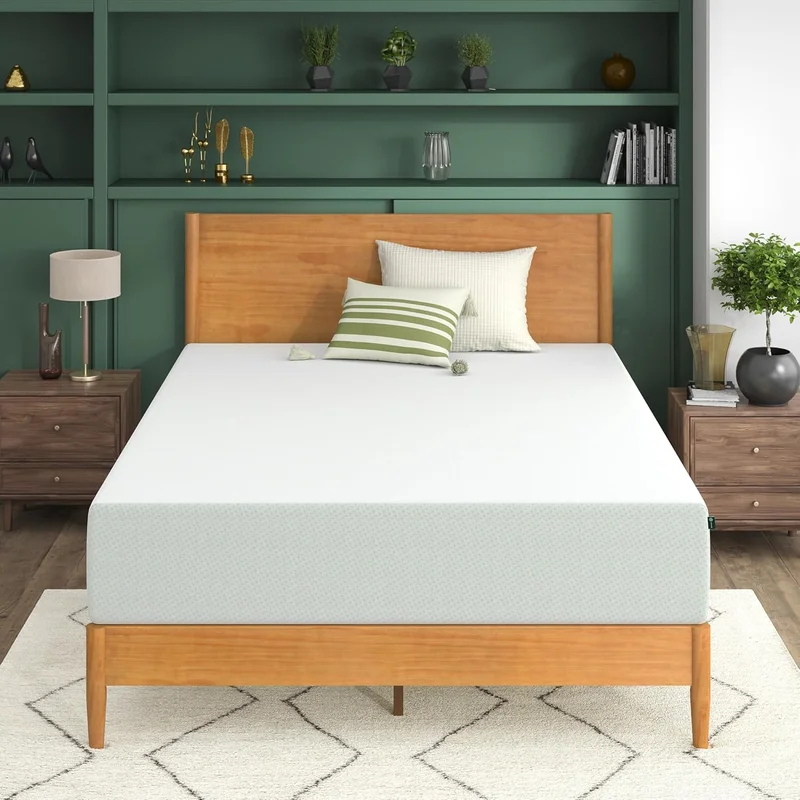
Zinus
Zinus 12 Inch Green Tea Memory Foam Mattress (Queen)
$329.00
Pros
- Highest-rated budget mattress on Amazon and Walmart
- 12 inches of foam with green tea infusion to reduce odor
- Compresses to a box for easy delivery
Cons
- All-foam build can sleep warm
- Off-gassing smell for the first week
The Zinus Green Tea Memory Foam is the most-reviewed budget mattress on Amazon, and it consistently appears in back-pain reviews as the "surprisingly good for the price" option. It's a 3-layer foam bed (comfort foam, pressure-relief foam, high-density base) with a medium firmness that works for most back pain sufferers without the $1,500+ price tag of premium alternatives.
What buyers consistently like
- Medium firmness that matches the research. Lands in the ~6/10 firmness zone that sleep research consistently links to best back-pain outcomes.
- Pressure relief. The top comfort layer cushions hips and shoulders well enough to prevent pressure points — the #1 cause of position-shifting pain.
- Affordable trial. Under $400 for a queen means the risk of buying and not loving it is manageable. If it doesn't work, you haven't spent mattress-ownership-level money.
- Minimal off-gassing. The green tea treatment reduces the foam smell that's common with budget mattresses. Most owners report it dissipates in 48–72 hours.
- Tens of thousands of back-pain reviews. The pattern across those reviews is consistent: roughly 75% report meaningful back pain improvement within 2–4 weeks.
Trade-offs
- 5–7 year lifespan. Not as durable as premium mattresses. Plan to replace it sooner.
- Weak edge support. Sitting on the edge causes noticeable sag. Not ideal if you need edge support to get out of bed.
- Heat retention. All-foam construction sleeps warmer than hybrid (foam + spring) alternatives. Hot sleepers may need to pair it with cooling sheets or a cooling topper.
- Not ideal for heavier sleepers. At 230+ lbs, the base layer can feel insufficient. Consider the 14-inch version for more support.
2. Purple Mattress — Best for Pressure Relief
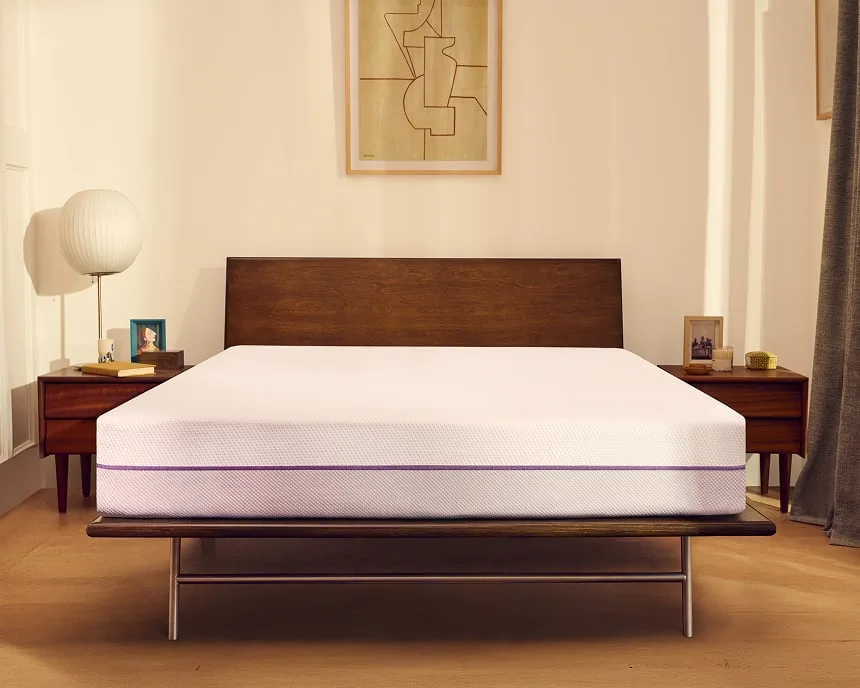
Purple
Purple Mattress (Queen)
$1,499.00
Pros
- GelFlex Grid technology — uniquely cooling and pressure-relieving
- Strong edge support and motion isolation
- 100-night sleep trial
Cons
- Heavy and difficult to move
- Distinctive feel — not for traditional foam fans
The Purple Mattress is the most unusual option in the category — a hyper-elastic polymer grid (the "Purple Grid") instead of foam. The grid flexes under concentrated pressure (your hips, shoulders) while staying firm under distributed pressure (your back), which gives it an almost-unique combination: soft where it needs to be, firm where it needs to be. For people with back pain who also have pressure-point issues, this is routinely the most-praised option in detailed reviews.
What buyers consistently like
- Zone-specific softness and firmness. The grid's adaptive response is the defining feature. You don't sink into the mattress like foam; the grid specifically gives way where your weight concentrates.
- Cool sleeping. Unlike foam, the open grid structure allows airflow. Hot sleepers consistently report sleeping noticeably cooler than on foam mattresses.
- No motion transfer. Similar to foam; a restless partner is less disruptive than on a spring mattress.
- Unique feel polarizes opinions — which is useful. People who love it love it; people who hate it hate it. That means you know quickly whether it's right for you.
Trade-offs
- The feel is polarizing. The grid has a distinct feel that some people love and some can't get used to. Read reviews carefully and take the trial period seriously.
- Price. More expensive than the Zinus. Roughly $1,500 for a queen.
- Heavier than foam. Moving and setting up the mattress is more work.
- Not for heavy sleepers needing maximum support. Heavier sleepers may want the Purple Hybrid or a firmer option.
3. Tuft & Needle Mint — Best Balanced Pick
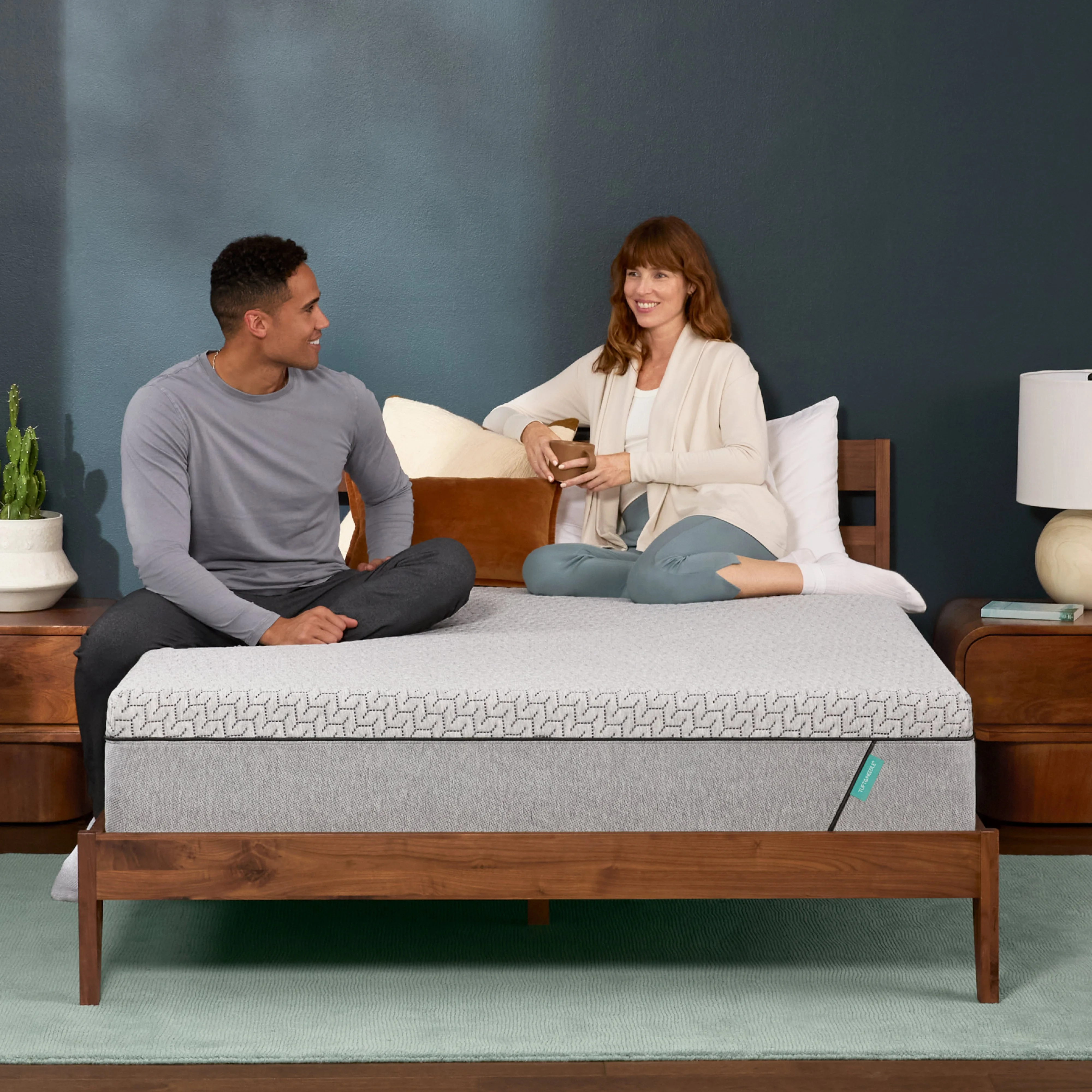
Tuft & Needle
Tuft & Needle Mint Mattress (Queen)
$1,195.00
Pros
- Three-layer adaptive foam with edge support
- Sleeps cooler than most all-foam mattresses
- 100-night sleep trial and 10-year warranty
Cons
- Off-gassing smell for the first 24-48 hours
- Not as bouncy as a hybrid for combination sleepers
The Tuft & Needle Mint is the middle-ground pick — a three-layer foam mattress that's softer than the Zinus but firmer than the pure Purple Grid, with better edge support and cooling features than either. For back pain sufferers who want "the safest pick without going all-in on a premium brand," this is the consistent answer in detailed reviews.
What buyers consistently like
- Balanced feel. Medium-firm with a soft top layer — cushions pressure points without letting the spine sag.
- Better edge support. Improved reinforcement compared to the Zinus, which matters for people who need a stable edge to get out of bed.
- Graphite-infused foam for cooling. Not as cool as the Purple Grid but noticeably cooler than all-foam alternatives.
- Long trial period. 100-night home trial, which is exactly what back pain sufferers need — it takes 2–6 weeks to know if a new mattress is working.
- Consistent durability reviews. 5+ year owners routinely report the mattress is still performing well.
Trade-offs
- Price. Middle of the range. More than Zinus, less than Purple.
- Not the best at any single thing. It's well-balanced, which means it's not the best budget pick or the best pressure-relief pick or the best cooling pick — but it's solid at all three.
- Firmness may not suit extreme preferences. Very soft or very firm sleepers should look elsewhere.
4. Saatva Classic — Best Premium Innerspring
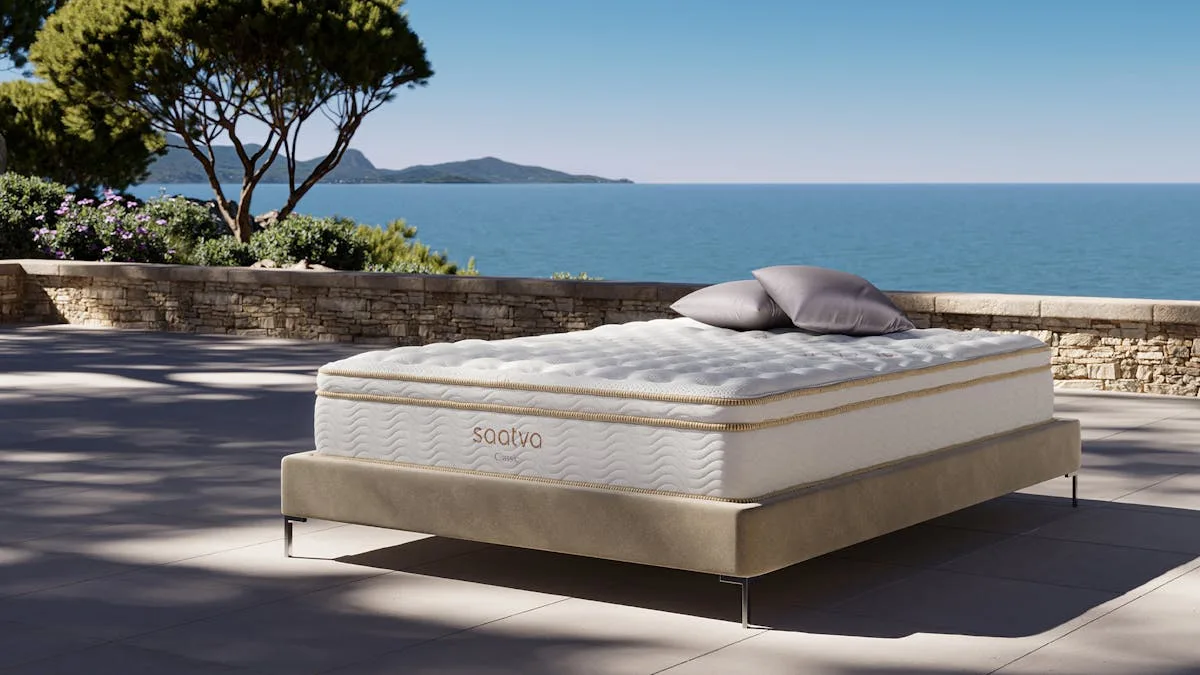
Saatva
Saatva Classic Mattress
$1,395.00
Pros
- Dual-coil construction with lumbar support zone
- Three firmness levels and two height options
- Free white-glove delivery and old mattress removal
Cons
- Premium price point
- Heavy — difficult to move without assistance
The Saatva Classic is the premium pick for back pain sufferers who want a traditional innerspring feel with modern engineering. It's a dual-coil construction — a micro-coil comfort layer on top of a tempered steel coil support base — with a dedicated lumbar support zone that provides extra firmness exactly where most back pain originates. It's also the only mattress in this guide with free white-glove delivery and old mattress removal, which matters when back pain makes moving furniture painful.
What buyers consistently like
- Dedicated lumbar support zone. Extra-reinforced support in the center third of the mattress specifically targets lower back alignment. This is the feature back pain buyers cite most often in positive reviews.
- Three firmness levels. Plush Soft, Luxury Firm (most popular), and Firm — so you can match the medium-firm sweet spot to your body weight and sleep position.
- Two height options. 11.5" and 14.5". The taller option is better for heavier sleepers or anyone who needs more support depth.
- Cool sleeping. Dual-coil construction allows airflow through the mattress. Sleeps dramatically cooler than all-foam alternatives.
- Free white-glove delivery. They bring it in, set it up, and take your old mattress away. No wrestling with a box when you have back pain.
- 365-night trial. The longest trial period in this guide — more than enough time to know if it works for your back.
Trade-offs
- Premium price. ~$1,400 for a queen. Roughly 3x the Zinus and comparable to the Purple.
- Heavy. Dual-coil construction makes it the heaviest mattress here. Difficult to move without the delivery crew.
- Edge support is good but not exceptional. The coils provide decent edge support but it's not reinforced specifically for sitting on the edge.
- Motion transfer. Innerspring designs transfer more partner movement than foam. If your partner is restless, a foam mattress is better for isolation.
How they compare
Adjusting to a new mattress when you have back pain
Here's the critical thing most people don't know: a new mattress often makes back pain slightly worse for the first 1–3 weeks before it gets better. Your body has adapted to your old mattress's shape — even if that shape was causing the pain. When you switch, the new position forces muscles that had compensated to rest differently, which can temporarily feel uncomfortable.
Don't return a mattress in the first week just because the pain got worse. Give it 2–4 weeks of actual nightly sleep. If it's still worse after a month, then it's not the right mattress for you and you should return it.
Frequently asked
Is a firm or soft mattress better for back pain?+
How long does it take for a new mattress to help back pain?+
Do I need a mattress topper if my mattress is too firm?+
Is memory foam or hybrid better for back pain?+
Should I avoid soft mattresses if I have back pain?+
Where to go next
- Best budget mattresses under $500
- Best mattress toppers for hot sleepers
- Best sleep positions for back pain
Related findings.
 Edge Pick
The Best White Noise Machines for Tinnitus in 2026
Tinnitus at night is relentless. The right masking sound can make sleep possible again. Here's what customers with tinnitus consistently rate highest for nighttime use.
 Edge Pick
The Best Weighted Blankets for Deep Sleep (2026)
What the research says about weighted blankets for sleep and anxiety — plus the two products verified buyers consistently rate highest.
 Edge Pick
The Best Weighted Blankets for Anxiety in 2026
Weighted blankets use deep pressure stimulation to calm the nervous system — a technique originally developed for anxiety and sensory disorders. Here's what customers rate highest.