The Best Mattress Toppers for Hot Sleepers (2026)
A guide to mattress toppers that actually cool — natural latex vs. active cooling, what to look for, and the 2 toppers buyers rate highest.
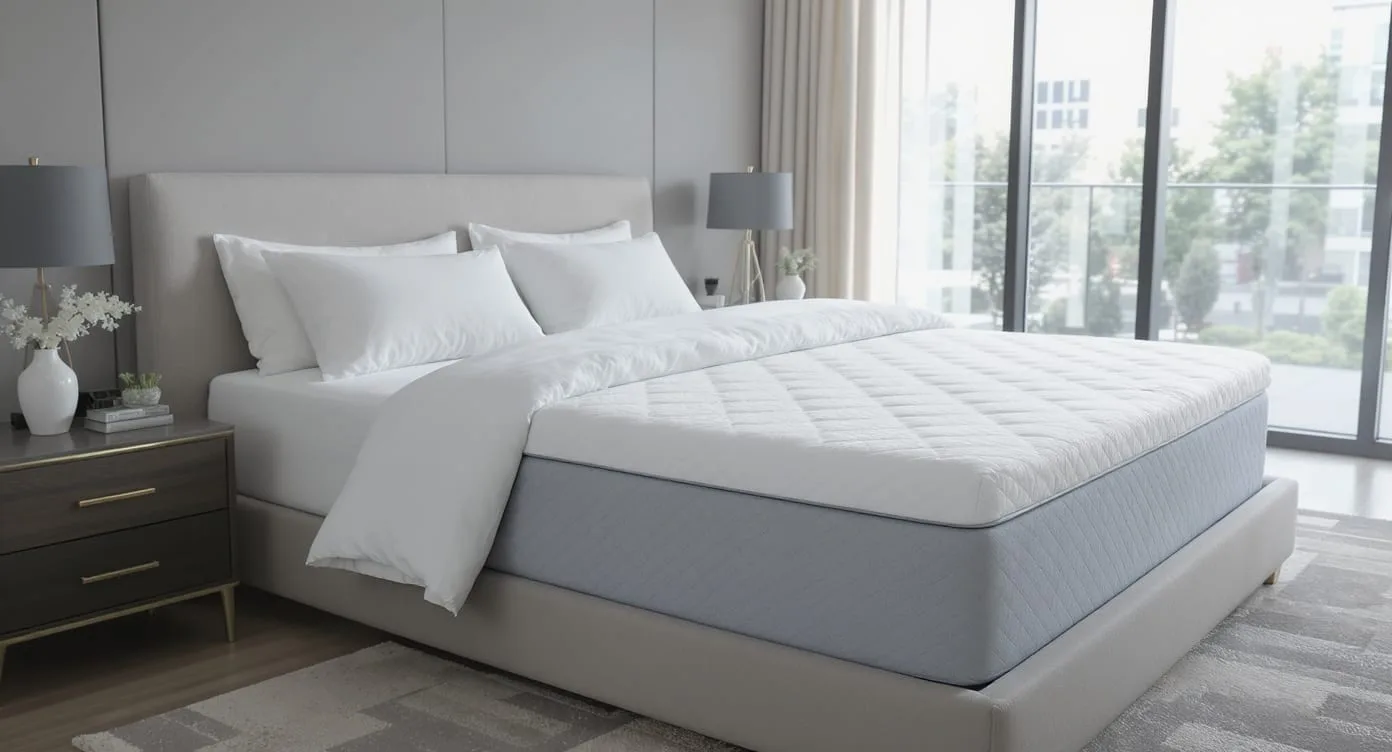
If your mattress sleeps hot but you don't want to replace a $1,000+ mattress, a cooling topper is the most cost-effective intervention. But "cooling" in the mattress industry is one of the most overused and least meaningful marketing terms — most products labeled "cooling" provide a brief sensation of coolness that disappears within 20 minutes as the material equilibrates with your body temperature.
This guide separates the topper categories by how they actually work, explains why some cooling claims are legitimate and others are marketing, and highlights the two products that consistently lead verified buyer reviews for hot sleepers.
Why mattress toppers matter for temperature
Your mattress is the largest surface in contact with your skin during sleep. If it traps heat — and most memory foam mattresses do — no amount of fan, AC, or bedding adjustment will fully compensate. The heat builds between your body and the sleep surface, raising skin temperature and interfering with the core body temperature drop your brain needs for deep sleep onset.
A good cooling topper addresses this at the source: the surface in contact with your skin. The question is how it does that, because the mechanism determines whether the cooling lasts 20 minutes or 8 hours.
The three tiers of cooling
Tier 1: Marketing cooling (phase-change, gel infusion)
Most "cooling" toppers use phase-change materials (PCMs) or gel-infused foam. These absorb heat and feel cool to the touch initially. But they have a finite heat capacity — once the material absorbs its limit, it stops cooling and becomes a normal (or even warm) foam surface.
- Gel-infused memory foam: feels cool for 10–20 minutes, then equilibrates
- Phase-change covers: absorb heat longer than gel (30–60 minutes) but still plateau
- Copper/graphite infused foam: marketing claims around "thermal conductivity" but minimal real-world difference in most tests
These products aren't useless — they can make the initial lying-down experience more pleasant — but they don't solve the core problem for genuine hot sleepers.
Tier 2: Passive cooling (natural latex, breathable materials)
Natural latex (especially Talalay latex) has an open-cell structure with inherent air channels that allow heat and moisture to dissipate continuously. Unlike memory foam, latex doesn't trap body heat because it doesn't conform as tightly and it allows airflow through the material.
This is genuine, sustained cooling — not the same magnitude as active cooling, but it lasts all night. Latex toppers are the most recommended option for hot sleepers who want to improve their mattress without adding electronics.
Tier 3: Active cooling (water-based, electric)
Active systems circulate cooled water or air through tubes in a pad. They maintain a set temperature all night, regardless of body heat. This is the most effective cooling solution but also the most expensive ($300–$1,000+). For most readers, a passive latex topper combined with a fan and lighter bedding is enough — active cooling is the "next step" intervention when the basics aren't enough.
At a glance
1. Pure Green 100% Natural Latex Topper — Best Passive Cooling
The Pure Green is a 100% natural Talalay latex topper that consistently tops detailed reviews for cooling, comfort, and durability. It's the most-recommended passive cooling topper in sleep communities — and one of the few latex toppers that actually states its certification (GOLS organic) on the label.
What buyers like
- Genuinely cooler than foam. Verified buyers who switched from memory foam toppers consistently describe a noticeable temperature difference that lasts all night — not just the first 20 minutes.
- 100% natural Talalay latex. Bouncier and more responsive than memory foam, with an open-cell structure that allows airflow.
- GOLS organic certified. Real third-party certification, not marketing language.
- Durability. Latex toppers last significantly longer than foam alternatives — 5+ years is commonly reported.
What buyers complain about
- Weight. A queen-size 2-inch latex topper is heavy (~30+ lbs). Repositioning it once placed requires effort.
- Cover sold separately. The topper itself is the latex slab — you'll want a cotton or bamboo cover, which adds cost.
- Firmness. Some buyers expecting a "sink in" memory foam feel find latex too responsive/bouncy. This is a material preference, not a defect.
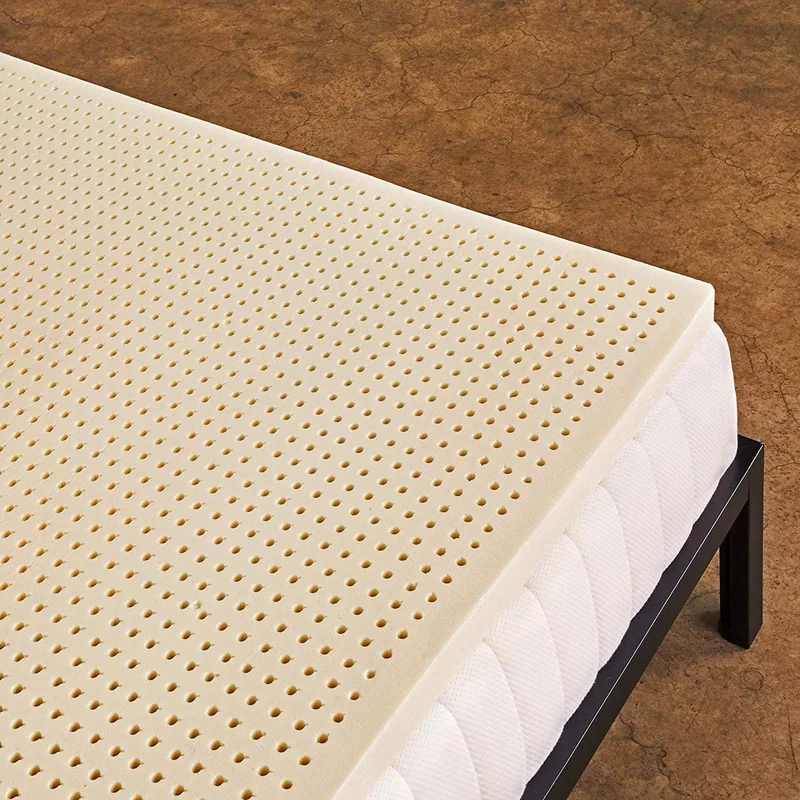
Sleep On Latex
Pure Green 100% Natural Latex Mattress Topper (Queen)
$179.00
Pros
- 100% natural Talalay latex — no synthetic blends
- Open-cell structure for genuine all-night cooling
- GOLS organic certified, no off-gassing
Cons
- Heavy and difficult to reposition
- Cover sold separately
2. Linenspa 3" Gel Memory Foam Topper — Best Budget Pick
If your mattress is too firm rather than too hot, a gel-infused memory foam topper is the cheapest path to a softer, slightly cooler sleep surface. The Linenspa is the best-selling budget topper on both Amazon and Walmart, and detailed reviews consistently rate it as the best value in the category.
What buyers like
- Price. At ~$80 for a queen, it's a fraction of the cost of a premium latex topper.
- Pressure relief. The 3-inch profile meaningfully changes the feel of a firm mattress, particularly for side sleepers with shoulder pain.
- Gel infusion. Provides modest cooling compared to standard memory foam — not as effective as latex, but better than nothing.
What buyers complain about
- Off-gassing. A chemical smell on first unboxing that takes 24–72 hours to dissipate. Standard for memory foam but worth knowing.
- Less responsive than latex. Memory foam holds your body shape; some sleepers feel "stuck."
- Sleeps warmer than latex. Despite the gel infusion, foam still traps more heat than open-cell latex.
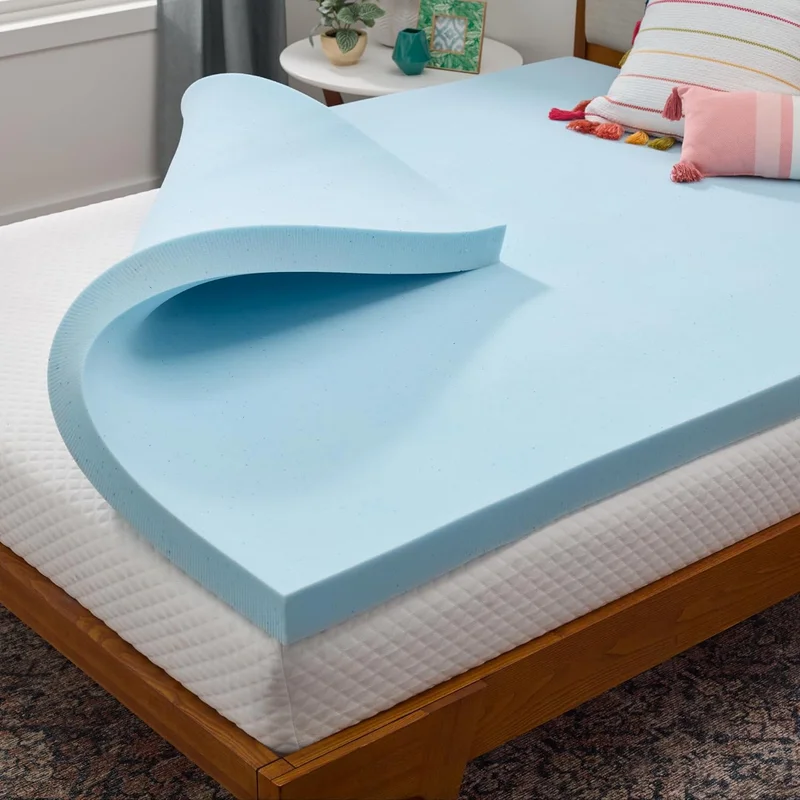
Linenspa
Linenspa 3 Inch Gel Memory Foam Mattress Topper (Queen)
$79.99
Pros
- Gel-infused memory foam for moderate cooling
- 3-inch profile meaningfully softens firm mattresses
- One of the best-selling budget toppers on both retailers
Cons
- Off-gassing smell for 24-72 hours after unboxing
- Less responsive than latex toppers
Before you buy a topper: try these first
What to avoid
- "Cooling gel memory foam" toppers under $100. Almost universally, these provide 15–20 minutes of surface coolness, then sleep warmer than standard foam because the gel adds thermal mass. They are the most returned topper category in buyer review data.
- Toppers that don't specify the material. If the listing says "cooling foam" without specifying gel density, cell structure, or certifications, it's probably generic foam with marketing.
- Thick memory foam toppers for hot sleepers. Memory foam conforms tightly to your body, trapping heat. A 3–4 inch memory foam topper will make almost any mattress warmer, regardless of "cooling" labels.
Frequently asked
Will a topper fix a bad mattress?+
Latex vs. memory foam — which sleeps cooler?+
How thick should a cooling topper be?+
Do I need a new mattress protector with a topper?+
Can I use a cooling topper with an adjustable bed?+
References
- Okamoto-Mizuno K, Mizuno K. Effects of thermal environment on sleep and circadian rhythm. Journal of Physiological Anthropology, 2012.
- National Sleep Foundation. The best temperature for sleep.
Where to go next
- Optimal bedroom temperature guide
- Best cooling mattress toppers
- Best memory foam toppers
- Best blackout curtains
Related findings.
 Edge Pick
The Best White Noise Machines for Tinnitus in 2026
Tinnitus at night is relentless. The right masking sound can make sleep possible again. Here's what customers with tinnitus consistently rate highest for nighttime use.
 Edge Pick
The Best Weighted Blankets for Deep Sleep (2026)
What the research says about weighted blankets for sleep and anxiety — plus the two products verified buyers consistently rate highest.
 Edge Pick
The Best Weighted Blankets for Anxiety in 2026
Weighted blankets use deep pressure stimulation to calm the nervous system — a technique originally developed for anxiety and sensory disorders. Here's what customers rate highest.