The Best Humidifiers for Sleep in 2026
Dry winter air dries out your sinuses, increases snoring, and wakes you with a sore throat. A quality humidifier fixes all three. Here's what customers rate highest on Amazon and Walmart.
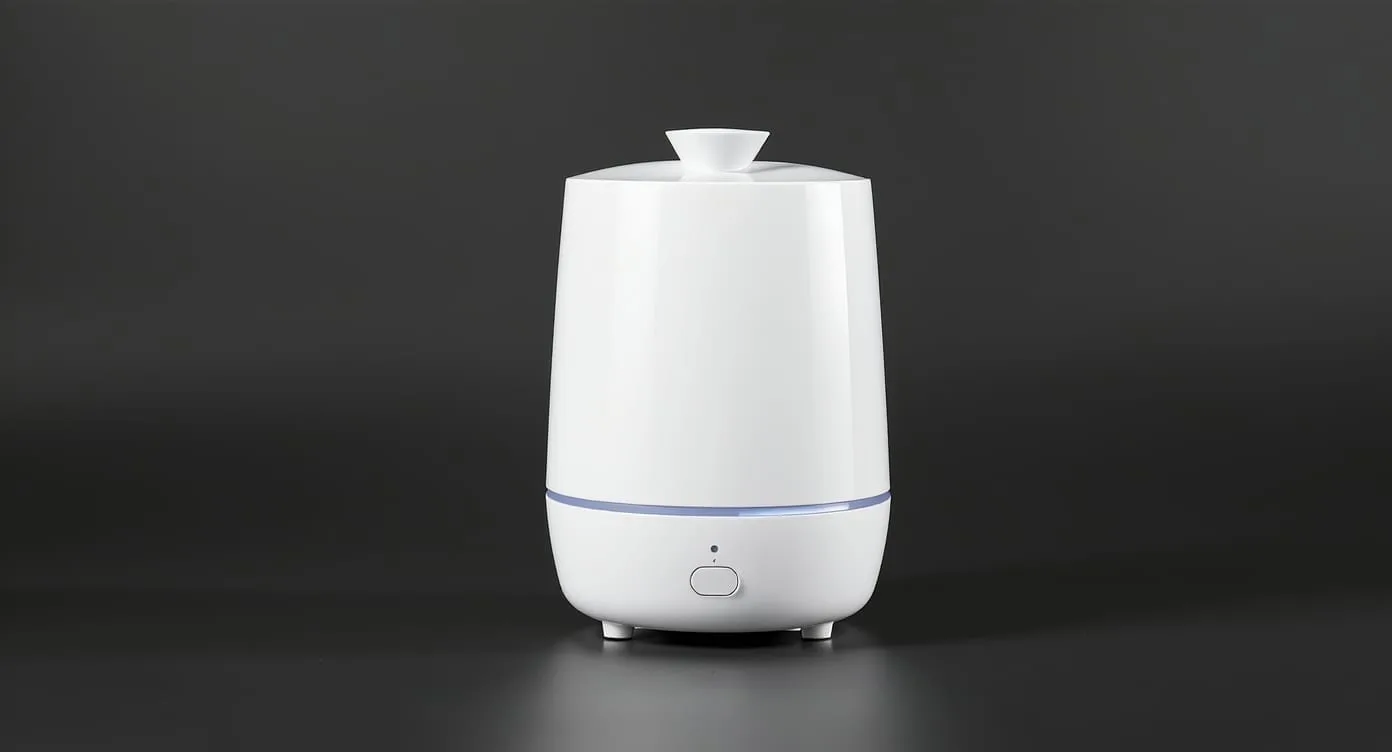
If you wake up every winter morning with a dry throat, cracked lips, or nosebleeds — and then spend the first hour of the day coughing — your bedroom air is the problem. Heated indoor air in winter often drops below 20% relative humidity, which is significantly drier than the Sahara. A humidifier brings it back to the 40–60% range that actually supports easy breathing and comfortable sleep.
This guide covers the humidifier that consistently leads verified buyer reviews for bedroom use — with a focus on what matters: ease of cleaning, noise, and reliable nightly operation.
What to look for in a sleep humidifier
1. Cool mist vs. warm mist. Cool mist humidifiers use a wick or ultrasonic vibration to produce room-temperature mist. Warm mist boils water before releasing steam. For bedroom use, cool mist is safer (no burn risk if knocked over), more energy-efficient, and doesn't heat up the room. Warm mist is quieter but has maintenance quirks.
2. Tank capacity. Small tanks (under 1 gallon) run dry during the night. You want at least 1 gallon for 8+ hours of continuous use without refilling.
3. Noise. Ultrasonic humidifiers are nearly silent. Evaporative (wick-based) humidifiers have a small fan that makes soft white noise — which can actually help or hurt sleep depending on your preference.
4. Cleaning simplicity. This is the #1 long-term complaint in detailed reviews. Humidifiers that are hard to clean develop mold, bacteria, and mineral scale — which then gets aerosolized into the air you breathe. Wide-opening tanks that you can fit your hand inside are dramatically easier to maintain than narrow-opening tanks.
5. Filter-free operation. Filter-based humidifiers require ongoing filter replacement costs and filter replacement schedules. Filter-free models cost more upfront but less over time.
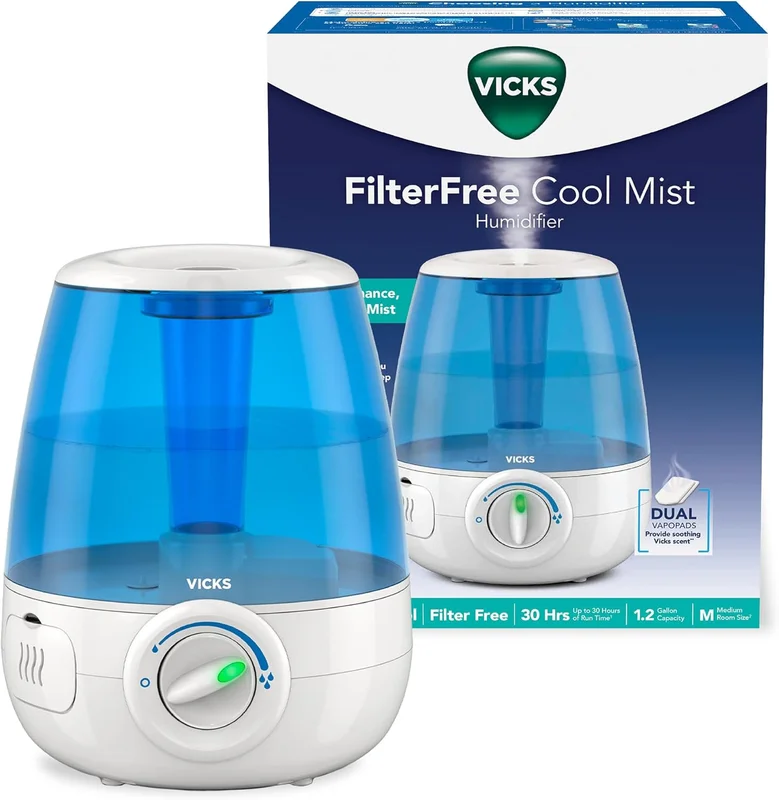
1. Vicks Filter-Free Cool Mist Humidifier — Best Overall
Vicks
Vicks Filter-Free Cool Mist Humidifier
$44.99
Pros
- 1.2-gallon tank runs up to 30 hours per fill
- Ultrasonic — virtually silent operation for the bedroom
- Helps with dry-air congestion that fragments sleep
Cons
- Requires regular cleaning to prevent mineral buildup
- Doesn't work with hard tap water — distilled recommended
The Vicks Filter-Free Cool Mist humidifier is the most-reviewed bedroom humidifier on Amazon and consistently leads detailed reviews for the combination of features that actually matter in daily use: filter-free operation (no recurring cost), a large enough tank for all-night use, and a wide-opening tank that's easy to clean.
What buyers consistently like
- Filter-free. The #1 cited benefit by long-term owners. Unlike competing humidifiers that need $15–30 filters every 1–3 months, this one just needs regular cleaning. Zero recurring cost.
- Truly cool mist. The mist leaves the unit at room temperature — no burn risk, no room heating, safe around kids and pets.
- All-night operation. 1+ gallon tank keeps it running for 24+ hours at low setting, more than enough for an overnight without refilling.
- Quiet enough for sleep. The fan produces a soft white noise hum that most reviewers describe as "pleasant" or "unnoticeable."
- Wide tank opening. You can fit your hand inside to clean the interior, which matters because humidifier cleaning is the #1 source of long-term complaints in this category.
- Accepts Vicks VapoPads. Optional menthol scent pads for congestion relief if you get a winter cold. Not a must-have but widely praised.
- Simple controls. Two-speed dial. No app, no menu, no "smart" features to fail.
Trade-offs
- White mineral dust. Like all ultrasonic and evaporative cool mist humidifiers, this can deposit a fine white dust on nearby surfaces if you use hard tap water. Solution: use distilled water, which most long-term owners recommend anyway to reduce mineral scale inside the unit.
- Fan noise. Quieter than many evaporative humidifiers, but not silent. Light sleepers in absolutely-silent bedrooms may notice it.
- Cleaning is still needed. Filter-free doesn't mean maintenance-free. Every 3–7 days it needs a vinegar-water soak to prevent mineral scale and biofilm buildup. Skip this and you'll regret it within a month.
- Not a whole-house humidifier. It's sized for a bedroom (up to ~400 sq ft). For a larger room or open-plan space, you'll need something bigger.
How to actually use a humidifier correctly
This is where most buyers go wrong:
1. Use distilled water, not tap. Minerals in tap water become airborne dust (hard on electronics) and accelerate scale buildup inside the unit. Distilled water is ~$1/gallon at any grocery store and solves both problems.
2. Clean it weekly. Drain the tank, wipe the base with a vinegar-water mix, and let it air dry. This 5-minute routine prevents the mold/biofilm problem that ruins humidifiers.
3. Don't overdo humidity. Target 40–50% relative humidity. Above 60% encourages dust mites and mold in the room itself. A cheap hygrometer ($10) lets you check.
4. Run it pointing away from electronics. Fine water spray can condense on nearby laptops, speakers, and lamps.
When a humidifier helps with sleep
Dry winter air. The most obvious case. Heated indoor air drops below 20% humidity; a humidifier brings it to 40–50%.
Snoring. Dry air irritates throat and nasal tissue, which worsens snoring. Several snoring studies have found that humidified air reduces snoring severity in mild cases.
Congestion from a cold. Moist air loosens mucus and soothes irritated sinuses. This is why humidifiers are routinely recommended by pediatricians for sick kids.
Eczema and dry skin. Dry air pulls moisture from skin overnight, making eczema worse. Humidified sleeping air is one of the cheapest interventions for winter eczema flares.
Frequently asked
Cool mist or warm mist — which is better for sleep?+
Will a humidifier help with snoring?+
How often do I need to refill the tank?+
Can humidifiers cause mold?+
Should I use the humidifier year-round or just winter?+
Where to go next
Related findings.
 Edge Pick
The Best White Noise Machines for Tinnitus in 2026
Tinnitus at night is relentless. The right masking sound can make sleep possible again. Here's what customers with tinnitus consistently rate highest for nighttime use.
 Edge Pick
The Best Weighted Blankets for Deep Sleep (2026)
What the research says about weighted blankets for sleep and anxiety — plus the two products verified buyers consistently rate highest.
 Edge Pick
The Best Weighted Blankets for Anxiety in 2026
Weighted blankets use deep pressure stimulation to calm the nervous system — a technique originally developed for anxiety and sensory disorders. Here's what customers rate highest.