JALL Wake Up Light Review: The Budget Sunrise Alarm That Punches Up
A detailed review of the JALL Wake Up Light Sunrise Alarm Clock — adjustable 10-to-60-minute sunrise, 25 sounds, Bluetooth speaker, and dual alarms for under $35.
The JALL Wake Up Light Sunrise Alarm Clock is Amazon's #1 best-selling sunrise alarm, and the reviews explain why: a full-screen LED panel that rivals lights costing 2–3x more, a 25-sound library with Bluetooth streaming, and an adjustable sunrise ramp from 10 to 60 minutes — all for under $35.
This review covers what verified buyers consistently report about the JALL Wake Up Light: the sunrise quality, the sound options, the learning curve, and the specific trade-offs you accept at the budget price point. If you're curious about sunrise waking but not ready to invest $170+ on a Philips, the JALL is where most buyers start.
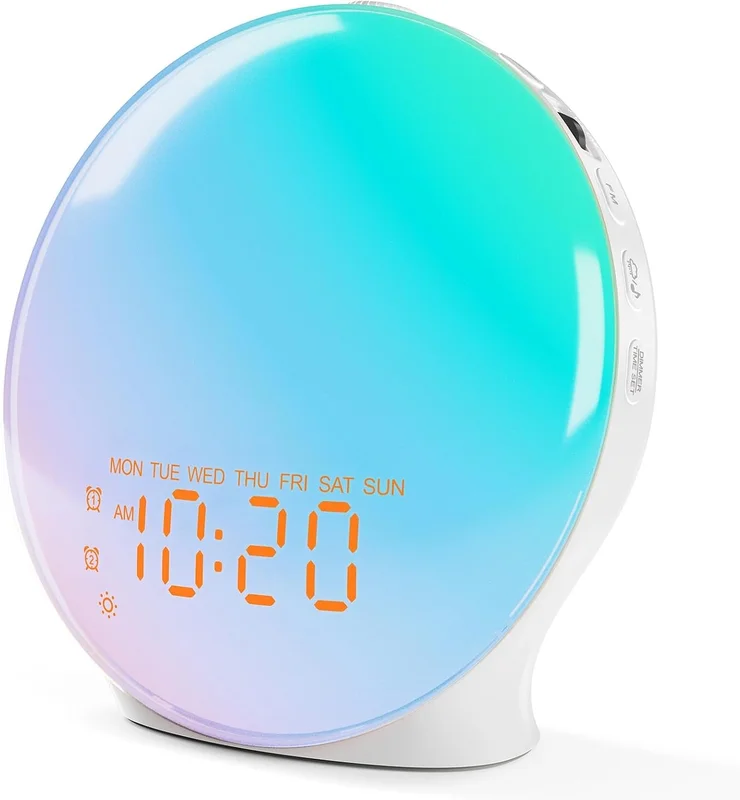
JALL
JALL Wake Up Light Sunrise Alarm Clock
$34.99
Pros
- Full-screen LED panel with 20 brightness levels rivals lights costing 2-3x more
- Adjustable 10-to-60-minute sunrise simulation with dual alarm presets
- 25 built-in sounds plus Bluetooth speaker and FM radio
Cons
- 12 side buttons and many settings create a learning curve
- No smartphone app or voice assistant integration
What it is
The JALL Wake Up Light is a round bedside alarm clock with a large full-screen LED panel that simulates a natural sunrise. Key specs:
- Sunrise simulation: Light gradually increases over 10, 20, 30, or 60 minutes before your alarm time
- Brightness levels: 20 settings, from dim nightlight to full room-filling brightness
- Alarm sounds: 25 built-in soothing sounds (babbling brook, wind chimes, crackling fire, birds, and more) plus FM radio
- Bluetooth speaker: 5W speaker for streaming your own audio from any phone
- Sunset simulation: Gradual dimming for falling asleep
- Display: LED clock face with adjustable brightness
- Power: USB-C powered
- Dual alarms: Two separate alarm time settings for weekday/weekend schedules
- Price: $34.99
- Brand: JALL, specializing in alarm clocks and ambient lighting
The value proposition is aggressive: more features than the Philips SmartSleep HF3520 at roughly one-fifth the price. The adjustable ramp time, 20 brightness levels, 25 sounds, Bluetooth, and dual alarms are all present. What differs is the interface complexity — 12 physical buttons take practice to learn.
What buyers consistently like
The full-screen LED brightness
This is the standout feature in verified reviews. The JALL's large full-screen LED panel produces strong, room-filling light that reviewers at Tom's Guide and across Amazon describe as "surprisingly bright for the price." At full brightness, it fills a dark bedroom with warm light that's visible through closed eyelids — the threshold that matters for triggering the cortisol wake-up response.
Multiple 5-star reviews specifically compare the brightness favorably to the Philips HF3520, which costs nearly 5x more. The 20 adjustable brightness levels give fine-grained control from a barely-there nightlight glow to full intensity.
Adjustable sunrise ramp (10–60 minutes)
Unlike most budget sunrise alarms that lock you into a fixed 30-minute ramp, the JALL lets you choose 10, 20, 30, or 60 minutes. This flexibility matters because different sleepers respond differently: light sleepers often prefer a shorter 10–20 minute ramp that pulls them gently out of a single sleep cycle, while deep sleepers benefit from the full 60-minute ramp that progressively shifts their sleep stages over multiple cycles.
The light starts at 10% brightness and gradually increases to 100%. Verified buyers report the same core outcome that premium sunrise alarm users describe: waking before the alarm sound fires, feeling less groggy, and starting the morning calmer.
Dual alarm presets
The JALL offers two independent alarm settings — a genuine advantage over single-alarm devices. Buyers with different weekday and weekend schedules highlight this as a daily convenience. Couples who wake at different times can use both alarms on the same device without manual adjustment.
25 sounds plus Bluetooth
The 25 built-in soothing sounds are a significant step up from the typical 5-sound budget alarm. Babbling brook, crackling fire, wind chimes, and various nature sounds are the most popular based on review mentions. They loop smoothly and serve as gentle wake-up tones or bedtime ambience.
The 5W Bluetooth speaker adds genuine versatility — stream sleep podcasts, guided meditations, or your own playlists without needing a separate speaker on your nightstand. Sound quality is adequate for bedside use, not audiophile-grade, but verified buyers consistently describe it as a valued bonus.
Sunset simulation for falling asleep
Like premium alternatives, the JALL includes a reverse sunset mode that gradually dims the light for falling asleep. Buyers who use this feature report it creates a natural "lights out" cue that removes the decision of when to stop scrolling or reading. The gradual fade to darkness is described as surprisingly effective for sleep onset.
What buyers consistently complain about
Button interface learning curve
The most common complaint across negative reviews is the control scheme. The JALL has 12 physical buttons along its back edge, and the initial setup — setting dual alarms, choosing sounds, configuring sunrise duration, adjusting brightness — requires consulting the instruction manual. Several reviewers describe the interface as "overwhelming at first" and "not intuitive."
The good news: once configured, most buyers report rarely needing to change settings again. The learning curve is front-loaded. But if you want a pick-up-and-go device with no setup friction, the Philips dial-and-tap interface is simpler.
No app or smart-home integration
There is no smartphone app, no WiFi, no Alexa or Google Home integration. Every setting is configured via physical buttons. For buyers who want their alarm to integrate with bedtime routines, smart lighting, or voice commands, this is a meaningful limitation. The Hatch Restore 2 is the option for connected-home users.
Plastic build quality
The JALL feels like a $35 product. The white plastic housing and gray fabric base are functional but not premium. The round form factor sits fine on a nightstand, but it won't win design awards. Long-term reviews (1+ years) generally report the device holds up physically, but the aesthetic is utilitarian rather than elegant.
FM radio reception
The FM radio is present but reception quality is inconsistent based on location. Several reviewers note weak signal strength. If waking to FM radio is a priority feature for you, test it before committing — though most buyers use the built-in sounds or Bluetooth instead.
Who should buy the JALL Wake Up Light
Best for:
- First-time sunrise alarm buyers who want to try the concept without a big investment
- Budget-conscious shoppers who want feature-rich sunrise functionality under $40
- People with different weekday/weekend wake times who need dual alarms
- Students and renters who want a sunrise alarm but can't justify $170+
- Buyers who want a Bluetooth speaker and sound machine in one bedside device
Not great for:
- People who want dead-simple setup with minimal buttons
- Smart-home users who want app control or voice assistant integration
- Buyers who prioritize premium build quality and refined aesthetics
- People upgrading from a Philips or Hatch who will notice the interface gap
How it compares to alternatives
vs. Philips SmartSleep HF3520
The Philips has a more natural light color progression (deep red through amber to white), simpler physical controls (dial + tap), and better build quality. The JALL has adjustable ramp duration (10–60 min vs. fixed 20/30 min), more sounds (25 vs. 5), Bluetooth streaming, and costs $135 less. If you want the best light quality and simplicity, the Philips is the upgrade. If you want the most features per dollar, the JALL wins decisively.
vs. Hatch Restore 2
The Hatch is a connected smart device with app control, programmable routines, a curated sound library, and guided content. It's in a different category — more versatile but also more complex and more expensive ($170+). The JALL is a simpler, cheaper device for people who just want a sunrise alarm with good sound options without the smart-home layer or subscription fees.
vs. phone-based sunrise apps
Apps like Sleep Cycle can increase screen brightness gradually to simulate a sunrise. The effectiveness is limited by phone screen brightness (much dimmer than a dedicated lamp) and by the fact that your phone is now in bed with you — which contradicts sleep-hygiene recommendations. The JALL's dedicated LED panel is meaningfully brighter and keeps your phone out of the equation.
vs. smart plug + regular lamp on a timer
A smart plug ($10–15) with a regular lamp can turn on at a set time, simulating a crude sunrise. The difference: no gradual ramp (it's off-or-on), no warm-to-cool color shift, and no alarm sounds. The JALL's adjustable gradual ramp is the entire point — a sudden light-on is much less effective for natural wake-up than a progressive brightening.
Where to buy
Frequently asked
Is the sunrise bright enough to actually wake you up?+
How hard is the initial setup?+
Does it have a battery backup?+
How good is the Bluetooth speaker?+
How long do they last?+
Where to go next
- Best sunrise alarm clocks compared
- Best alarm clocks for heavy sleepers
- Philips SmartSleep HF3520 review (the premium alternative)
Related findings.
 Lab Report
Zinus Green Tea Memory Foam Mattress Review: The $400 Mattress Most People Actually Need
A detailed review of the Zinus 12-Inch Green Tea Memory Foam Mattress — the most-reviewed budget mattress on Amazon, and why it satisfies 80% of sleepers at 25% of the premium price.
Yogasleep Rohm Travel White Noise Machine Review: The Pocket-Sized Sleep Saver
A detailed review of the Yogasleep Rohm — portability, battery life, sound quality, and how it compares to plug-in alternatives.
 Lab Report
Yogasleep Dohm Review: The 60-Year-Old Design That Still Wins
A detailed review of the Yogasleep Dohm — why a real-fan noise machine from 1962 still outsells digital alternatives, and who it's for.