Sleep and Exercise: Timing, Intensity, and What the Research Says
Exercise consistently improves sleep — but timing and intensity matter. A research-backed look at when to train, what to avoid, and why sleep is the recovery tool.
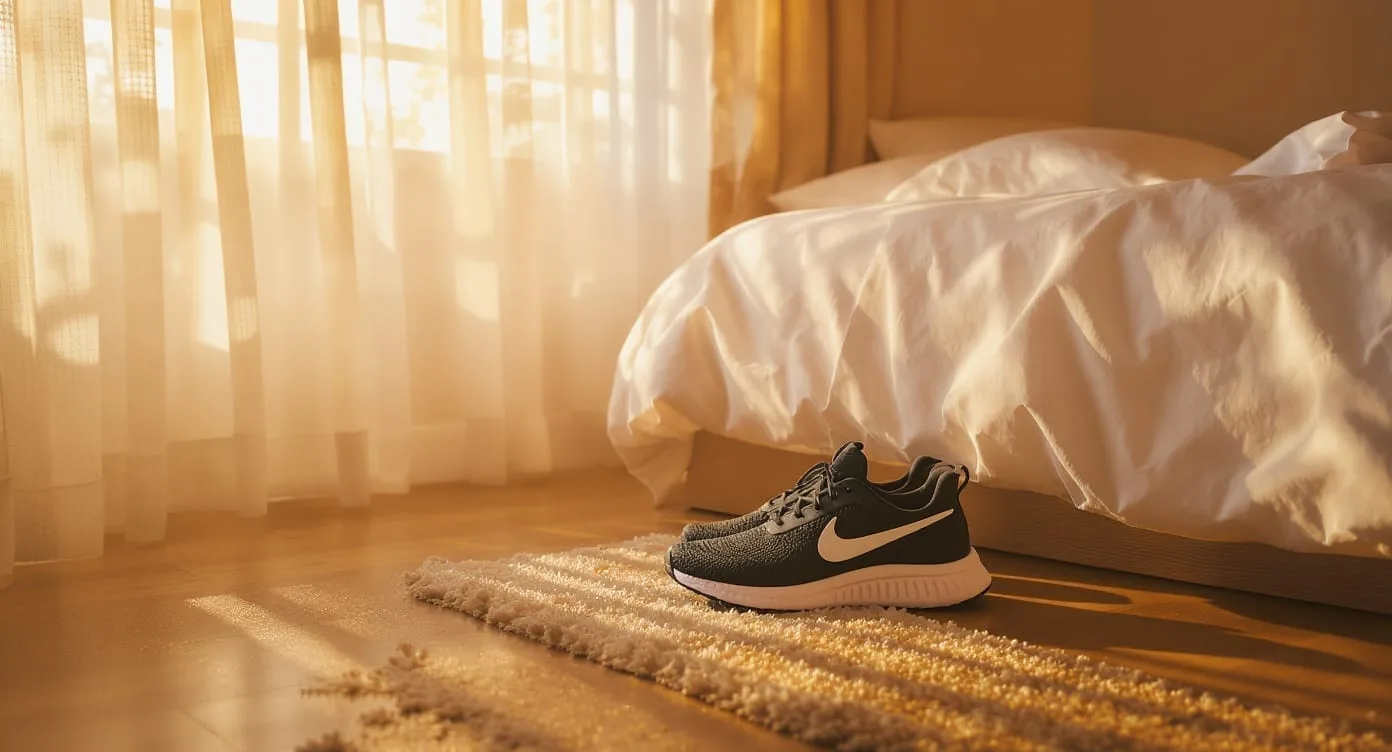
The relationship between exercise and sleep is one of the most consistently positive findings in sleep research. Across dozens of studies, regular physical activity is associated with faster sleep onset, more deep sleep, fewer nighttime awakenings, and better subjective sleep quality. It's one of the few interventions that improves sleep without any side effects, costs nothing, and benefits every other system in your body at the same time.
But the details matter. When you exercise, how hard, and how consistently all affect whether your workout helps tonight's sleep, hurts it, or has no effect at all.
What the research consistently shows
Exercise improves sleep quality
A 2015 meta-analysis by Kredlow et al. in the Journal of Behavioral Medicine analyzed 66 studies and found that regular exercise produced:
- Modest increase in total sleep time (~10 minutes on average)
- Meaningful reduction in sleep onset latency (falling asleep faster)
- Increase in deep sleep duration
- Improvement in subjective sleep quality
The effects were present across age groups and fitness levels, though they were larger in people who exercised regularly (3+ times/week for several weeks) compared to single-session effects.
The type matters less than you'd think
The good news: you don't need a specific type of exercise. The research supports:
- Aerobic exercise (running, cycling, swimming): the most-studied type, consistently improves sleep
- Resistance training (weights, bodyweight): improves sleep quality, particularly deep sleep
- Yoga and stretching: improves subjective sleep quality and reduces sleep onset latency, particularly in people with anxiety
- Walking: even 30 minutes of moderate walking produces measurable sleep benefits
The key variable isn't the type — it's consistency. A single workout produces modest same-day effects. Regular exercise (3–5 times/week for 4+ weeks) produces lasting improvements in sleep architecture that persist even on rest days.
When to exercise: the timing question
This is where the advice gets more nuanced, because timing interacts with intensity.
Morning exercise (best for circadian alignment)
Morning exercise — especially outdoors in bright light — has a dual benefit: it combines physical activity with the strongest circadian-setting signal (bright light). Published research suggests morning exercise is associated with:
- Stronger circadian rhythm amplitude (more clearly defined alert/sleepy cycles)
- Earlier melatonin onset in the evening
- Easier sleep onset at night
If you're choosing a time purely for sleep benefit, morning is the strongest evidence-based recommendation.
Afternoon exercise (peak performance window)
Your body temperature peaks in mid-to-late afternoon, which means muscle strength, reaction time, and aerobic capacity are all slightly higher between roughly 2–6 PM. If athletic performance matters (you're training for a competition), afternoon is physiologically optimal.
The sleep impact of afternoon exercise is neutral to positive — there's no published evidence that it impairs sleep when finished by early evening.
Evening exercise (the controversy)
The traditional advice has been to avoid vigorous exercise within 2–3 hours of bed. The logic: exercise raises core body temperature, heart rate, and sympathetic nervous system activity — all of which oppose sleep onset.
The updated evidence is more permissive. A 2018 meta-analysis by Stutz et al. in Sports Medicine found that evening exercise did NOT impair sleep for most people — and in some studies actually improved it — as long as vigorous exercise ended at least 1 hour before bed.
The exception: high-intensity exercise ending less than 1 hour before bed did show negative effects on sleep onset and sleep quality in some studies. This appears to be the actual threshold, not the 2–3 hours traditionally recommended.
Exercise and sleep stages
Deep sleep
This is where the strongest effect shows up. Regular exercise — particularly resistance training and moderate-to-vigorous aerobic exercise — consistently increases the amount of deep (slow-wave) sleep in published studies. Deep sleep is when most physical recovery, growth hormone release, and immune function happen, which creates a reinforcing loop: exercise demands recovery → more deep sleep → better recovery → better exercise performance.
REM sleep
The effect on REM is less consistent. Some studies show modest increases in REM after exercise; others show no change. Exercise doesn't appear to suppress REM the way alcohol or certain medications do.
Sleep onset latency
Exercise reduces the time it takes to fall asleep, likely through two mechanisms:
- Increased sleep pressure: physical exertion increases adenosine accumulation
- Post-exercise temperature drop: after exercise, core body temperature drops below baseline — mimicking the natural thermoregulatory cascade that triggers sleep onset
The recovery side: why athletes need more sleep
For people who train seriously, sleep isn't just a nice-to-have — it's the primary recovery tool.
- Growth hormone: 70–80% of daily growth hormone secretion occurs during deep sleep. This is the hormone that drives muscle repair and tissue growth.
- Protein synthesis: rates increase during sleep, particularly in the hours following resistance training.
- Motor learning: skills practiced during the day (technique, coordination, tactical patterns) are consolidated during REM sleep.
- Injury risk: a 2014 study by Milewski et al. found that adolescent athletes who slept less than 8 hours per night had a 1.7x higher injury rate.
Exercise as a sleep intervention
For people who currently sleep poorly and are sedentary, starting a regular exercise habit is one of the highest-leverage interventions available — comparable in effect to many sleep medications, without the side effects or dependence risk.
The research suggests:
- Start moderate. You don't need to run a marathon. 30 minutes of brisk walking 3–5 times per week is enough to see measurable sleep improvements within 4–8 weeks.
- Be patient. Unlike caffeine or a sleep aid, exercise improves sleep gradually. The first week may show nothing. The benefits accumulate over weeks.
- Morning is ideal but any time works. Don't skip a workout because you can't do it in the morning. An evening workout is better than no workout.
- Consistency beats intensity. Four 30-minute moderate sessions per week will improve your sleep more than one 2-hour weekend warrior session.
Common questions
Overtraining and sleep
There's an important exception to the "exercise improves sleep" rule: overtraining syndrome — a state of chronic excessive training load without adequate recovery — actually impairs sleep. Symptoms include difficulty falling asleep despite exhaustion, elevated resting heart rate, persistent fatigue, and mood disturbance.
If you train heavily and your sleep is getting worse despite following good sleep hygiene, overtraining is worth considering. The fix is more rest, not more training.
Exercise and insomnia
Exercise is not a standalone treatment for clinical insomnia, but it's a useful adjunct. CBT-I remains the first-line treatment. That said, adding regular exercise to a CBT-I protocol may improve outcomes, and for mild sleep-onset insomnia in otherwise healthy people, exercise alone may be sufficient.
Frequently asked
I exercise regularly but still sleep poorly. Why?+
Will running at 9 PM ruin my sleep?+
Does exercise replace sleep?+
What's the best exercise for sleep?+
Can I exercise to fix jet lag?+
References
- Kredlow MA et al. The effects of physical activity on sleep: a meta-analytic review. Journal of Behavioral Medicine, 2015.
- Stutz J et al. Effects of evening exercise on sleep in healthy participants: a systematic review and meta-analysis. Sports Medicine, 2019.
- Dolezal BA et al. Interrelationship between sleep and exercise: a systematic review. Advances in Preventive Medicine, 2017.
- Milewski MD et al. Chronic lack of sleep is associated with increased sports injuries in adolescent athletes. Journal of Pediatric Orthopaedics, 2014.
- Mah CD et al. The effects of sleep extension on athletic performance. Sleep, 2011.
Where to go next
Related findings.
 Protocol
Why You Wake Up at 3 AM (And What You Can Do About It)
Middle-of-the-night wake-ups have a small set of common causes — and most of them are addressable. A writer-curated look at what's really happening at 3 AM.
 Protocol
Why We Dream: What Science Actually Knows (and Doesn't)
Dreams aren't random noise. Published neuroscience points to specific functions — memory, emotion, creativity. Here's what we know and what's still a mystery.
 Protocol
Sleep for Shift Workers: A Survival Guide
Night shifts fight your biology. Here's what published research says about managing sleep when your schedule won't cooperate.