Sleep Routines for Kids (Ages 3–12): A Parent's Evidence-Based Guide
Bedtime battles, early wake-ups, and the 'one more story' loop. Here's what pediatric sleep research says actually works — and what doesn't.
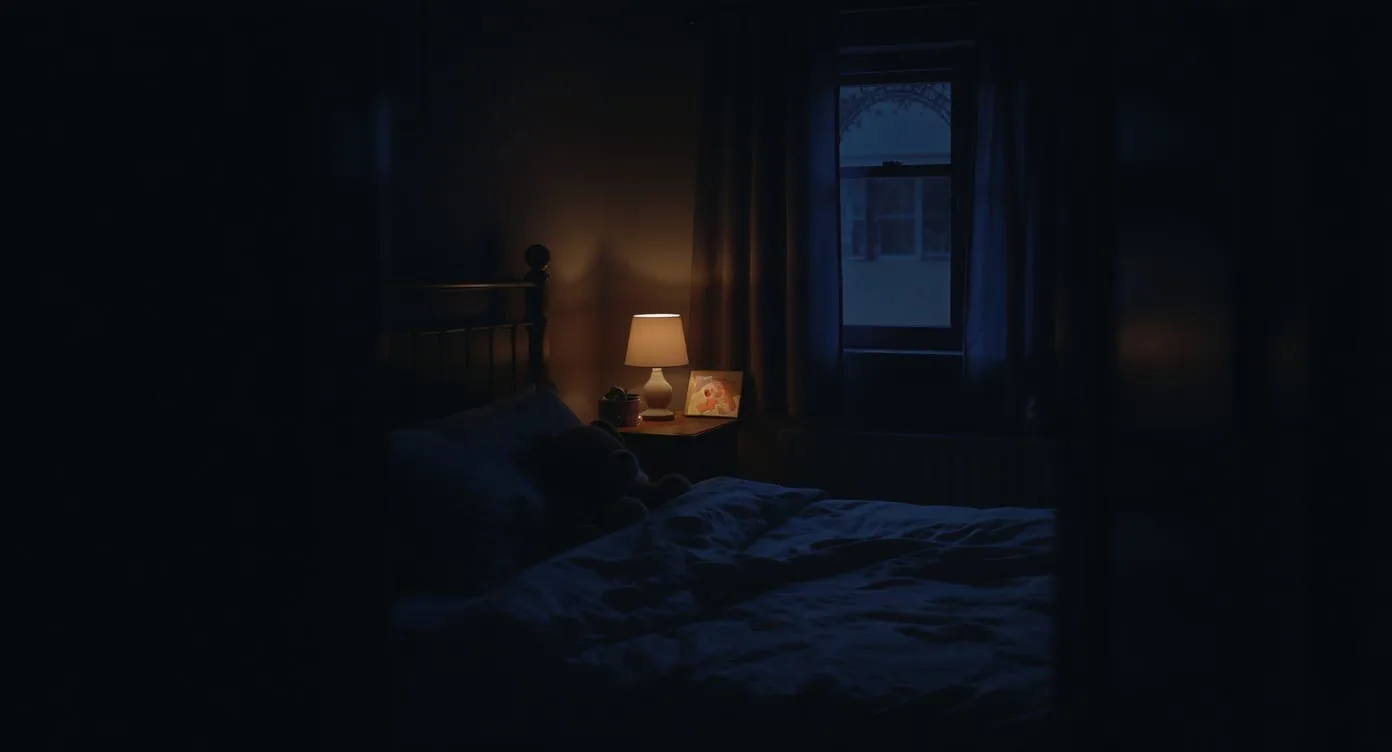
If bedtime in your household involves negotiations, meltdowns, endless requests for water, or a child who appears at your bedroom door at midnight like a tiny ghost — you're not failing as a parent. You're experiencing the most common pediatric sleep problem in the world: a child whose behavioral and environmental cues aren't aligned with their biology.
Published pediatric sleep research is remarkably clear on what works. The strategies aren't complicated. But they require consistency — which is the hard part when you're exhausted and your child is screaming that they're "not tired."
This guide covers how much sleep children actually need by age, why bedtime resistance happens, the evidence-based routine that resolves most problems, and when to involve a pediatrician.
How much sleep kids need
The American Academy of Sleep Medicine (AASM) recommendations, endorsed by the AAP:
| Age | Recommended Hours (including naps) | |---|---| | 3–5 years | 10–13 hours | | 6–12 years | 9–12 hours |
These are total sleep in 24 hours. A 4-year-old who naps for 1.5 hours still needs 9–11.5 hours at night. A 9-year-old who doesn't nap needs all 9–12 hours overnight.
Why bedtime resistance happens
It's rarely about not being tired
Most children who resist bedtime are actually tired — they just can't transition from the high-stimulation state of their day to the low-stimulation state required for sleep. The bridge between those two states is the bedtime routine, and when the routine is absent, inconsistent, or too short, the child gets stuck in "awake mode."
Common drivers of resistance
- Screen time too close to bed — screens are stimulating, and children are more sensitive to screen light than adults (larger pupils, clearer lenses)
- Inconsistent bedtime — a bedtime that varies by 30+ minutes night to night makes the circadian system unpredictable
- The routine is too short — jumping from play to bed in 5 minutes doesn't give the nervous system time to transition
- Overtiredness — paradoxically, children who are too tired often become more wired, not less. Cortisol rises when sleep pressure exceeds a certain threshold, producing hyperactivity that looks like energy but is actually exhaustion
- Separation anxiety — developmentally normal in young children and a legitimate (not manipulative) reason for bedtime difficulty
The evidence-based bedtime routine
Published research — particularly a 2009 study by Mindell et al. in Sleep — demonstrated that a consistent 3-step bedtime routine, implemented nightly, produced clinically significant improvements in:
- Time to fall asleep
- Number of nighttime awakenings
- Maternal mood (yes — the parents slept better too)
The routine doesn't need to be elaborate. It needs to be consistent, predictable, and calming.
The 30-minute framework
T-30 minutes: The signal
- Screens off. This is the hardest step and the most important. No TV, no tablet, no phone. The AAP recommends no screens in the hour before bed for children.
- Announce that bedtime routine is starting. Use a consistent phrase: "Time to start getting ready for bed."
T-20 minutes: The wind-down
- Bath or warm shower (optional but effective — the thermoregulatory cool-down helps sleep onset, same mechanism as in adults)
- Brush teeth
- Put on pajamas
- These steps serve as behavioral cues: the child's brain learns that this sequence leads to sleep
T-10 minutes: The connection
- Quiet activity in the bedroom: reading a story, talking about the day, a brief guided relaxation
- This is the most important part emotionally. The connection reduces separation anxiety and gives the child a positive association with bedtime rather than a punitive one
- Keep it to 1–2 stories or 5–10 minutes of quiet conversation. Set the expectation in advance: "We're going to read two stories tonight."
T-0: Lights out
- Consistent lights-out time, every night, within a 15-minute window
- Brief, warm goodnight ("I love you, see you in the morning")
- Leave the room
The leaving-the-room problem
For children who protest when you leave:
- Graduated check-ins: Leave the room. If the child calls out or cries, wait 2 minutes, then briefly return ("I'm here, you're safe, it's time to sleep"), then leave again. Extend the interval by 1–2 minutes each time. This teaches the child that you're available but that sleep is non-negotiable.
- Bedtime pass: Give the child one "pass" per night — a physical card they can use for one permitted leave (bathroom, one more hug). Once the pass is used, no more exits. Published research shows this technique reduces bedtime resistance and nighttime awakenings.
- Okay-to-wake clock/light: A visual cue that tells the child when it's okay to get up in the morning. The Hatch Rest (kids version) and similar products serve this function.
The early wake-up problem
If your child wakes at 5 AM or earlier, the most common causes:
Light
Early dawn light is the #1 cause of early wake-ups in young children. Blackout curtains or blackout blinds are the first-line fix. See our blackout curtains roundup.
Bedtime is too late
Counterintuitively, putting a child to bed later often makes them wake earlier. Overtired children have elevated cortisol, which causes more fragmented sleep and earlier morning arousal. Moving bedtime 30 minutes earlier often pushes the wake-up time later.
Bedtime is too early
If the child falls asleep at 6:30 PM and wakes at 5 AM, they've slept 10.5 hours — which may be adequate. The fix is pushing bedtime later in 15-minute increments over a week.
Hunger
Young children with small stomachs may wake early because they're genuinely hungry. A protein-rich snack before bed (cheese, yogurt, nut butter on toast) can help bridge the gap.
Screens: the evidence for children
The AAP recommendation — no screens in the hour before bed — has strong published support:
- Light sensitivity: Children's retinas are more sensitive to the melatonin-suppressing effects of screen light than adults' (larger pupils, clearer crystalline lens).
- Content arousal: Interactive content (games, social media, messaging) is more disruptive than passive content (watching a show), but both delay sleep onset compared to non-screen activities.
- Time displacement: Screen time pushes bedtime later, which reduces total sleep. This is the simplest and most robust finding.
The practical reality: most families can't or won't eliminate all screens after dinner. The harm-reduction approach: switch to passive content (a familiar show on a TV across the room), reduce brightness, turn off at least 30 minutes before the bedtime routine starts, and never have screens in the bedroom.
Napping by age
Ages 3–5
Most children drop their nap between 3 and 5. Signs the nap is no longer needed: the nap takes 30+ minutes to fall asleep for, the nap pushes nighttime sleep onset past a reasonable hour, or the child sleeps well at night without the nap.
When dropping the nap, move bedtime 30–60 minutes earlier to compensate. Expect a few weeks of overtired crankiness during the transition.
Ages 6+
Most children don't need regular naps after 5–6. If a school-age child needs daily naps, it's worth discussing with a pediatrician — it may indicate insufficient nighttime sleep or, rarely, a sleep disorder.
When to see a pediatrician
Pediatric sleep apnea — most commonly caused by enlarged tonsils and adenoids — is underdiagnosed and has significant effects on behavior, attention, and growth. Snoring in children is not normal in the same way it's considered normal (if suboptimal) in adults.
Frequently asked
My 4-year-old fights bedtime for an hour. What am I doing wrong?+
Should I let my child fall asleep with me in the room?+
Is melatonin safe for children?+
My kids share a room and have different sleep needs. Help.+
Does my child need a nightlight?+
References
- Mindell JA et al. A nightly bedtime routine: impact on sleep in young children and maternal mood. Sleep, 2009.
- Paruthi S et al. Recommended amount of sleep for pediatric populations: a consensus statement of the AASM. Journal of Clinical Sleep Medicine, 2016.
- Hale L, Guan S. Screen time and sleep among school-aged children and adolescents: a systematic review. Sleep Medicine Reviews, 2015.
Where to go next
- Best blackout curtains (for early wake-ups)
- How screen time affects sleep
- 12 evidence-based sleep tips
- Best blackout curtains for nursery
- Best baby sound machines
Related findings.
 Protocol
Why You Wake Up at 3 AM (And What You Can Do About It)
Middle-of-the-night wake-ups have a small set of common causes — and most of them are addressable. A writer-curated look at what's really happening at 3 AM.
 Protocol
Why We Dream: What Science Actually Knows (and Doesn't)
Dreams aren't random noise. Published neuroscience points to specific functions — memory, emotion, creativity. Here's what we know and what's still a mystery.
 Protocol
Sleep for Shift Workers: A Survival Guide
Night shifts fight your biology. Here's what published research says about managing sleep when your schedule won't cooperate.