The Best White Noise Machines for Tinnitus in 2026
Tinnitus at night is relentless. The right masking sound can make sleep possible again. Here's what customers with tinnitus consistently rate highest for nighttime use.
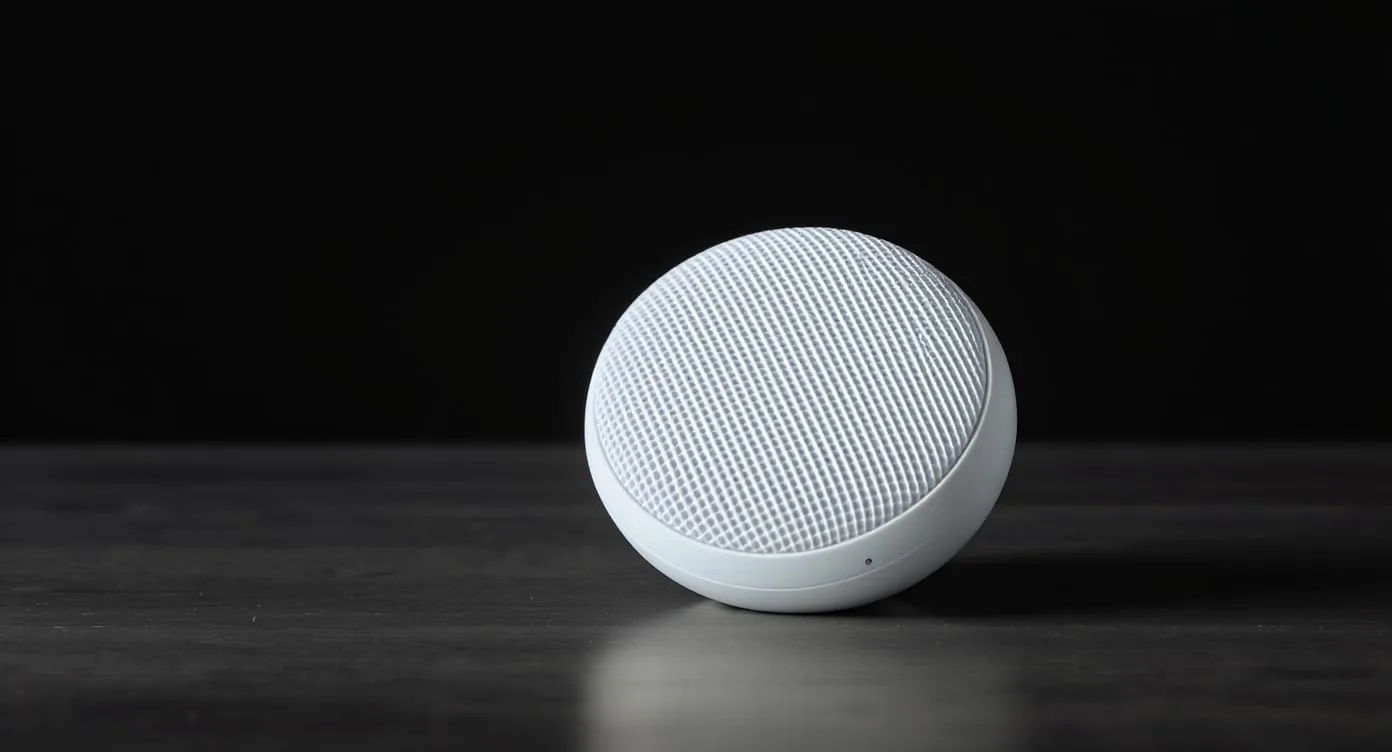
Tinnitus is one of the cruelest sleep disruptors. During the day, ambient noise masks the ringing. At night, absolute silence amplifies it — the brain's auditory system dials up its own gain, and what was a background buzz becomes impossible to ignore. For tinnitus sufferers, a good masking sound machine is often the single highest-impact sleep intervention available — not to cure the tinnitus, but to give the auditory system something else to focus on so sleep can happen.
This guide covers the three sound machines that consistently lead detailed reviews from tinnitus sufferers specifically, with honest notes on which type of masking works best for which kind of tinnitus.
Why silence makes tinnitus worse
The phenomenon is called auditory gain adjustment. When external sound drops, the brain automatically increases its sensitivity to whatever sound is available — which, for tinnitus sufferers, means the internal ringing gets louder relative to silence. This is why tinnitus feels dramatically worse when you lie down in a quiet bedroom than it does while walking down a city street.
Masking sound breaks this cycle. When there's consistent external sound at an appropriate volume, the brain stops trying to amplify everything, and the tinnitus retreats into the background.
What tinnitus sufferers need from a sound machine
1. Broadband sound that covers the tinnitus frequency. Most tinnitus sits in the 4–8 kHz range (high-pitched). White, pink, and brown noise all overlap this range but with different intensity distributions. Experimenting with all three is usually necessary to find what masks your specific pitch.
2. Zero audible looping. The #1 complaint from tinnitus sufferers about cheap sound machines — and tinnitus sufferers are uniquely sensitive to loops because they're listening so intently at night. A 30-second loop that most people wouldn't notice becomes a torture device for someone with tinnitus.
3. Adjustable volume with a usable low setting. The right masking volume is slightly above your tinnitus level, not much above. Too loud creates its own stress; too quiet doesn't mask. Needs fine control.
4. All-night operation. Most tinnitus sufferers wake if the machine shuts off mid-night, because the sudden silence triggers the gain adjustment cycle. No timers — continuous play.
5. Sound variety. What works on night one may not work on night twenty as the brain adapts. Machines with multiple sound options let you rotate.
1. Yogasleep Dohm Classic — Best Mechanical (No Loop)
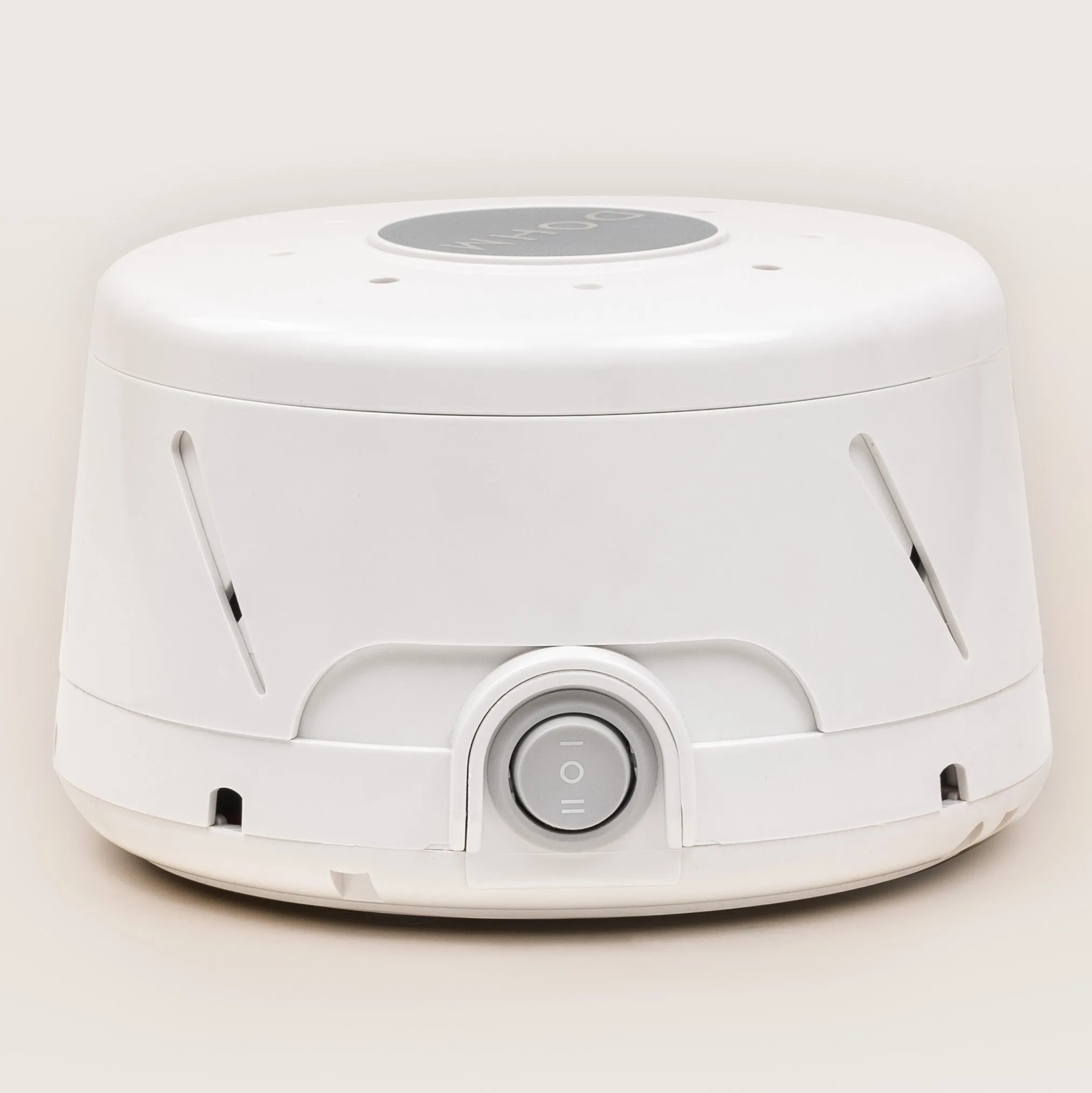
Yogasleep
Yogasleep Dohm Classic
$49.99
Pros
- Real fan-based white noise with natural texture
- Tunable pitch and tone
- Durable build, made in USA
Cons
- Single sound only — no nature or ambient options
- No timer or alarm
The Yogasleep Dohm is the single most-recommended sound machine for tinnitus in detailed reviews, and the reason is simple: it's a real fan inside an acoustic housing, not a speaker playing a recording. For tinnitus sufferers, the absence of any loop cycle is critical. Your brain can't lock onto a repetition pattern because there is no pattern — the sound is continuously generated by moving air.
What tinnitus sufferers consistently like
- No loop, ever. The defining feature. Users who tried and failed with electronic machines consistently find relief with the Dohm.
- Broadband sound. Real fan noise covers a wide frequency range, which increases the chance of masking your specific tinnitus pitch.
- Adjustable tone. Rotate the housing to change the sound character slightly — enough to fine-tune for your specific ringing frequency.
- Built to last. Yogasleep has made this product for 60+ years. 10-year reviews are common. For a daily-use tinnitus tool, durability matters enormously.
- Simple, no learning curve. Plug it in, rotate to taste, leave it running. No app, no menu, no updates.
Trade-offs
- Single sound. It's a fan. You can't cycle between white/pink/brown — you get one sound.
- Volume range is moderate. If your tinnitus is severe, the Dohm's maximum volume may not be enough. In that case, the LectroFan EVO (next pick) has a higher ceiling.
- Plug-in only. Not portable — so you need a travel alternative for trips.
2. LectroFan EVO — Best Electronic for Severe Tinnitus
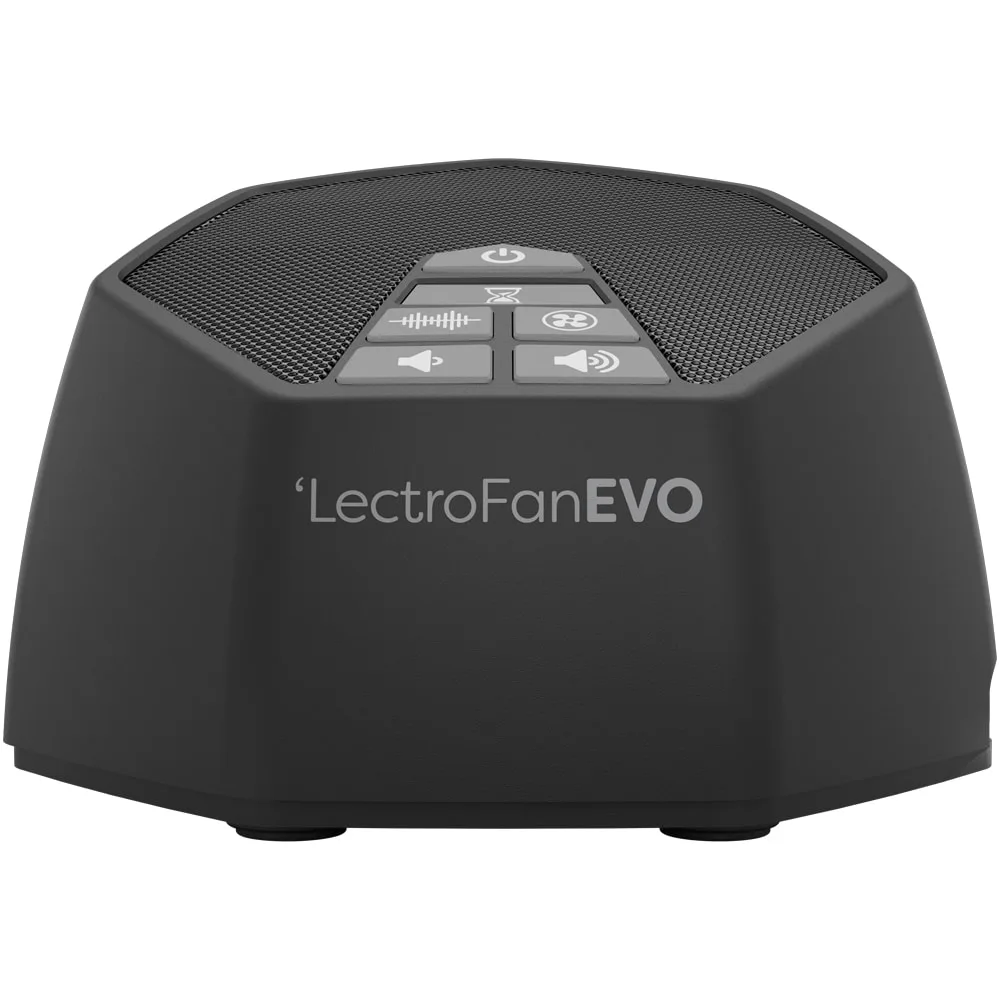
Adaptive Sound Technologies
LectroFan Evo Sound Machine
$59.99
Pros
- 10 fan sounds plus 10 ambient noise variations
- Non-looping digital — no audible repetition
- Compact size with sleep timer and headphone jack
Cons
- Digital generation lacks the texture of real-fan machines
- Speaker quality is good but not exceptional
The LectroFan EVO is the electronic alternative that works for tinnitus sufferers because it uses generated (not looped) audio. Most cheap electronic machines loop a few seconds of recorded sound, which tinnitus sufferers detect immediately. The EVO generates sound in real time, which means there's no audible cycle — and it offers 22 different sound options (10 fan-type, 10 nature, plus ocean and rain), which matters for tinnitus sufferers who need to rotate sounds as their brain adapts.
What tinnitus sufferers consistently like
- No audible looping despite being electronic. The generation algorithm avoids repetition that cheap machines have.
- High maximum volume. Louder than the Dohm, which matters for severe tinnitus.
- 20+ sound options. Ability to rotate between white, pink, brown, and various nature sounds lets you experiment to find what masks your specific pitch.
- Precise volume control. Fine-grained dial lets you find the exact volume that masks without being too loud.
- Sleep timer option (can be disabled for continuous play).
Trade-offs
- Electronic means less "organic" than the Dohm. Some tinnitus sufferers prefer real-fan sound and find the generated noise less soothing despite being technically loop-free.
- Plug-in only. Not portable.
- More to learn. Multiple sounds means you need to experiment to find your preferred setting.
3. Yogasleep Rohm — Best Travel/Portable
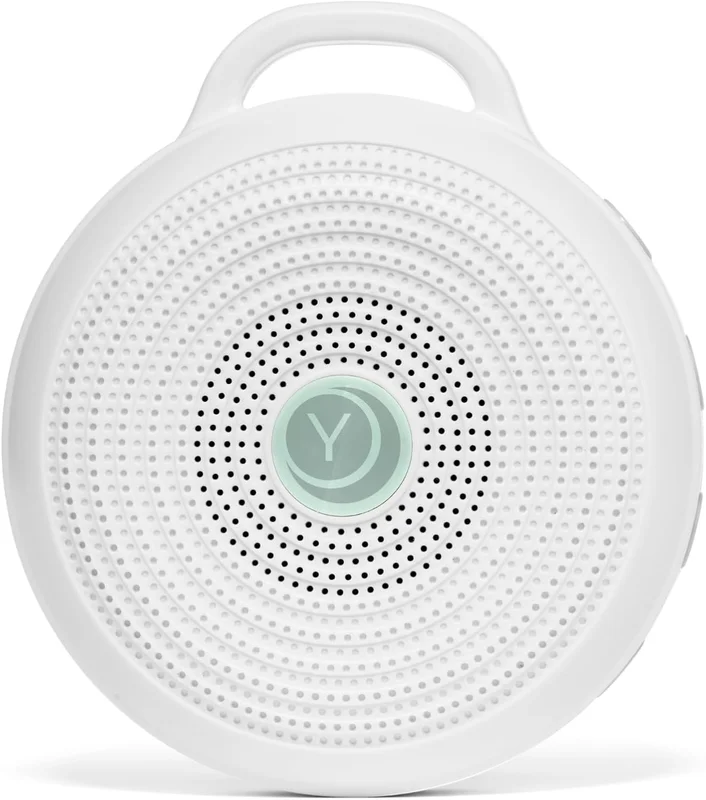
Yogasleep
Yogasleep Rohm Travel White Noise Machine
$34.95
Pros
- Compact and rechargeable — fits in a coat pocket
- Three sound options: white noise, fan, surf
- Up to 12 hours battery life per charge
Cons
- Only three sounds vs full LectroFan library
- Not as full-bodied as a plug-in Dohm
Tinnitus doesn't pause when you travel, and finding that you can't sleep in a hotel room without the familiar sound of home can turn a vacation into a nightmare. The Yogasleep Rohm is the portable, battery-powered travel version from the same brand as the Dohm — different technology (electronic, not mechanical) but the same commitment to long, loop-free operation.
What tinnitus sufferers consistently like
- Truly portable. Palm-sized, rechargeable, clips to a carry-on. Fits anywhere.
- Long battery life. 8–12 hours per charge — enough for a full night's masking without interruption.
- Three sound types. White, pink, brown — covers the main frequency ranges for tinnitus masking.
- Rugged. Designed to survive travel without breaking.
- Affordable. At ~$40, an easy addition to an existing at-home setup.
Trade-offs
- Lower maximum volume than the Dohm or EVO. Sufficient for typical hotel rooms but not for very loud environments.
- Battery life depends on volume. Running at high volume reduces the 12-hour claim to closer to 6–8.
- Smaller speaker, thinner sound. Not as full-bodied as a plug-in machine.
Mechanical or electronic: which for tinnitus
Choose the Dohm (mechanical) if:
- You've failed with electronic sound machines because of audible looping
- You want maximum durability (10+ year product)
- Your tinnitus is mild to moderate
- You prefer a simple, one-button device
Choose the LectroFan EVO (electronic) if:
- You need higher maximum volume for severe tinnitus
- You want multiple sound options to rotate through
- You're comfortable experimenting to find your best setting
- You want precise volume control
Choose the Rohm (portable) if:
- You travel frequently
- You need a second device for a separate room
- You want a backup for when your main device fails
Most tinnitus sufferers who take sleep seriously end up owning two: a plug-in (Dohm or EVO) for home and a Rohm for travel.
How they compare
Beyond sound machines: other tinnitus sleep strategies
Sound masking is one lever. If you're still struggling:
- Gradual volume reduction. Start the sound machine louder than your tinnigus, and over weeks, slowly reduce it as your brain recalibrates. This is a form of habituation therapy.
- Consistent bedtime routine. The more predictable your sleep context, the less cognitive attention your brain has left over for amplifying tinnitus.
- Caffeine and alcohol reduction. Both can worsen tinnitus perception, especially at night.
- See an audiologist. Tinnitus retraining therapy (TRT) is a structured, evidence-based program that can help severe cases beyond what self-masking can achieve.
Frequently asked
Will a sound machine cure tinnitus?+
White, pink, or brown noise — which is best for tinnitus?+
Is it safe to sleep with a sound machine all night?+
Why doesn't my phone white noise app work as well?+
Should I use the sound machine all day too?+
Where to go next
Related findings.
 Edge Pick
The Best Weighted Blankets for Deep Sleep (2026)
What the research says about weighted blankets for sleep and anxiety — plus the two products verified buyers consistently rate highest.
 Edge Pick
The Best Weighted Blankets for Anxiety in 2026
Weighted blankets use deep pressure stimulation to calm the nervous system — a technique originally developed for anxiety and sensory disorders. Here's what customers rate highest.
 Edge Pick
The Best Wedge Pillow for Acid Reflux in 2026
Acid reflux at night is usually a gravity problem — and a wedge pillow is the simplest, cheapest fix. Here's the wedge pillow customers consistently rate highest for GERD, reflux, and heartburn.