The Best Fans for Sleeping in 2026
A fan is the cheapest sleep upgrade most people can make — cooling, white noise, and air circulation all in one. Here's the fan that consistently leads customer reviews for bedroom use.
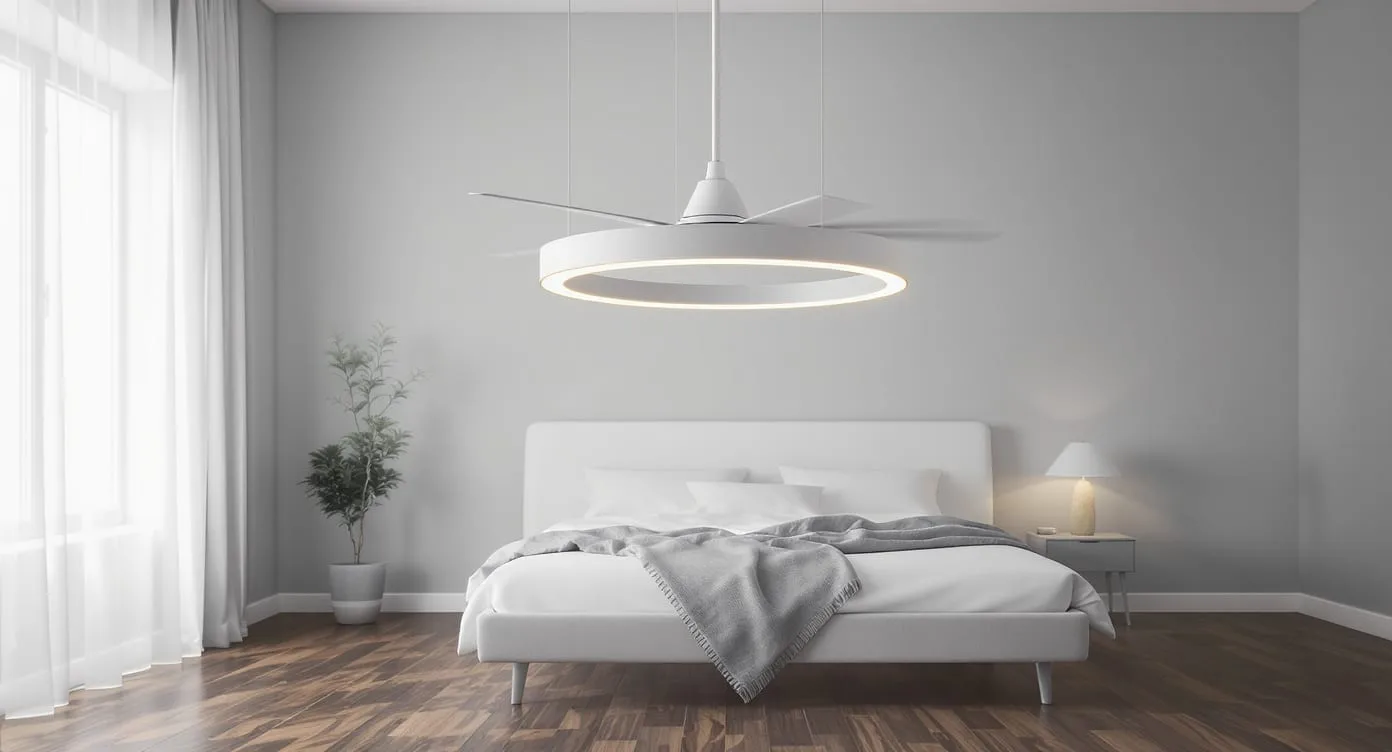
A fan is the most underrated sleep product in existence. For ~$100, you get three things at once: cooling (by accelerating evaporative heat loss from your skin), white noise (which masks disruptive sounds), and air circulation (which prevents the stale-air stuffiness that causes waking up with a dry mouth and headache). Before you spend $500+ on a smart bed or active cooling system, try a real bedroom fan — it's often enough on its own.
This guide covers the fan that consistently leads verified buyer reviews for bedroom use — not because it's the prettiest, but because it's the one people actually sleep with and keep using for years.
What to look for in a bedroom fan
1. Airflow at distance. Cheap fans move air near the blades but lose effectiveness 3+ feet away. Quality fans use airflow design to push air across a whole room, which matters because your bed isn't right next to the fan.
2. Noise profile. A bedroom fan needs to produce steady broadband noise, not intermittent rattles, clicks, or high-pitched whines. Long-term reviews reveal which fans stay smooth vs. which develop annoying noises after 6 months.
3. Multiple speeds with a usable low setting. The low setting is what you'll actually run overnight. If the lowest speed is too loud or too gentle, you'll either keep waking up or keep overheating.
4. Stability. A fan that tips over or vibrates its way across the floor is unusable. Look for a weighted base.
5. Durability. Cheap fans seize up after a year of nightly use. Quality fans last 5–10 years. Given that you'll run this every night, the per-year cost of a quality fan is actually lower.
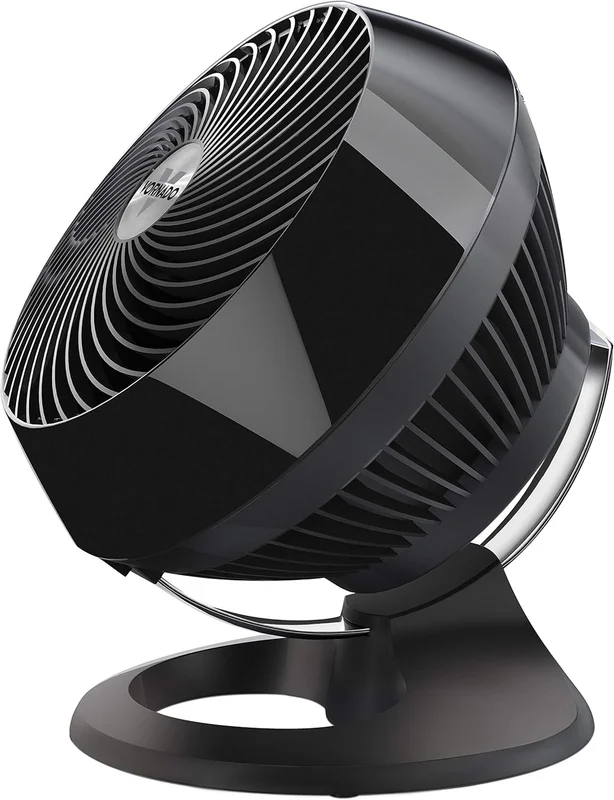
1. Vornado 660 Whole Room Air Circulator — Best Overall
Vornado
Vornado 660 Whole Room Air Circulator
$99.99
Pros
- Vortex airflow circulates an entire bedroom
- Four speeds — gentle for sleep, powerful for cooling
- Provides white noise as a side benefit
Cons
- Audible motor on high settings
- Larger footprint than basic desk fans
The Vornado 660 is the most-recommended bedroom fan in sleep reviews — not because it's the biggest, but because it uses a patented airflow design that pushes air across a whole room rather than just blowing on what's directly in front of it. The result: you can position it 8–10 feet from your bed and still feel a consistent breeze across the entire sleeping surface.
What buyers consistently like
- Room-wide airflow. The #1 cited benefit over conventional fans. The Vornado's deep-dished blades and grille design create a "vortex" that circulates air across the whole room instead of blasting a narrow column.
- Smooth white noise. Long-term reviewers consistently describe the sound as "steady," "relaxing," and "like a distant waterfall." Not clicky, not whiny, not rattly.
- Multiple usable speeds. Four speeds including a genuinely quiet low that's usable overnight without any sacrifice in cooling.
- Durability. 5–10 year owners are common in the reviews. Vornado has built a reputation for fans that outlast cheap alternatives by 5x.
- Rock-solid base. Heavy, stable, doesn't walk. Good for hardwood floors.
- Compact footprint. Smaller than its airflow suggests. Fits on a dresser or in a corner without dominating the room.
Trade-offs
- Not oscillating. The Vornado 660 doesn't sweep side to side. Its airflow design doesn't need oscillation — the vortex distributes air across the room — but some buyers expect oscillation and are initially disappointed.
- Not the quietest fan on the market. If you need near-silent operation, tower fans or specialized "sleep fans" are quieter at low speed. The Vornado's sound is intentional (white noise is a feature, not a bug, for most users) but not suitable for people who want absolute quiet.
- Price. Roughly $100. Cheaper fans exist. The question is whether you'll be using the cheap fan in three years (probably not) vs. the Vornado (almost certainly).
How to use a fan for better sleep
Placement. Position the fan 6–10 feet from the bed, angled slightly across the bed rather than directly at your face. Direct air on the face tends to dry out sinuses overnight.
Speed. Start on the lowest setting and increase only if you're overheating. Higher speeds move more air but also produce more noise, which may either help or hurt your sleep depending on your preference.
Use year-round, not just summer. A fan is as useful in winter for air circulation and white noise as it is in summer for cooling. Many long-term owners report running it 365 nights a year.
Combine with a cool room. A fan can't cool a hot room — it accelerates evaporative cooling from your skin, which works best when the ambient room temperature is in the 60–68°F sleep-friendly range. If your bedroom is 78°F, a fan alone won't solve the problem; you'll need AC or active cooling in combination.
A fan vs. an air conditioner: which to buy first
For most hot-sleeper complaints, a fan is the right first purchase. It's cheaper, requires no installation, uses less electricity, and combines cooling with white noise (which an AC can't do well — AC noise is typically mechanical, not the broadband hum of a fan). Add AC if your bedroom ambient temperature is consistently above 72°F at night and the fan alone isn't enough.
Frequently asked
Is it bad to sleep with a fan on all night?+
Does running a fan actually lower body temperature?+
Will a fan work as white noise for light sleepers?+
How much electricity does a bedroom fan use overnight?+
Can a fan replace an air conditioner?+
Where to go next
Related findings.
 Edge Pick
The Best White Noise Machines for Tinnitus in 2026
Tinnitus at night is relentless. The right masking sound can make sleep possible again. Here's what customers with tinnitus consistently rate highest for nighttime use.
 Edge Pick
The Best Weighted Blankets for Deep Sleep (2026)
What the research says about weighted blankets for sleep and anxiety — plus the two products verified buyers consistently rate highest.
 Edge Pick
The Best Weighted Blankets for Anxiety in 2026
Weighted blankets use deep pressure stimulation to calm the nervous system — a technique originally developed for anxiety and sensory disorders. Here's what customers rate highest.