The Best Earplugs for a Snoring Spouse in 2026
Your partner's snoring doesn't have to ruin your sleep. Here are the earplugs customers consistently rate highest for blocking snoring specifically — with realistic notes on what earplugs can and can't fix.
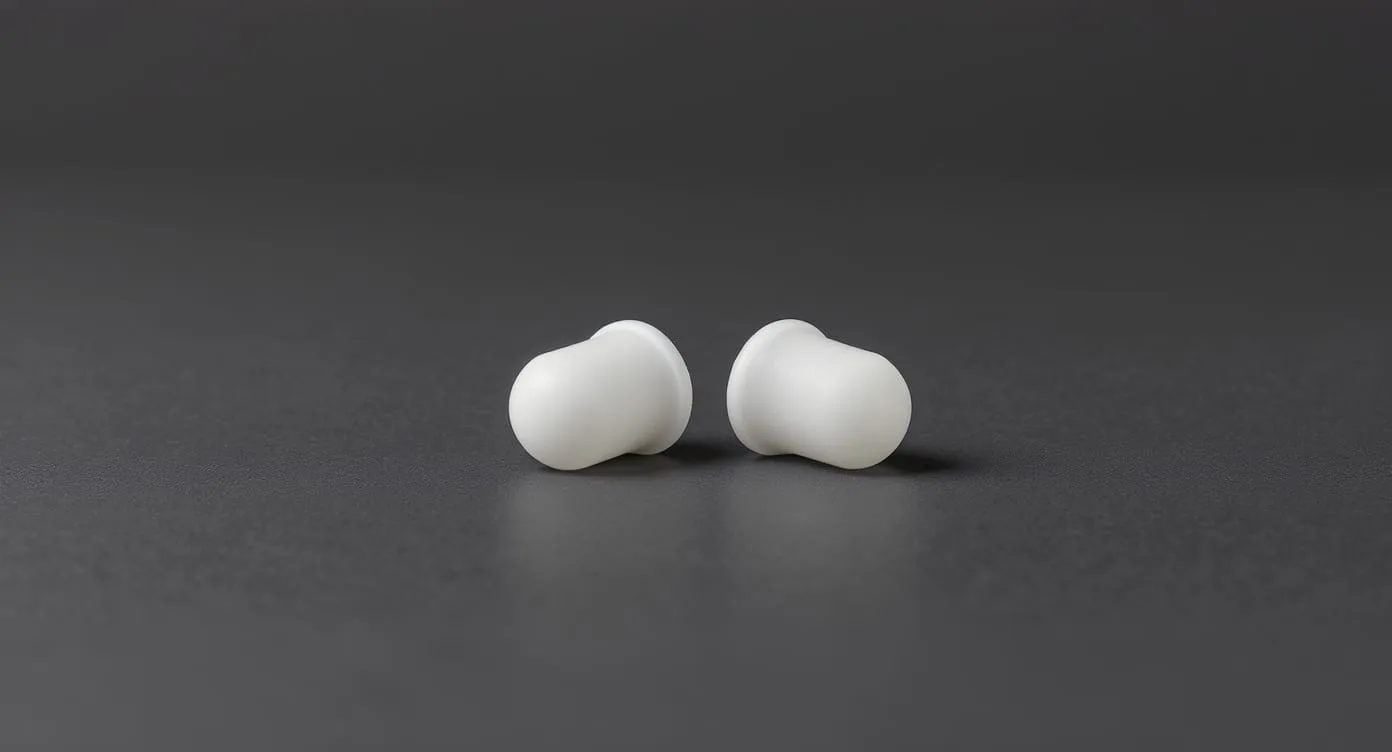
Your partner's snoring is probably not going to stop. You can nag them about sleeping on their side, about losing weight, about seeing a doctor for possible sleep apnea — and you should, because untreated sleep apnea is genuinely dangerous — but while you wait for those interventions to work, you still need to sleep tonight. A good pair of earplugs is often the difference between a barely-functional marriage and an actually-happy one.
This guide covers the two earplug categories that consistently lead detailed reviews from light sleepers living with snorers — reusable silicone and disposable foam — with honest notes on which is right for which situation.
Why snoring is hard to block
Snoring is a specific acoustic challenge:
1. It's low-frequency. Snoring tends to sit in the 60–200 Hz range — deeper than most speech. Low frequencies penetrate ear canals and physical barriers more easily than high frequencies.
2. It's intermittent. Unlike steady traffic noise, snoring has peaks and pauses. Your brain registers the sudden onset of each snore even more than a constant loud sound.
3. It's close range. If your partner is snoring 12 inches from your ear, even a high-attenuation earplug is working against a lot of decibels.
4. It's emotionally charged. Partner snoring triggers an irritation response that amplifies your perception of the sound, which makes it feel worse than the raw decibels justify.
The implication: you need earplugs with high NRR (Noise Reduction Rating) — ideally 25+ dB — that you can wear comfortably all night.
What to look for in earplugs for snoring
1. NRR (Noise Reduction Rating). Expressed in decibels. 22 dB is the minimum useful for snoring; 28–33 dB is ideal. Note that real-world noise reduction is typically 5–10 dB less than the lab rating, so buy for 30+ NRR and expect ~20 dB in practice.
2. Comfort for side sleepers. Most snorer-spouses end up sleeping on their side to roll away from the noise. Earplugs that stick out of the ear (common with cheap foam) get pressed against the pillow and become painful within an hour.
3. Material. Foam is cheap, disposable, and offers the highest attenuation. Silicone is reusable, lower-profile, and more comfortable for side sleepers — but offers slightly less sound blocking.
4. Washable or disposable. Foam is single-use or few-use. Silicone can be washed and reused for months.
5. Ear canal size. Foam expands to fit any canal. Silicone comes in fixed sizes — you may need to try different sizes to find your fit.
1. Loop Quiet 2 Earplugs — Best for Comfort (Side Sleepers)
Loop
Loop Quiet 2 Earplugs
$24.95
Pros
- Comfortable silicone design for side sleepers
- 27 dB noise reduction — blocks snoring and traffic
- Reusable, four ear tip sizes included
Cons
- Won't block very loud noise (construction, heavy snoring)
- Some users find the fit takes trial and error
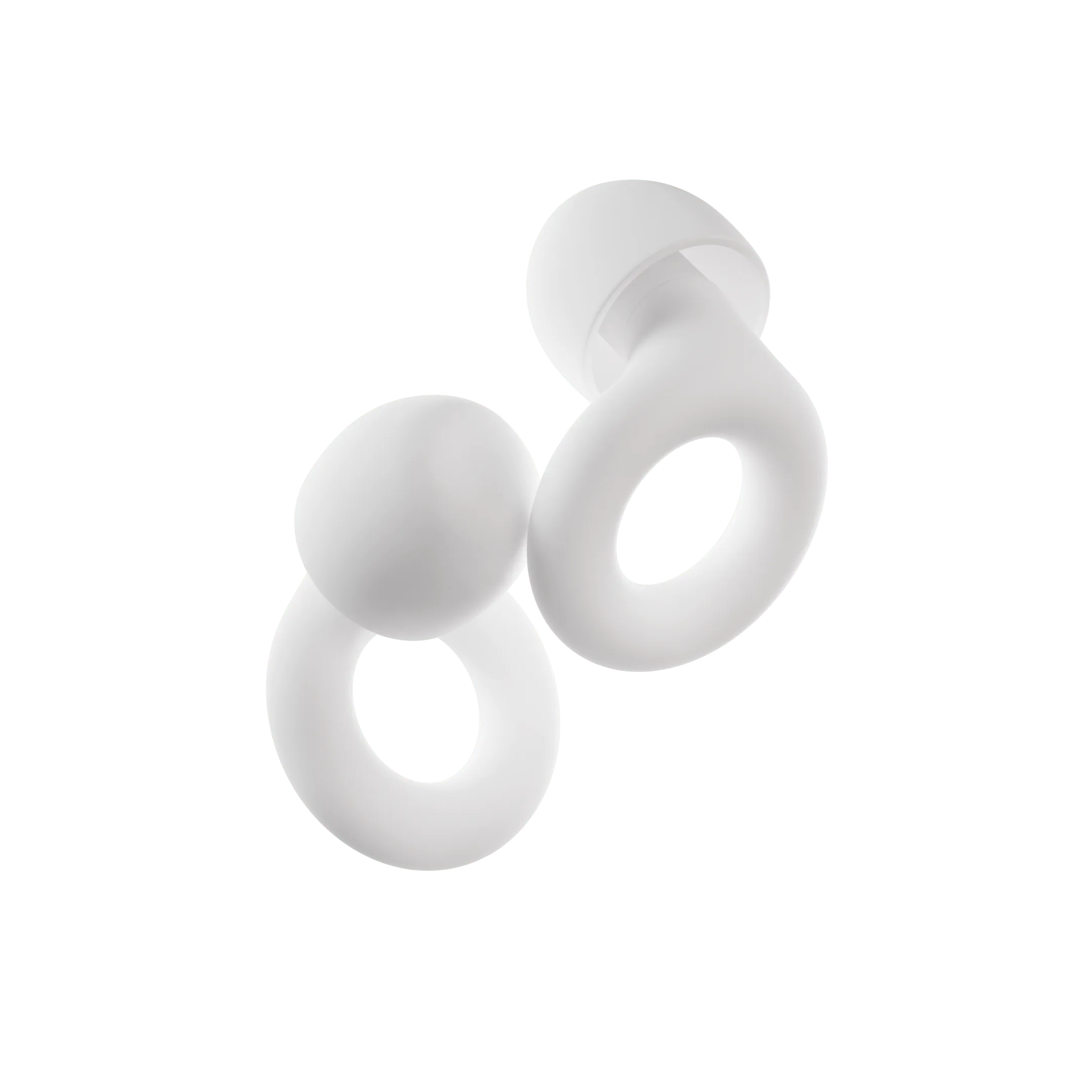
The Loop Quiet 2 is a reusable silicone earplug specifically designed to sit flush with the ear canal — meaning nothing sticks out to press against your pillow. For side sleepers living with snorers, this is the single biggest quality-of-life feature in an earplug. Lab NRR is 24 dB, which in practice means ~18 dB of real-world reduction — enough to turn a loud snorer into a barely-audible hum.
What buyers consistently like
- Flush fit. The #1 cited benefit. Nothing protrudes from the ear, so side sleeping on a pillow doesn't create pressure points that wake you up at 3 AM.
- Reusable for months. Washable with soap and water. Unlike foam that you throw away, a single pair lasts a long time — cost-effective over 6+ months.
- Multiple ear tip sizes. Included tips in XS/S/M/L let you find a good seal, which is what determines real-world noise blocking.
- Comfortable for 8-hour wear. Most foam plugs are uncomfortable after a few hours; the Loop Quiet can be worn all night without the "I need to take these out" moment at 4 AM.
- Subtle design. More discreet than huge foam earplugs if your partner is sensitive about the earplugs themselves being a statement.
- Reduces but doesn't eliminate. You can still hear your phone alarm, emergency noises, and a baby crying — which is what most people actually want.
Trade-offs
- Lower NRR than foam. 24 dB is enough for most snoring but not enough for extremely loud snorers. If your partner's snoring is genuinely severe, foam may be more effective.
- Seal requires correct tip size. Bad seal = poor noise blocking. Takes 1–2 nights of experimentation to find the right tip.
- Price. Significantly more expensive than foam on a per-pair basis, but cheaper over 6+ months of reuse.
2. Mack's Slim Fit Soft Foam Earplugs — Best Budget Max-Attenuation
Mack's
Mack's Slim Fit Soft Foam Earplugs (50 Pair)
$13.49
Pros
- 29 dB NRR — among the highest for foam earplugs
- Slim profile designed for smaller ear canals
- Extremely affordable — pennies per pair
Cons
- Disposable — not reusable long-term
- Foam can feel warm in the ear canal
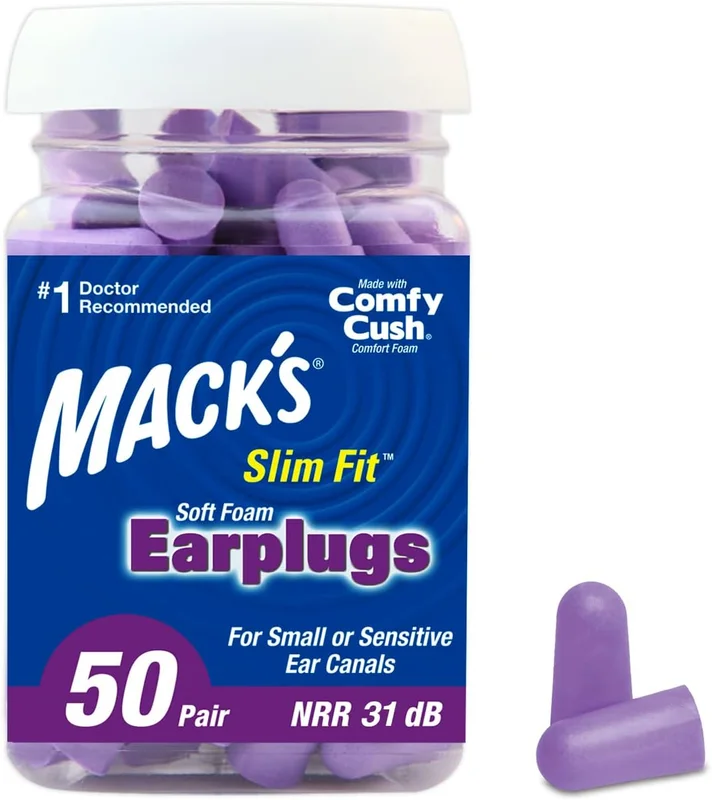
Mack's Slim Fit is the most-reviewed disposable foam earplug on Amazon and consistently leads detailed reviews for people with loud snorers. The NRR is 29 dB — 5–6 dB higher than the Loop Quiet — which in practice is the difference between "mostly muffled" and "barely audible." The "slim fit" version is specifically designed for smaller ear canals and side sleeping, which solves the normal foam-plug comfort problem.
What buyers consistently like
- 29 dB NRR. Among the highest attenuation ratings available in consumer earplugs. For very loud snoring, this is often the only thing that works.
- Slim shape. Narrower than standard foam plugs, which fits smaller ear canals and causes less protrusion when side sleeping.
- Price. Pennies per pair. 50-pair bulk pack is the standard purchase size.
- Disposable. No washing required. Use once or twice and toss.
- Excellent seal. Foam expands to fill the entire ear canal, which creates the best possible seal against low-frequency snoring.
- Widely available. Drugstores, Amazon, Walmart — easy to buy in person when you run out.
Trade-offs
- Still less comfortable than silicone for all-night side sleeping. Even the slim version protrudes slightly from the ear, and hours of pressure against a pillow can cause ear canal soreness.
- Single-use or few-use. You'll go through a lot more of these than you would silicone plugs over a year.
- Not reusable. Cost per use is low but cumulative waste is higher than silicone.
- Cheap look. Bright colors. Some partners find them visually distracting (though the "I'm wearing these because you snore" message may be intentional).
How to actually use earplugs for snoring
1. Put them in before you get in bed, not after. Lying down can cause ear canal shape changes that affect the seal.
2. Learn the proper insertion technique.
- For foam: roll the plug into a thin cylinder, pull your ear upward and backward to straighten the canal, insert, hold in place until it expands.
- For silicone: pick the right tip size first, then gently insert with a slight twist.
3. Combine with white noise. Earplugs reduce sound; a white noise machine masks remaining sound. Together they work better than either alone for severe snoring environments.
4. Accept that they're not perfect. Even the best earplugs don't make snoring disappear. They turn "very loud and wake-me-up" into "muffled and barely noticeable." Manage expectations.
5. Talk to your partner about the snoring itself. Earplugs are a coping tool — not a solution to the underlying problem. Sleep apnea, obesity, alcohol, and sleeping position all affect snoring. Getting your partner evaluated may help both of you more than any earplug.
Frequently asked
Are earplugs safe to wear every night?+
Will earplugs make me miss my alarm?+
Foam or silicone — which is better for snoring?+
Can I wear earplugs if I sleep on my side?+
How long does a pair of reusable silicone earplugs last?+
Where to go next
Related findings.
 Edge Pick
The Best White Noise Machines for Tinnitus in 2026
Tinnitus at night is relentless. The right masking sound can make sleep possible again. Here's what customers with tinnitus consistently rate highest for nighttime use.
 Edge Pick
The Best Weighted Blankets for Deep Sleep (2026)
What the research says about weighted blankets for sleep and anxiety — plus the two products verified buyers consistently rate highest.
 Edge Pick
The Best Weighted Blankets for Anxiety in 2026
Weighted blankets use deep pressure stimulation to calm the nervous system — a technique originally developed for anxiety and sensory disorders. Here's what customers rate highest.