Uvex Skyper Review: The $12 Blue Blockers That Actually Work
A detailed review of the Uvex Skyper SCT-Orange blue light blocking glasses — 98% blue light filtering, fit-over-glasses design, and the trade-offs of going industrial.
The Uvex Skyper SCT-Orange is the most frequently recommended budget blue-light blocker across sleep forums, Reddit threads, and verified buyer reviews — and the reason is simple math. At roughly $12, it blocks 98% of blue light in the 400–500nm range, which is more than many glasses costing five to ten times as much. It was originally designed as industrial safety eyewear, and that origin story is both its greatest strength and the source of its only real weakness.
This review covers what 10,000+ verified buyers consistently report about the Uvex Skyper's blue-blocking performance, comfort for evening wear, and the practical trade-offs of wearing safety glasses to bed.
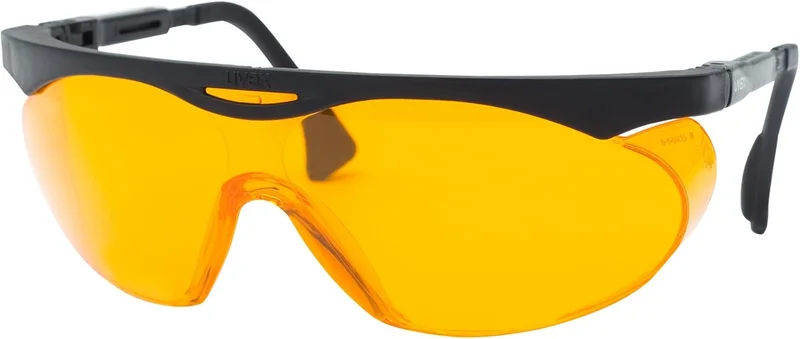
Uvex
Uvex Skyper SCT-Orange Blue Light Blocking Glasses
$11.99
Pros
- 98% blue light blocking — verified on lab spectrum tests
- Fits over prescription glasses
- Cheapest credible blue blockers on the market
Cons
- Industrial safety glasses look — not stylish
- Bulkier than fashion-frame alternatives
What it is
The Uvex Skyper is a wraparound safety goggle with an SCT-Orange polycarbonate lens. It was designed by Honeywell's safety division for industrial environments where workers need protection from UV and high-energy visible light. The sleep community adopted it because the SCT-Orange lens happens to provide aggressive blue-light filtration — more than most consumer "sleep glasses" — at a fraction of the price.
The key specs:
- Blue light blocked: ~98% of wavelengths below 530nm (independently verified by multiple sources)
- Lens material: SCT-Orange polycarbonate
- Frame style: Wraparound safety goggle with adjustable temples
- Fits over glasses: Yes — designed to accommodate prescription eyewear underneath
- Weight: Lightweight (~1.5 oz)
- Price: ~$11.99
What buyers consistently like
1. 98% blue light blocking — verified
This is the headline feature and the reason the Uvex Skyper dominates budget blue-blocker discussions. The SCT-Orange lens blocks approximately 98% of blue light below 530nm. This has been independently verified by multiple users with spectrophotometers, and the results are consistent: the Uvex Skyper matches or exceeds the blue-blocking performance of glasses costing $80–$150. Verified buyers consistently report that when wearing these, a blue LED on a device appears completely dark — the standard DIY test for effective blue blocking.
2. Fits over prescription glasses
The Skyper was designed as safety eyewear that goes over existing glasses. This is a significant advantage for the roughly 75% of adults who wear corrective lenses. Instead of paying $150+ for prescription blue-blocking lenses, you put $12 Skypers over your regular glasses and get better blue filtration. Verified buyer reviews from prescription-glasses wearers consistently describe this as the primary reason they chose the Skyper over consumer alternatives.
3. Wraparound coverage blocks peripheral light
Unlike standard eyeglass frames that leave gaps on the sides, top, and bottom, the Skyper's wraparound design blocks light from entering at any angle. This matters because peripheral light still reaches the retina and can suppress melatonin production. Buyers who previously used flat-frame blue blockers consistently report that the wraparound coverage makes a noticeable difference in how quickly they feel drowsy in the evening.
4. Price makes replacement painless
At $12, losing, scratching, or sitting on a pair of Skypers is a minor inconvenience rather than a financial setback. Many long-term users keep two or three pairs — one by the couch, one in the bedroom, one for travel. Verified buyers frequently describe this as a "buy three and never worry about it" product, which dramatically increases compliance compared to a single $100 pair you're afraid to damage.
5. Noticeable effect on sleep onset
A substantial proportion of detailed reviews specifically mention falling asleep faster after 1–2 weeks of consistent evening use. The most common description is feeling "noticeably drowsier" within 60–90 minutes of putting the glasses on, which aligns with the published research on aggressive blue-light filtration and melatonin onset. Buyers who pair the Skypers with dimmed room lighting report the strongest effects.
The pattern across reviews is remarkably consistent: the first 2–3 nights show minimal change, then around days 5–7 of consistent use, buyers begin noticing an earlier onset of sleepiness. This timeline aligns with circadian rhythm research showing that consistent light hygiene practices take several days to shift the melatonin production schedule measurably.
6. Easy to buy in bulk for household use
At $12, buying one pair for each family member or keeping spares in different rooms is trivially affordable. Verified reviews include a notable proportion of repeat purchases — buyers who initially purchased a single pair and returned to buy additional units for partners, travel bags, and backup. The low price removes the decision friction entirely, and several buyers describe keeping a pair on every nightstand in the house.
What buyers consistently complain about
1. Industrial safety aesthetic
This is the #1 complaint and it is legitimate. The Uvex Skyper looks like what it is: a safety goggle from a factory floor. There is no stylish frame option, no sleek profile, no color choices. Verified reviews are blunt about this — "they look ridiculous," "my partner laughed," and "I would never wear these outside my house" are representative comments. If appearance matters to you during evening wear, these are a hard sell.
2. Bulky and not ideal for lying down
The wraparound frame that provides excellent light blocking also means the Skypers are bulkier than standard glasses. Buyers who read or watch TV while lying down report that the frame presses against pillows and shifts on the face. They work well while sitting upright, but the form factor is not designed for reclining. This is a meaningful limitation for people whose pre-bed routine involves lying on the couch.
3. Strong orange tint distorts colors
The SCT-Orange lens makes everything look deeply orange. This is by design — aggressive filtration means aggressive color shift. Watching TV, browsing your phone, or reading a tablet through these lenses is a noticeably different visual experience. Most buyers adjust within 3–5 days, but some find the distortion annoying enough to limit usage to the final 30–60 minutes before bed rather than the recommended 2–3 hours.
4. Temple arms can feel tight
Some reviewers with wider heads report that the non-adjustable temple width creates pressure points above the ears after extended wear. The temples are adjustable in angle but not width. For average or smaller head sizes this is not an issue, but buyers with larger heads consistently mention discomfort after 60+ minutes of continuous wear.
The science behind SCT-Orange lenses
The Uvex Skyper's effectiveness is rooted in a straightforward principle: the melanopsin receptors in the retina that regulate circadian rhythm are most sensitive to blue light in the 460–490nm range. The SCT-Orange lens blocks virtually all light below 530nm, which means it eliminates the entire wavelength range that suppresses melatonin production.
Published research supports the general approach. A 2009 study in Chronobiology International found that participants wearing amber lenses for three hours before bed showed significantly improved sleep quality and mood compared to a control group wearing clear lenses. A 2018 study in Journal of Psychiatric Research demonstrated that blue-light blocking in the evening modestly advanced melatonin onset timing.
The critical nuance: the Skyper's SCT-Orange lens is more aggressive than the amber lenses used in many consumer "sleep glasses." While amber lenses block 65–80% of blue light, the SCT-Orange blocks 98%. This means a more dramatic color distortion but a more complete elimination of the wavelengths that matter for circadian signaling. For buyers who are serious about pre-bed light hygiene and willing to tolerate the orange world, the Skyper provides the most comprehensive blocking available outside of specialty optics.
It is worth noting that blue-blocking glasses are one component of evening light management, not a standalone solution. Room lighting, overhead LEDs, and ambient brightness from windows all contribute to circadian disruption. Wearing Skypers under bright fluorescent ceiling lights helps, but dimming overall room lighting amplifies the effect considerably. The most positive buyer reviews consistently describe using the glasses as part of a broader wind-down routine rather than as an isolated intervention.
Who should buy Uvex Skyper
Best for:
- Budget-conscious buyers who want maximum blue-blocking per dollar
- Prescription glasses wearers who need a fit-over solution
- People who prioritize function over fashion and wear them only at home
- Anyone who wants wraparound coverage to block peripheral light leakage
- Users who want to keep multiple pairs in different locations for convenience
Not great for:
- Anyone who cares about appearance while wearing them around others
- People who read or watch TV while lying down (the frame is too bulky)
- Users who want a single pair of blue blockers for both home and public use
- Buyers with very wide heads who may find the temple pressure uncomfortable
How it compares to alternatives
| Feature | Uvex Skyper | Swanwick Swannies | Ra Optics Twilight | |---|---|---|---| | Blue light blocked | ~98% | ~80–90% (estimated) | ~99% (published data) | | Fits over glasses | Yes | No | No | | Wraparound coverage | Yes | No | Partial | | Comfort for 2+ hours | Good (seated) | Excellent | Excellent | | Appearance | Industrial | Stylish | Premium | | Price | ~$12 | ~$79 | ~$120 |
The practical breakdown: the Uvex Skyper blocks more light than the Swannies at one-sixth the price, and nearly matches the Ra Optics at one-tenth the price. The trade-off is entirely aesthetic and comfort-related. If you wear them at home and don't mind the look, the Skyper is the rational choice. If you need something presentable or comfortable for reclining, pay more.
A common buying pattern in detailed reviews: start with the Skyper to test whether blue-blocking helps your sleep at all. If it does, decide whether the industrial look bothers you enough to upgrade. Many buyers report being satisfied enough with the Skyper's performance that they never upgrade — the aesthetic compromise at home, where no one sees you, is easy to accept when the glasses cost less than a lunch.
For buyers considering the Swannies or Ra Optics primarily for better aesthetics, it is worth noting that neither product is typically worn outside the home either. Evening blue-blocking is fundamentally a pre-bed, at-home activity. If you're wearing them in your living room while watching TV or reading before bed, the audience is yourself and possibly a partner — not the general public. This context makes the aesthetic premium harder to justify for many buyers, as reflected in detailed reviews where Skyper owners describe moving past the appearance concern within the first week of use.
The one scenario where a premium option clearly wins over the Skyper is extended reclining wear. If your pre-bed routine involves lying on the couch for 1–2 hours watching TV, the Skyper's bulky wraparound frame will press uncomfortably against pillows and shift on your face. Flat-frame options like the Swannies are better suited to this position. If your pre-bed routine is primarily seated — at a desk, on a couch sitting upright, or in an armchair — the Skyper's frame is perfectly adequate.
Where to buy
Frequently asked
Do the Uvex Skyper glasses actually help with sleep?+
Can I wear these over my prescription glasses?+
How do these compare to blue-blocking screen filters or apps like f.lux?+
Will the orange tint bother me while watching TV?+
How long do they last?+
Where to go next
Practical tips from verified buyer reviews
Several recurring recommendations appear across hundreds of verified buyer reviews that are worth consolidating here.
Start wearing them earlier than you think. The most commonly cited advice is to put the Skypers on 2–3 hours before your target bedtime, not 30 minutes before. The melatonin production process takes time to ramp up once blue light exposure stops, and starting earlier gives your body a longer window to begin producing melatonin naturally. Buyers who wear the glasses for only 30 minutes before bed consistently report less noticeable effects than those who wear them for 2+ hours.
Dim room lights at the same time. Putting on blue-blocking glasses while sitting under bright overhead LEDs blocks the blue component entering your eyes but leaves the overall brightness signal intact. Bright light of any wavelength can suppress melatonin, though blue is the most potent. The most positive buyer reviews consistently describe a combined approach: glasses on and lights dimmed to low, warm-toned settings simultaneously.
Keep a pair with your evening routine. Wherever you spend your pre-bed hours — couch, office, bedroom — keep a pair within arm's reach. The $12 price makes this trivial. The biggest barrier to consistent use isn't the glasses themselves; it's remembering to put them on. Keeping them visible and accessible at your evening spot eliminates the friction.
Ignore the look and focus on the result. Multiple long-term buyers note that they initially felt self-conscious about the industrial appearance and nearly stopped wearing them. After 1–2 weeks of noticing faster sleep onset, the cosmetic concern became irrelevant. The consensus across detailed reviews is clear: function wins over form when it comes to sleep tools used exclusively at home.
Related findings.
 Lab Report
Zinus Green Tea Memory Foam Mattress Review: The $400 Mattress Most People Actually Need
A detailed review of the Zinus 12-Inch Green Tea Memory Foam Mattress — the most-reviewed budget mattress on Amazon, and why it satisfies 80% of sleepers at 25% of the premium price.
Yogasleep Rohm Travel White Noise Machine Review: The Pocket-Sized Sleep Saver
A detailed review of the Yogasleep Rohm — portability, battery life, sound quality, and how it compares to plug-in alternatives.
 Lab Report
Yogasleep Dohm Review: The 60-Year-Old Design That Still Wins
A detailed review of the Yogasleep Dohm — why a real-fan noise machine from 1962 still outsells digital alternatives, and who it's for.