Sleep and Aging: What Changes After 50 (and What to Do About It)
Sleep changes with age — but not all of it is inevitable. Here's what the research says about why older adults sleep differently and what actually helps.
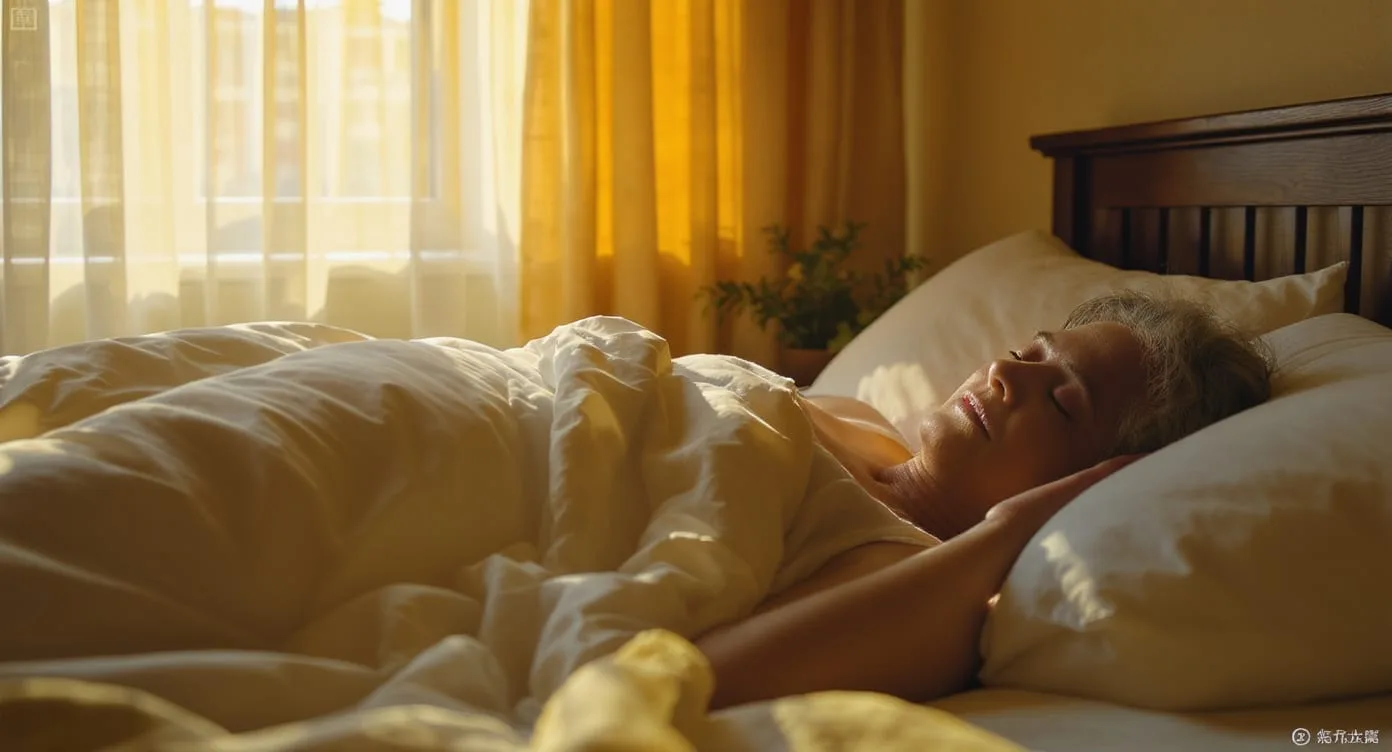
Sleep changes as you age. This is normal, well-documented, and — to an extent — unavoidable. But the common assumption that older adults "just don't need as much sleep" is wrong, and accepting poor sleep as an inevitable part of aging means missing treatable problems that have real health consequences.
This guide covers what the published research says about how sleep architecture changes with age, which changes are normal versus which signal a problem, and the evidence-based strategies that help older adults maintain the best sleep their biology allows.
What actually changes
Deep sleep declines
This is the most significant age-related sleep change. Deep (slow-wave) sleep — the stage responsible for physical recovery, growth hormone release, immune function, and glymphatic clearance — declines steadily from early adulthood. By age 60, many people get 50–70% less deep sleep than they did at age 25.
The cause is partly structural: the neurons in the brain regions that generate slow waves (particularly the medial prefrontal cortex) deteriorate with age. The result: the brain still enters light and REM sleep normally, but can't generate the same depth of slow-wave activity.
Sleep becomes more fragmented
Older adults experience more frequent awakenings during the night. This isn't because they're lighter sleepers in the literal sense — it's because the transitions between sleep stages become less stable, and the arousal threshold (how much noise or discomfort it takes to wake you) drops.
The result: total time in bed may be 8 hours, but actual sleep time may be only 6–6.5 hours, with the rest spent in brief awakenings. This discrepancy is one of the reasons many older adults feel unrested despite spending adequate time in bed.
The circadian clock shifts earlier
The circadian rhythm naturally advances (shifts earlier) with age. This is why many older adults feel sleepy by 8–9 PM and wake at 4–5 AM. The shift is driven by changes in the SCN and in melatonin production patterns.
This is often misidentified as insomnia — "I wake up too early and can't get back to sleep" — when it may simply be a circadian phase advance. The distinction matters because the treatments are different: early-morning waking from a shifted clock responds to evening light therapy, while early-morning waking from insomnia responds to CBT-I.
Melatonin production decreases
The pineal gland produces less melatonin with age. By age 60, nighttime melatonin levels are often 50–80% lower than at age 25. This contributes to both the circadian shift and the reduction in sleep consolidation.
This is one of the few situations where low-dose melatonin supplementation (0.3–1mg) has relatively strong published support — because the supplementation is replacing a genuine age-related deficit rather than adding a hormone to a system that doesn't need it.
What's normal vs. what's a problem
Normal age-related changes
- Waking 1–2 times per night
- Needing slightly less total sleep (7–8 hours vs. 7–9)
- Earlier sleep-wake timing (bedtime shifting to 9–10 PM, wake time to 5–6 AM)
- Lighter sleep overall
- Taking slightly longer to fall asleep (15–20 minutes vs. 10–15)
Signs of a treatable problem
- Loud snoring with pauses or gasping — sleep apnea (prevalence increases sharply after 50)
- Uncontrollable urge to move legs at night — restless legs syndrome (prevalence increases with age)
- Feeling unrefreshed despite 7–8 hours in bed — possible sleep disorder or medication side effect
- Excessive daytime sleepiness — not normal aging; warrants evaluation
- Regular sleep onset taking 30+ minutes — may indicate insomnia or circadian misalignment
- Frequent nighttime urination (3+ times) — may indicate prostate issues (men), pelvic floor changes (women), or undiagnosed sleep apnea
What helps (evidence-based)
1. Morning light — the most underused intervention
Bright morning light is the most effective tool for maintaining a robust circadian rhythm as you age. It strengthens the amplitude of the sleep-wake cycle, improves nighttime sleep consolidation, and counters the circadian drift that causes progressively earlier bedtimes.
For older adults who wake "too early" and get sleepy too early in the evening, evening light exposure (bright light in the late afternoon/early evening) can delay the clock and push sleep timing later.
2. Exercise — particularly aerobic
Regular aerobic exercise is one of the strongest evidence-based interventions for improving sleep quality in older adults. A 2010 study by Reid et al. in Sleep Medicine found that 16 weeks of moderate aerobic exercise (30 minutes, 4 days/week) produced clinically significant improvements in sleep quality, sleep latency, and daytime function in older adults with insomnia.
The key: consistency over intensity. Walking, swimming, and cycling are all effective. Morning exercise is ideal because it combines physical activity with bright-light exposure.
3. Low-dose melatonin (with doctor guidance)
For older adults with documented low melatonin production, supplementation at physiological doses (0.3–1mg, 30–60 minutes before bedtime) has published support for improving sleep onset and sleep consolidation.
Higher doses (3–10mg) are not more effective and may cause next-day grogginess.
4. Cognitive behavioral therapy for insomnia (CBT-I)
CBT-I is effective in older adults — the published evidence is clear and consistent. A 2006 meta-analysis by Irwin et al. found that CBT-I produced significant, sustained improvements in sleep quality in adults over 55, with effects lasting months after treatment ended.
Many older adults are prescribed sleep medications as a first-line treatment. The research strongly supports CBT-I as a better first-line approach — it's more effective long-term, has no side effects, and doesn't carry the fall risk that sedative medications do in older populations.
5. Sleep apnea screening
The prevalence of sleep apnea increases dramatically with age — affecting an estimated 20–30% of adults over 65. Untreated sleep apnea in older adults is associated with:
- Hypertension and cardiovascular events
- Cognitive decline and increased dementia risk
- Excessive daytime sleepiness and fall risk
- Nocturia (frequent nighttime urination — yes, apnea causes this)
If you snore, feel unrefreshed, or wake frequently, a sleep study is worth pursuing regardless of age. CPAP is effective and well-tolerated in older adults. See our sleep apnea warning signs guide.
6. Medication review
Many medications commonly prescribed to older adults affect sleep:
- Beta-blockers — can suppress melatonin and cause insomnia
- Diuretics — increase nighttime urination
- SSRIs — can cause insomnia or vivid dreams
- Corticosteroids — frequently disrupt sleep
- Statins — occasionally linked to insomnia in some users
A medication review with your doctor or pharmacist — specifically asking "could any of my medications be affecting my sleep?" — is one of the most overlooked interventions. In many cases, adjusting timing (taking a stimulating medication in the morning rather than evening) makes a meaningful difference.
7. Bedroom environment optimization
The basics matter more with age because the arousal threshold drops:
- Cooler room (65–68°F) — temperature sensitivity increases with age
- Blackout curtains — early dawn light triggers the advanced circadian clock even earlier
- White noise — masks the intermittent sounds that fragment lighter sleep
- Comfortable mattress — joint pain and pressure points are more problematic as you age
- Bathroom nightlight — red or amber, not white. Bright bathroom light during nighttime trips can suppress melatonin and make it harder to fall back asleep
The napping question
For older adults with adequate nighttime sleep, the same rules apply as for younger adults: an afternoon nap of 20–30 minutes can be restorative without disrupting nighttime sleep. The afternoon circadian dip is more pronounced in older adults, making a post-lunch nap both tempting and potentially beneficial.
For older adults with nighttime insomnia, napping is generally counterproductive — it reduces the sleep pressure needed at bedtime. See our napping guide for the full framework.
The dementia connection
Published research has established a bidirectional relationship between sleep and cognitive decline:
- Poor sleep increases dementia risk. The glymphatic system — which clears beta-amyloid and tau proteins from the brain — operates primarily during deep sleep. Chronic deep-sleep deficit may contribute to the accumulation of these proteins, which are hallmarks of Alzheimer's disease.
- Dementia disrupts sleep. Neurodegenerative changes in the brain regions that generate and maintain sleep make sleep progressively worse as cognitive decline advances.
This connection means that optimizing sleep in midlife and beyond is not just a quality-of-life issue — it may be a meaningful factor in long-term cognitive health.
Frequently asked
Is it true that older adults need less sleep?+
Should I take sleeping pills?+
Why do I wake up so early now?+
Can better sleep prevent dementia?+
Is sleep apnea treatment different for older adults?+
References
- Mander BA, Winer JR, Walker MP. Sleep and human aging. Neuron, 2017.
- Duffy JF, Czeisler CA. Age-related change in the relationship between circadian period, circadian phase, and diurnal preference in humans. Neuroscience Letters, 2002.
- Reid KJ et al. Aerobic exercise improves self-reported sleep and quality of life in older adults with insomnia. Sleep Medicine, 2010.
- Irwin MR et al. Cognitive behavioral therapy vs. tai chi for late-life insomnia. JAMA Internal Medicine, 2014.
- Xie L et al. Sleep drives metabolite clearance from the adult brain. Science, 2013.
Where to go next
Related findings.
 Protocol
Why You Wake Up at 3 AM (And What You Can Do About It)
Middle-of-the-night wake-ups have a small set of common causes — and most of them are addressable. A writer-curated look at what's really happening at 3 AM.
 Protocol
Why We Dream: What Science Actually Knows (and Doesn't)
Dreams aren't random noise. Published neuroscience points to specific functions — memory, emotion, creativity. Here's what we know and what's still a mystery.
 Protocol
Sleep for Shift Workers: A Survival Guide
Night shifts fight your biology. Here's what published research says about managing sleep when your schedule won't cooperate.