The Best Sleep Masks for Side Sleepers in 2026
Most sleep masks dig into your eyes when you sleep on your side. Here's the eye-cup mask design customers consistently rate highest for side-sleeper comfort and total light blocking.
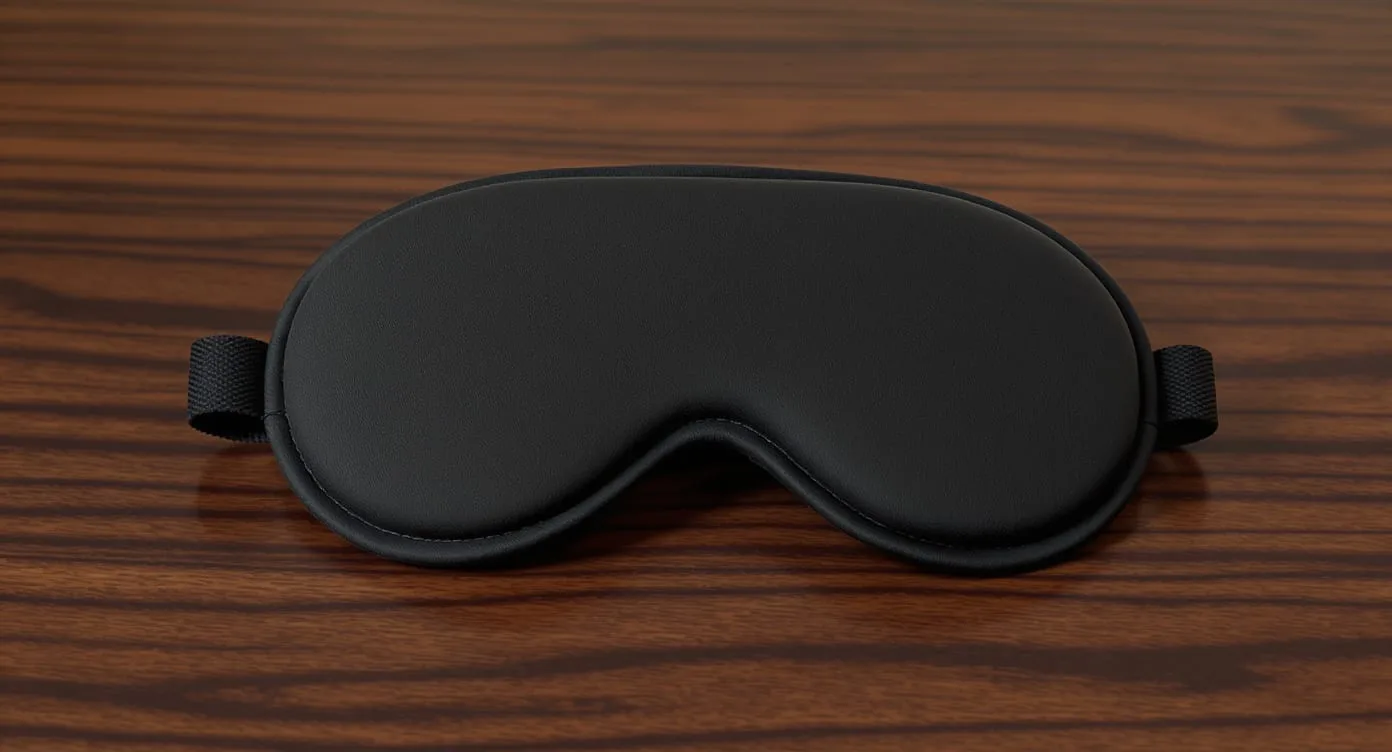
If you've ever tried a flat sleep mask as a side sleeper, you know the problem: you lie on your side, the mask presses against the pillow, the fabric mashes into your closed eyelids, your eyelashes get crushed, and within 20 minutes you've torn it off because it's unbearable. The solution isn't "try a softer mask" — it's a mask with structural eye cups that keep fabric off the eyelids entirely. That design category is dominated by one product in detailed reviews, and it has been for years.
Why flat sleep masks fail for side sleepers
Three specific problems:
1. Fabric pressure on closed eyelids. Even soft fabric feels uncomfortable on closed eyes after 30 minutes. REM sleep involves rapid eye movement under the lids; a tight mask interferes with that and can cause dry eyes on waking.
2. Eyelash crushing. Flat masks press your lashes down against your eyelids. It's a minor discomfort at first but cumulative over a full night, and it's a real complaint in detailed reviews.
3. Light leak at the nose bridge. Most flat masks don't seal well around the nose bridge — there's almost always a gap that lets morning sunlight in exactly where you don't want it.
A well-designed eye-cup mask solves all three by creating a small empty cavity over each eye, held in place by structural material that never contacts the eyelid itself.
What to look for in a side-sleeper sleep mask
1. Eye cup design. The #1 feature. Structural cups keep fabric off the eyelids and allow free eye movement during REM.
2. Nose bridge seal. Adjustable or contoured nose piece that blocks the gap where most masks leak light.
3. Strap adjustability. Fixed-size masks fit some heads and not others. Adjustable velcro or buckle straps ensure fit across different head sizes.
4. Breathable material. Faces sweat more than you'd think. Polyester masks trap heat; cotton or moisture-wicking fabrics don't.
5. Side-sleeper profile. The side of the mask that contacts the pillow should be relatively flat and not have buckles, straps, or seams that create pressure points.
1. Manta Sleep Mask — The Category Standard
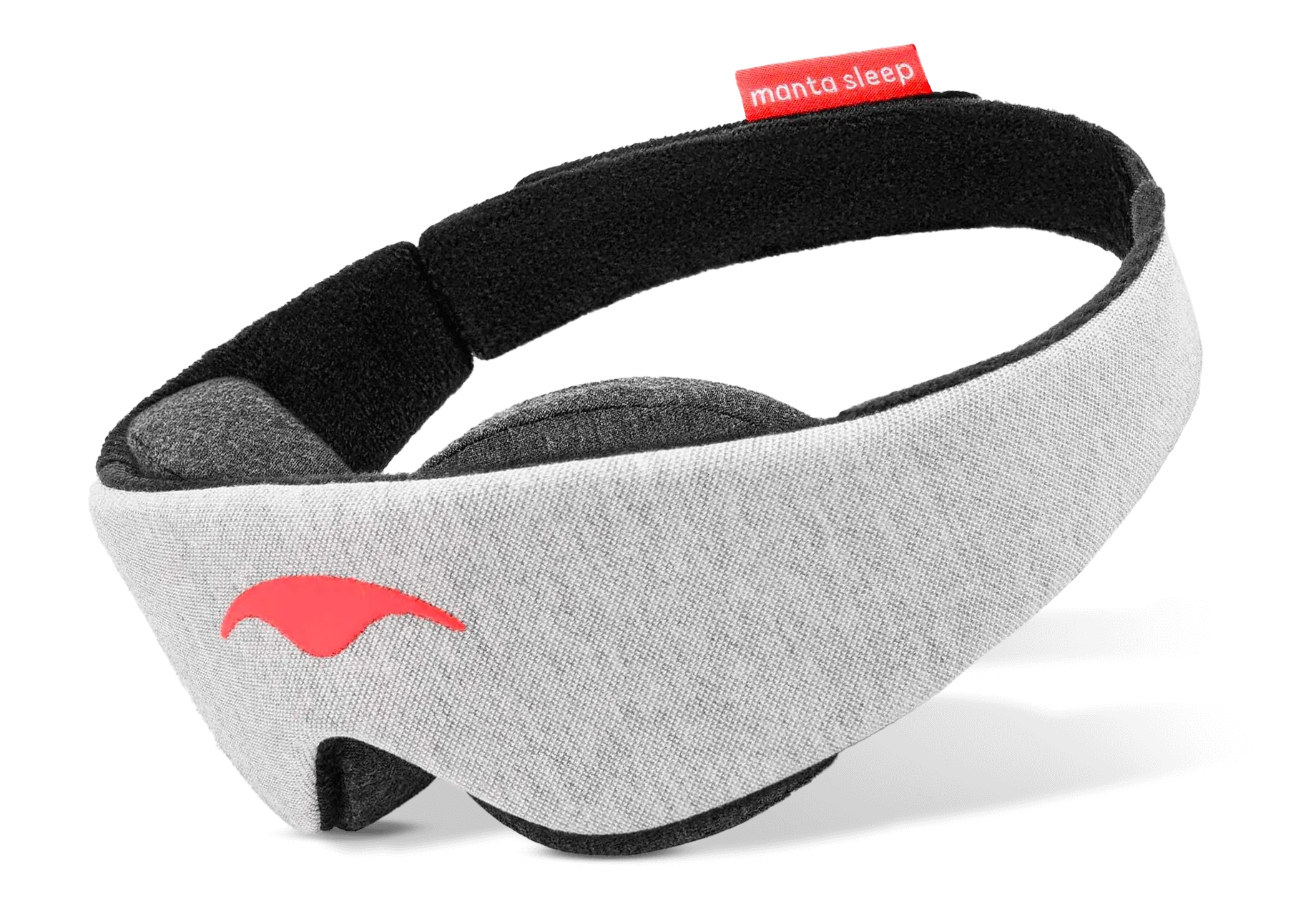
Manta Sleep
Manta Sleep Mask
$35.00
Pros
- Adjustable eye cups for total blackout
- Zero pressure on eyelids
- Modular and machine washable
Cons
- Bulkier than flat masks
- Strap can loosen over months of heavy use
The Manta Sleep Mask is the most-reviewed eye-cup sleep mask on Amazon and consistently the top-rated option for side sleepers in detailed reviews. It's not the cheapest sleep mask — it's roughly 3–5x the cost of basic flat masks — but it's the only one that reliably solves the side-sleeper problem. For anyone who's been through a cycle of "buy cheap masks, return them, buy more cheap masks, return those" this is usually where they end up.
What buyers consistently like
- Independent eye cups. The defining feature. Two structural cups sit on your face with enough depth to keep fabric entirely off your eyelids and eyelashes. You can open and close your eyes under the mask without feeling fabric.
- Complete light blocking. The eye cups create a true seal. Unlike flat masks that leak light at the nose bridge, the Manta blocks 100% of ambient light when properly fitted.
- Adjustable eye cup position. The cups are attached via velcro that lets you move them independently to match your face shape. This matters because faces are asymmetric — one eye socket is usually slightly different from the other, and fixed-position masks don't account for this.
- Adjustable velcro strap. Fits any head size, from small to large.
- Breathable fabric. Cotton and microfiber construction that doesn't trap heat or sweat.
- Side-sleeper comfort. The soft fabric over the cups flattens against the pillow without pressing into the face. The cups themselves are far enough from the pillow that pressure doesn't transmit to the eyes.
- Machine washable. Remove the eye cups and wash the mask body.
- 3+ year durability. Long-term reviews consistently report the mask still working like new.
Trade-offs
- Price. The #1 complaint. Roughly $35. For a sleep mask, that feels expensive until you realize most people buy 3–5 failed cheap masks before finding this one, at which point the math works out.
- Takes 1–2 nights to position correctly. The first night often has the cups slightly off-center. Adjustment is easy but not instant.
- Bulkier profile than flat masks. The eye cups make the mask more visible and noticeable than a flat strip of fabric. Most users adapt within a few nights; a small minority find it too bulky.
- Not great for back sleepers with specific fit issues. Generally works for all positions, but the cup-based design is specifically optimized for side sleepers. Back sleepers can use any mask without the pillow-pressure problem.
Who actually benefits from a sleep mask
Shift workers. You're trying to sleep during daylight. A sleep mask is the single highest-impact accessory for daytime sleep.
Travelers. Hotels, planes, trains — all have unpredictable lighting you can't control.
Light-sensitive sleepers. Some people are genuinely more sensitive to ambient light than others. The small amount of light that leaks through blackout curtains can wake them up; a mask provides the final layer.
Partner on different schedules. Your partner stays up reading while you sleep, or wakes up 2 hours earlier with the lights on — a sleep mask lets you protect your sleep from their schedule.
People with eye conditions. Some eye conditions (dry eye, photophobia) benefit from total darkness during sleep. A well-designed mask is part of that protocol.
How to combine a sleep mask with other darkness tools
A sleep mask is the last line of defense for darkness, not the first. The ideal setup:
- Blackout curtains handle ambient street and sky light.
- Door draft stoppers and hallway light blockers handle indoor light leaks.
- A sleep mask handles whatever small amount of light still gets through.
Using a sleep mask without blackout curtains is inefficient — the mask is doing all the work, and if it shifts during the night, you get woken by sudden light. With the full stack, even if the mask shifts slightly, the room is already dark enough that it doesn't matter.
Frequently asked
Are eye cup sleep masks better than flat ones?+
Do sleep masks affect sleep quality?+
Can I wear a sleep mask if I normally need to wake up to my phone alarm?+
Will a sleep mask help with insomnia?+
How long does a sleep mask last?+
Where to go next
Related findings.
 Edge Pick
The Best White Noise Machines for Tinnitus in 2026
Tinnitus at night is relentless. The right masking sound can make sleep possible again. Here's what customers with tinnitus consistently rate highest for nighttime use.
 Edge Pick
The Best Weighted Blankets for Deep Sleep (2026)
What the research says about weighted blankets for sleep and anxiety — plus the two products verified buyers consistently rate highest.
 Edge Pick
The Best Weighted Blankets for Anxiety in 2026
Weighted blankets use deep pressure stimulation to calm the nervous system — a technique originally developed for anxiety and sensory disorders. Here's what customers rate highest.