The Best Earplugs for Sleeping (2026)
Reusable silicone, moldable putty and disposable foam earplugs for sleep: how NRR ratings really work, what owners report, and the five pairs we'd start with.
We earn a commission if you buy through links on this page, at no extra cost to you. Picks are based on buyer reviews and specs; we don't test products ourselves. How we work
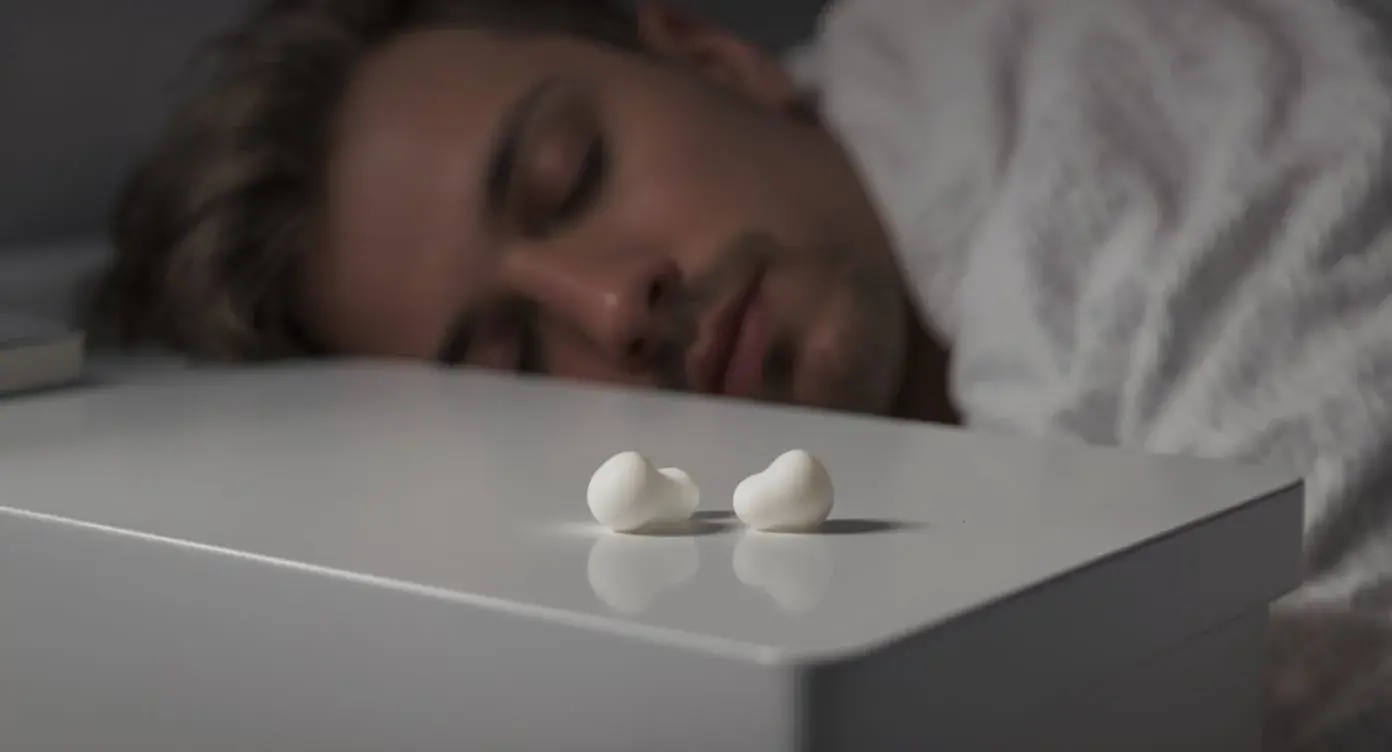
Earplugs are one of the cheapest, most effective sleep interventions available — and one of the most underused. If ambient noise (traffic, snoring, neighbors, early birds) is fragmenting your sleep, earplugs can reduce it to a level your brain ignores, without the electricity, the app, or the cost of a sound machine.
This guide covers how noise reduction ratings work, the difference between reusable silicone and disposable foam, comfort considerations for side sleepers, and five picks: two reusable designs, a moldable silicone putty, and two disposable foams for different ear sizes and noise levels.
How NRR ratings work
Every earplug sold in the U.S. carries a Noise Reduction Rating (NRR) — a number in decibels that indicates how much sound the earplug blocks under lab conditions. A few things to know:
- Real-world reduction is lower than the lab number. The EPA sets the NRR labeling rules, but for estimating real-world protection, OSHA's guidance is to subtract 7 dB from the NRR and then apply a 50% derating (divide by 2). So an NRR 29 earplug provides roughly (29−7)/2 = 11 dB of real-world reduction.
- 11 dB is meaningful. A 10 dB reduction cuts perceived loudness roughly in half. That's often enough to drop a snoring partner from "keeping me awake" to "barely noticeable."
- You don't want total silence. Blocking all sound means you won't hear a smoke alarm. For sleep, you want to reduce ambient noise enough that it stops fragmenting your sleep — not eliminate all sound.
Reusable silicone vs. disposable foam
Reusable silicone (Loop, Flare, etc.)
- Pros: Washable, durable, consistent fit, more comfortable for many side sleepers because the profile is flatter
- Cons: Lower NRR than foam (Loop Quiet, for example, is rated 14 dB NRR), higher upfront cost, some designs don't seal well in all ear canals
- Best for: Nightly use, side sleepers, partner snoring, moderate noise environments
Disposable foam (Mack's, Hearos, etc.)
- Pros: Highest NRR (up to 33 dB), extremely cheap per pair, conform to any ear canal shape
- Cons: Single-use (though many people reuse for a few nights), can feel warm, must be rolled and inserted correctly for full seal
- Best for: Heavy noise environments, travel, trying earplugs for the first time (cheapest way to test)
Moldable silicone putty (Mack's Pillow Soft, etc.)
- Pros: Covers the ear opening instead of going into the canal, nothing to roll or push in, waterproof
- Cons: Lower NRR than foam, loses its tackiness after a few uses, can pick up lint and hair
- Best for: People who find anything inside the ear canal uncomfortable
1. Loop Quiet — Best Reusable
Loop is a popular reusable sleep earplug. The design uses a silicone shell with soft ear tips that reduces noise without the pressure and heat of foam.
Why side sleepers like Loop
- Side-sleeper comfort. The flush, flat profile means the earplug doesn't press into the pillow. This is the main reason side sleepers choose Loop over foam.
- Moderate noise reduction. Loop rates the Quiet at 14 dB NRR (24 dB under the European SNR scale). Real-world protection is lower than the lab rating, especially with an imperfect fit, so think of it as taking the edge off noise rather than blocking it.
- Reusable and washable. One pair lasts months with proper care. Multiple ear tip sizes are included for fit.
- Aesthetics. They look good enough to wear outside sleep contexts — concerts, focus work, travel.
Loop Quiet drawbacks
- Fit varies. Some ear canal shapes don't seal well with the included tips. Loop sells supplemental tips, but it can take experimentation.
- Not enough for heavy noise. If you live next to a highway or your partner's snoring is severe, a 14 dB NRR plug may not be sufficient. Foam plugs block substantially more noise (Mack's Slim Fit is rated NRR 29).

Loop
Loop Quiet 2 Earplugs
Pros
- Comfortable silicone design for side sleepers
- Up to 24 dB (SNR) noise reduction — muffles snoring and traffic
- Reusable, four ear tip sizes included
Cons
- Won't block very loud noise (construction, heavy snoring)
- Some users find the fit takes trial and error
2. Mack's Slim Fit — Best Disposable
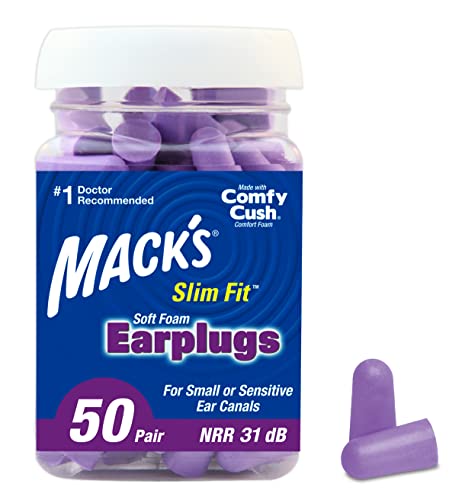
Mack's is a long-established earplug brand, and the Slim Fit model is designed specifically for people with smaller ear canals, a common pain point with standard-size foam plugs.
What Mack's Slim Fit does well
- 29 dB NRR. High for a foam plug (Mack's own Ultra Soft foam plugs are rated NRR 33), and strong enough for heavy snoring and urban noise.
- Slim profile. Specifically designed for smaller ears. People who find standard foam plugs uncomfortable often prefer these.
- Price. Sold in bulk boxes, so they cost pennies per night.
Common foam-plug gripes
- Disposable. Not ideal for the environmentally conscious. Many users reuse each pair for a few nights, but they're not designed for it.
- Insertion technique matters. Foam earplugs must be rolled tightly and inserted while compressed for a full seal. Buyers who skip this step report poor noise reduction.
Mack's
Mack's Slim Fit Soft Foam Earplugs (50 Pair)
Pros
- 29 dB NRR rating
- Slim profile designed for smaller ear canals
- Extremely affordable — pennies per pair
Cons
- Disposable — not reusable long-term
- Foam can feel warm in the ear canal
3. Alpine SleepDeep — Best Soft Reusable for Side Sleepers
SleepDeep is Alpine's sleep-specific earplug. Instead of a silicone shell with tips, it uses a soft, silicone-free oval plug that Alpine says warms to body temperature and molds to the ear, with a noise-reducing core inside.
What SleepDeep does well
- Comfort under pressure. The oval shape is meant to sit low in the ear so it doesn't get pushed in when your head is on the pillow. Softness and side-sleeper comfort are the most consistent themes in owner reviews.
- Size options. Sold in small, medium and large, plus a multi-size pack for working out your fit.
- Reusable. Alpine rates a pair for up to six months of use with regular cleaning.
SleepDeep drawbacks
- Moderate blocking. Alpine rates it at 27 dB on the European SNR scale (SNR numbers run higher than U.S. NRR). Owner reports on noise reduction are mixed, with some still hearing loud snoring.
- Fit is hit or miss. Some owners say the plugs work loose overnight, so the multi-size pack is worth considering first.

Alpine
Alpine SleepDeep Reusable Earplugs for Sleeping
Pros
- Soft oval shape designed to sit flat for side sleepers
- Sold in small, medium, large and a multi-size pack
- Silicone-free and reusable for up to 6 months
Cons
- Rated 27 dB SNR, so blocking is moderate; owner reports on noise reduction are mixed
- Some owners say the plugs work loose overnight
4. Mack's Pillow Soft — Best If You Hate In-Canal Plugs
Mack's Pillow Soft is a moldable silicone putty earplug that has been around for decades. You roll it into a ball, press it over the ear opening and flatten it into a seal. It doesn't go into the ear canal at all.
What Pillow Soft does well
- No canal pressure. For people whose ears ache from foam or silicone tips, covering the opening is often the only approach that works. Owners frequently say it handles a snoring partner better than foam did for them.
- NRR 22. Lower than the best foam plugs but higher than most reusable designs.
- Also waterproof. The same putty is sold for swimming, so it pulls double duty.
Pillow Soft drawbacks
- Short life per pair. The putty loses its stickiness and gathers lint, so each pair lasts only a few uses.
- Can come loose. Some owners find the putty peels off during the night, especially when lying on that ear.

Mack's
Mack's Pillow Soft Silicone Putty Earplugs (8 Pair)
Pros
- Moldable putty covers the ear opening instead of entering the canal
- NRR 22, higher than most reusable sleep plugs
- Waterproof, so it doubles as a swim plug
Cons
- Each pair lasts only a few uses before losing tackiness
- Some owners find it peels off during the night
5. Howard Leight MAX — Best for Heavy Noise
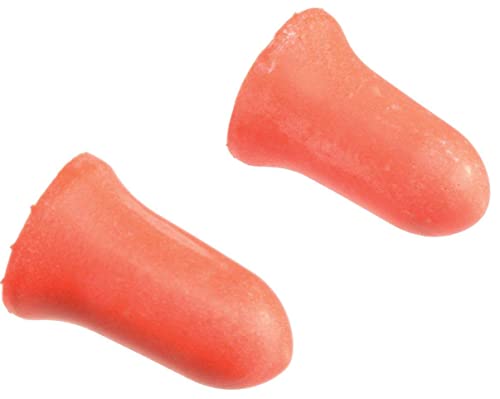
Howard Leight's MAX is built as workplace hearing protection, but its owner reviews are full of people using it for sleep. It is a bell-shaped polyurethane foam plug with a smooth, soil-resistant skin.
What Howard Leight MAX does well
- NRR 33. The highest rating you'll find on a disposable foam plug, which matters for highway noise, loud neighbors, or heavy snoring.
- Bell shape. The contour is designed to resist backing out of the ear canal. Owners often mention it drowns out snoring.
- Bulk box. Sold as 200 individually bagged pairs, so cost per night is tiny.
Howard Leight MAX drawbacks
- Full-size plug. It's a standard-size foam plug; people with small ear canals usually do better with Mack's Slim Fit.
- Foam pressure for side sleepers. Like any foam plug, it can press on the downside ear. Some owners also find it hard to insert correctly at first.
Howard Leight
Howard Leight by Honeywell MAX Disposable Foam Earplugs (200 Pair)
Pros
- NRR 33, the top rating for disposable foam plugs
- Bell shape designed to resist backing out of the ear canal
- 200 individually bagged pairs keep cost per night very low
Cons
- Full-size plug can be too big for small ear canals
- Foam presses on the downside ear for some side sleepers
Tips for sleeping with earplugs
- Combine with a sound machine for the most effective noise management. Earplugs reduce the peaks; a sound machine masks the residual noise.
- Clean reusable plugs regularly — warm water and mild soap. Dirty plugs can cause ear infections.
- Don't push foam plugs in too deep. The outer end should sit at the entrance of the ear canal; don't keep pushing until it disappears inside.
- If your ears feel sore, you're using the wrong size. Try a slimmer profile or switch between foam and silicone.
When earplugs aren't enough
If you need earplugs because of a partner's snoring and the snoring includes pauses, gasps, or choking sounds, the real solution is a sleep evaluation for the snorer — not better earplugs for you. See our snoring guide and sleep apnea warning signs.
Frequently asked
Are earplugs safe to use every night?+
Will I hear my alarm?+
Which is better for side sleeping?+
Can earplugs cause ear infections?+
What about custom-molded earplugs?+
Where to go next
- How to stop snoring
- Best sound machines for sleep
- Yogasleep Dohm review (sound masking)
- 12 evidence-based sleep tips
Related findings.
 Edge Pick
The Best Sleep Gear for Travel in 2026
Hotels are loud, bright, and unpredictable. Here's a packable four-item sleep kit for flights, road trips, and unfamiliar hotel rooms.
Buyer ReportMack's Slim Fit Review: Serious Noise Blocking for Smaller Ears
Mack's Slim Fit review: NRR 29 disposable foam earplugs with a narrower fit for small ear canals, in 10- and 50-pair packs. Who they suit and who should skip.
 Edge Pick
The Best Sleep Accessories for Couples in 2026
Sharing a bed doubles every sleep problem. Four products that solve the big ones for couples: temperature wars, snoring, mismatched schedules and comfort.