Vicks Filter-Free Cool Mist Humidifier Review: 30 Hours of Quiet Moisture
A detailed review of the Vicks Filter-Free Cool Mist Humidifier — 30-hour tank life, ultrasonic silence, and the maintenance reality buyers should know.
The Vicks Filter-Free Cool Mist Humidifier is one of the most-purchased bedroom humidifiers on the market, and verified buyer reviews point to a specific combination of features that explains why: a 1.2-gallon tank that runs for up to 30 hours on low, ultrasonic operation that is virtually silent, and a filter-free design that eliminates the recurring cost of replacement filters. At roughly $45, it sits in the sweet spot between cheap humidifiers that need refilling every 8 hours and premium units that cost three times as much.
This review covers what thousands of verified buyers consistently report about the Vicks Cool Mist's performance for sleep, the maintenance reality that the marketing doesn't emphasize, and who should consider a different type of humidifier instead.
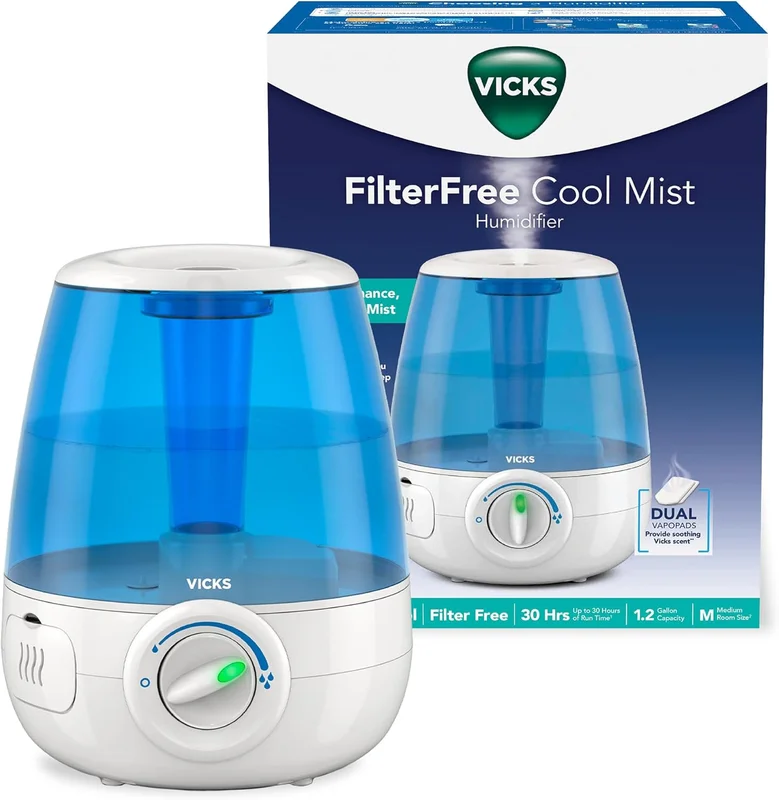
Vicks
Vicks Filter-Free Cool Mist Humidifier
$44.99
Pros
- 1.2-gallon tank runs up to 30 hours per fill
- Ultrasonic — virtually silent operation for the bedroom
- Helps with dry-air congestion that fragments sleep
Cons
- Requires regular cleaning to prevent mineral buildup
- Doesn't work with hard tap water — distilled recommended
What it is
The Vicks Filter-Free Cool Mist is an ultrasonic humidifier that uses high-frequency vibrations to turn water into a fine, cool mist without a fan or heating element. It has a transparent 1.2-gallon tank, a variable mist output dial, and a small tray for Vicks VapoPads (menthol scent pads sold separately). It's designed for rooms up to 400 square feet — suitable for most bedrooms.
The key specs:
- Tank capacity: 1.2 gallons
- Run time: Up to 30 hours on lowest setting
- Technology: Ultrasonic (no filter, no fan, no heating element)
- Room coverage: Up to 400 sq ft
- Noise level: Virtually silent (ultrasonic — no audible fan)
- VapoPad compatible: Yes (menthol pads sold separately)
- Price: ~$44.99
What buyers consistently like
1. 30-hour tank life eliminates nightly refilling
The 1.2-gallon tank runs for up to 30 hours on the lowest mist setting and approximately 12–15 hours on medium — meaning most buyers refill it every other day rather than every night. Verified buyers consistently cite this as the primary advantage over smaller humidifiers that run dry by 3 AM, leaving the second half of the night without humidity. The difference between waking up with a dry throat and waking up comfortable often comes down to whether the humidifier lasted the full 8 hours.
2. Ultrasonic silence
The unit produces no audible fan noise, motor hum, or gurgling under normal operation. The ultrasonic mechanism vibrates water at frequencies above the human hearing range, producing mist without moving air. Verified buyer reviews from light sleepers consistently describe it as "completely silent" or "the quietest humidifier I've owned." For bedrooms where any added noise is unwelcome, this is a significant advantage over evaporative humidifiers that rely on fans.
3. Helps with dry-air congestion and sinus discomfort
The most frequently cited benefit in buyer reviews is relief from nighttime congestion, dry sinuses, sore throat, and nosebleeds caused by dry indoor air — particularly during winter months when heating systems strip moisture from the air. Buyers in dry climates and cold-weather regions consistently report waking up with less congestion and fewer dry-throat mornings after adding this humidifier to their bedroom. When combined with VapoPads, the menthol mist provides additional sinus-clearing benefit during colds.
4. No replacement filters to buy
The filter-free design means no recurring filter costs. Evaporative humidifiers typically require filter replacements every 1–3 months at $8–$15 each — an annual cost of $30–$100. The Vicks ultrasonic eliminates this entirely. Verified buyers frequently describe the filter-free design as a primary purchase reason, particularly those who previously owned evaporative models and tired of the filter expense and hassle.
5. Variable mist output
The adjustable dial lets you set the mist output from a barely-visible trickle to a full plume. This matters because the optimal humidity level varies by season, room size, and personal preference. Buyers in small bedrooms consistently note that the lowest setting is sufficient, while buyers in larger or drier rooms use medium-to-high settings. The dial provides enough range to dial in the right level for most situations.
What buyers consistently complain about
1. Requires regular cleaning or mineral buildup accumulates
This is the #1 complaint in detailed reviews, and it is a legitimate maintenance burden. Without regular cleaning (Vicks recommends weekly), mineral deposits accumulate on the ultrasonic transducer and inside the tank. This buildup reduces mist output, can harbor bacteria, and eventually produces a white mineral dust on surrounding surfaces. The cleaning process involves vinegar soaking and scrubbing — not difficult, but a recurring chore that many buyers underestimate at purchase time.
2. Distilled water strongly recommended
Ultrasonic humidifiers disperse everything in the water into the air — including minerals. Tap water minerals become fine white dust that settles on furniture, electronics, and bedding near the unit. Verified buyers who use tap water consistently report this white dust issue. Using distilled water eliminates the problem but adds an ongoing cost (~$1–$2 per gallon, or roughly $15–$30 per month depending on usage). This is an operating cost that isn't obvious from the product listing.
3. No built-in hygrometer or auto-shutoff by humidity level
The unit runs at whatever mist level you set until the tank empties — it doesn't measure room humidity or adjust output automatically. This means it's possible to over-humidify a small bedroom, which can lead to condensation on windows, damp surfaces, and in worst cases, mold growth. Buyers who want set-it-and-forget-it humidity control consistently recommend pairing this unit with a separate $10–$15 hygrometer to monitor room humidity and keep it in the 40–60% range.
4. Tank design makes thorough cleaning difficult
The tank opening is narrow enough that reaching inside with a brush or cloth requires effort. Several detailed reviews describe the cleaning process as "awkward" due to the shape of the tank. This doesn't make cleaning impossible, but it makes it less likely that buyers will clean as frequently as recommended — which compounds the mineral buildup problem described above.
Humidity and sleep quality: what the research shows
The connection between bedroom humidity and sleep quality is well-established in environmental sleep research. Dry air — particularly common in heated winter bedrooms and arid climates — causes nasal passage dryness, throat irritation, and increased mucus production, all of which can fragment sleep or make it harder to fall asleep.
The optimal humidity range for sleep is generally accepted to be 40–60% relative humidity. Below 30%, most people begin experiencing dry-air symptoms. Above 60%, the risk of mold growth and dust mite proliferation increases, which creates a different set of problems for sleepers with allergies or asthma.
What verified buyer reviews consistently confirm is that adding humidity to a dry bedroom produces noticeable improvements in sleep quality within the first 2–3 nights — particularly for buyers who were previously waking up with dry throat, nosebleeds, or congestion. The effect is most dramatic in winter months when heating systems reduce indoor humidity to 20–25%, and in desert climates where outdoor humidity is naturally low year-round.
For sleepers with chronic congestion or sinus issues, a cool mist humidifier like the Vicks is one component of environmental optimization. It is not a medical treatment and does not replace evaluation by a healthcare provider for persistent breathing difficulties. But for the common scenario of "dry air makes my nose stuffy at night," verified buyer feedback is overwhelmingly positive about the impact of adding bedroom humidity.
Cool mist vs. warm mist: which is better for sleep?
A common question in buyer reviews and sleep forums. The Vicks Filter-Free uses cool mist, which has several practical advantages for bedroom use.
Cool mist humidifiers are safer because there is no heating element — no risk of burns from steam or hot water, which matters in households with children or pets. They also don't add heat to the room, which is relevant because cooler bedroom temperatures (65–68 degrees Fahrenheit) are associated with better sleep quality.
Warm mist humidifiers boil water before dispersing it as steam, which has one advantage: the boiling process kills bacteria and mold in the water. Cool mist units disperse water as-is, which means any bacteria in the tank get dispersed into the air. This is why regular cleaning of cool mist units is non-negotiable.
For sleep specifically, verified buyer reviews show no consistent preference for one type over the other in terms of perceived sleep quality improvement. The humidity reaching your nasal passages and throat is the same regardless of whether the mist was warm or cool by the time it arrives. The practical considerations — safety, room temperature impact, and cleaning requirements — are more relevant to the buying decision than the mist temperature itself.
Who should buy the Vicks Cool Mist Humidifier
Best for:
- Sleepers in dry climates or heated winter bedrooms who wake up with dry throat, congestion, or nosebleeds
- Light sleepers who need a humidifier that produces zero audible noise
- Budget-conscious buyers who want to avoid recurring filter replacement costs
- Bedrooms up to 400 sq ft where a single unit provides sufficient coverage
- Buyers willing to commit to weekly cleaning and using distilled water
Not great for:
- Anyone unwilling to clean the unit weekly (mineral buildup and bacteria are real risks)
- Buyers who want automatic humidity control without a separate hygrometer
- People using hard tap water who don't want to buy distilled water regularly
- Very large rooms or open floor plans over 400 sq ft (insufficient coverage)
How it compares to alternatives
| Feature | Vicks Filter-Free | Levoit LV600S | Honeywell HCM-350 | |---|---|---|---| | Technology | Ultrasonic | Ultrasonic + smart | Evaporative | | Tank size | 1.2 gal | 1.5 gal | 1 gal | | Run time (low) | ~30 hours | ~36 hours | ~24 hours | | Noise level | Silent | Silent | Low fan hum | | Auto humidity control | No | Yes (smart sensor) | No | | Filter required | No | No | Yes (~$15/3 months) | | Price | ~$45 | ~$90 | ~$55 | | White dust risk | Yes (use distilled water) | Yes (use distilled water) | No (evaporative) |
The practical breakdown: the Vicks is the best value for buyers who want silent operation and don't mind manual humidity monitoring. The Levoit LV600S doubles the price but adds smart humidity control. The Honeywell HCM-350 eliminates the white dust problem entirely but introduces fan noise and filter costs.
For buyers who prioritize silent operation above all else — light sleepers, people who sleep without white noise, or anyone sharing a bedroom with a noise-sensitive partner — the Vicks and Levoit ultrasonic models are the only options that produce genuinely zero noise. Evaporative models like the Honeywell produce a constant fan hum that, while quiet, is audible in a silent bedroom. Verified reviews from light sleepers consistently describe this fan hum as disruptive, even at low levels, which is why ultrasonic models dominate the sleep-focused humidifier market despite the white dust trade-off.
Where to buy
Frequently asked
Can I use tap water in this humidifier?+
How often should I clean the humidifier?+
Will this help with snoring caused by dry air?+
What humidity level should I target for sleep?+
Do the VapoPads actually help with congestion?+
Where to go next
Practical tips from verified buyer reviews
Several recurring recommendations from long-term Vicks Cool Mist users are worth consolidating.
Use distilled water from the start. The most consistent piece of advice across detailed reviews is to never use tap water. The white mineral dust problem is real, annoying, and entirely preventable. A gallon of distilled water costs $1–$2 and lasts several days depending on your mist setting. Buyers who start with tap water and switch to distilled consistently describe an immediate elimination of the white dust issue.
Set a weekly cleaning reminder. The cleaning process takes 10–15 minutes and involves emptying the tank, soaking the base in white vinegar for 15–20 minutes, scrubbing the transducer disc with a soft brush, and rinsing everything thoroughly. Buyers who establish a consistent cleaning day (many pick Sunday evenings) report no buildup issues. Buyers who clean "when they remember" consistently report mineral accumulation and reduced performance.
Buy a separate hygrometer. Since the Vicks has no built-in humidity sensor, a $10–$15 digital hygrometer on your nightstand tells you exactly where your bedroom humidity sits. Aim for 40–60%. If you're consistently above 55% on the lowest mist setting, the humidifier may be too much for your room size — reduce usage or run it intermittently rather than all night.
Position away from the bed. Place the humidifier on a nightstand or shelf at least 3–4 feet from your head and at or above mattress height. This prevents mist from settling directly on your pillow and bedding (which can feel damp) and allows the mist to disperse into the room air before reaching you. Verified reviews from buyers who place the unit directly next to the bed frequently mention damp pillows as an issue.
Related findings.
 Lab Report
Zinus Green Tea Memory Foam Mattress Review: The $400 Mattress Most People Actually Need
A detailed review of the Zinus 12-Inch Green Tea Memory Foam Mattress — the most-reviewed budget mattress on Amazon, and why it satisfies 80% of sleepers at 25% of the premium price.
Yogasleep Rohm Travel White Noise Machine Review: The Pocket-Sized Sleep Saver
A detailed review of the Yogasleep Rohm — portability, battery life, sound quality, and how it compares to plug-in alternatives.
 Lab Report
Yogasleep Dohm Review: The 60-Year-Old Design That Still Wins
A detailed review of the Yogasleep Dohm — why a real-fan noise machine from 1962 still outsells digital alternatives, and who it's for.