Purple Mattress Review: The Weird Grid That Hot Sleepers Love
A detailed review of the Purple Mattress — why the hyper-elastic polymer grid sleeps cooler than foam, who it works for, and who should skip it.
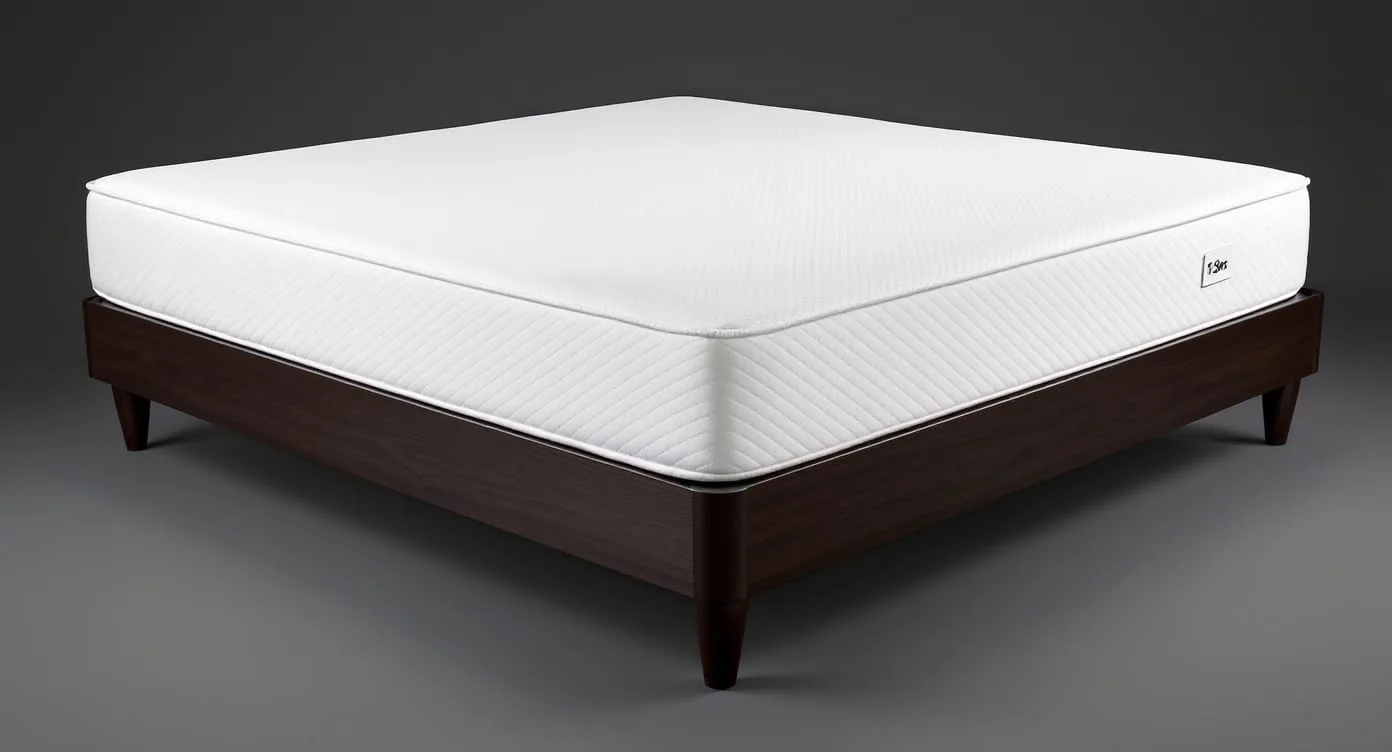
The Purple Mattress is the most polarizing mattress in detailed reviews — and that's actually what makes it interesting. Most mattresses live in a narrow band of "medium-firm memory foam, feels fine, nothing special." Purple uses a hyper-elastic polymer grid instead of foam at the comfort layer, which creates a feel that doesn't exist anywhere else in the mattress market. People who love it describe it as the best sleep they've ever had. People who hate it return it within the 100-night trial. There is almost no middle ground, and detailed reviews reflect this perfectly: very high 5-star count, very high 1-star count, surprisingly few 3-star reviews.
This review covers what the grid actually does, who it works for, and why the "try it for 2 weeks before judging" advice is more important for Purple than for any other mattress.
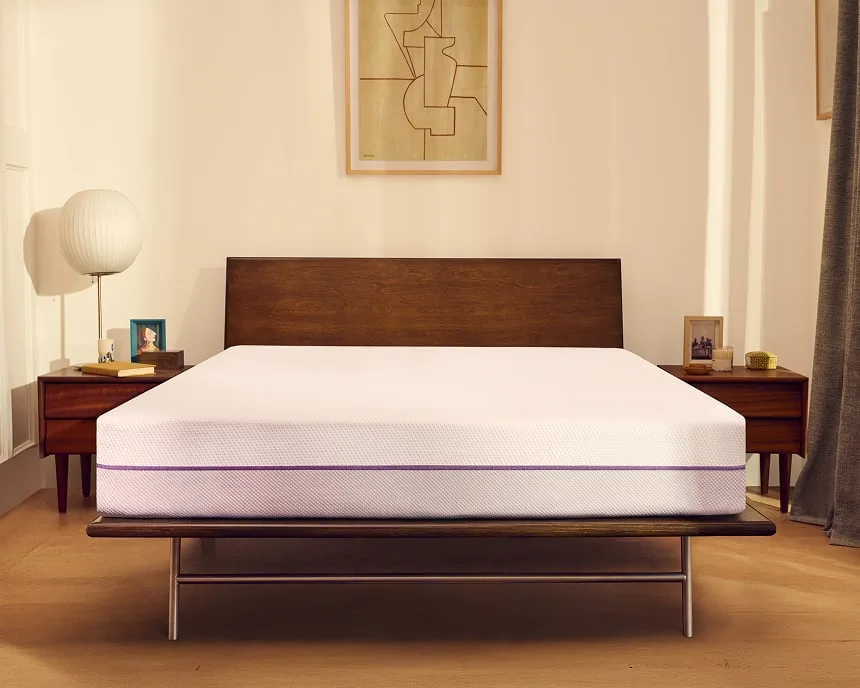
Purple
Purple Mattress (Queen)
$1,499.00
Pros
- GelFlex Grid technology — uniquely cooling and pressure-relieving
- Strong edge support and motion isolation
- 100-night sleep trial
Cons
- Heavy and difficult to move
- Distinctive feel — not for traditional foam fans
What it is
The Purple Mattress is a multi-layer bed with a hyper-elastic polymer grid as the top comfort layer. This grid — Purple calls it the "GelFlex Grid" — is a network of interconnected cells that flex independently under pressure. Where your hips or shoulders press down (concentrated weight), the grid cells collapse and let you sink. Where your back and torso rest (distributed weight), the grid stays firm and supportive.
The result: the mattress adapts to different body parts simultaneously without the "sinking in" sensation that memory foam creates. It's not memory foam, it's not latex, it's not innerspring — it's genuinely a different category of material.
What buyers consistently like
1. Cool sleeping
The #1 cited benefit in 5-star reviews. The grid structure has open cells that allow continuous airflow through the comfort layer — unlike memory foam, which is closed-cell and traps body heat against your skin. Hot sleepers consistently describe Purple as "dramatically cooler" than their previous memory foam mattress. This isn't just marketing; the mechanism is physically different from gel infusion (which only cools briefly).
2. Pressure relief without sinking
Memory foam cradles you — you sink in, and it fills around your body. The Purple Grid does something different: it flexes under concentrated pressure while staying firm under distributed pressure. The practical result is that your hips and shoulders feel cushioned, but you don't feel "stuck" or have difficulty turning over the way you do on memory foam.
3. Works for multiple sleep positions
Because the grid adapts to pressure distribution rather than just overall weight, it works for side sleepers (hip/shoulder cushioning), back sleepers (lumbar support), and some stomach sleepers (doesn't let hips sink too far). Verified reviews show higher satisfaction across position types than typical memory foam mattresses.
4. No motion transfer
The grid absorbs motion locally without transmitting it across the mattress. Partners who move during the night consistently report not feeling each other's movements.
5. 100-night trial
Purple offers a 100-night home trial with free returns. This matters more for Purple than for typical mattresses because the unique feel requires 2–3 weeks of adjustment — you genuinely can't judge it from one night. The trial removes the risk of the "most polarizing mattress on the market."
What buyers consistently complain about
1. The feel is weird at first
The #1 cited reason for returns. Purple doesn't feel like anything you've slept on before. Memory foam users expect a sink-in hug; Purple doesn't do that. Innerspring users expect a bouncy surface; Purple is quieter than springs. The first 3–5 nights are described as "strange," "different," and "not what I expected." Buyers who push through to week 2–3 almost always adjust; buyers who judge from night 1–2 often return it.
2. Price
At ~$1,500 for a queen, Purple is 3–4x the price of budget memory foam alternatives (Zinus, Linenspa). The value proposition only works if you specifically want what the grid provides — cool sleeping, adaptive pressure relief, and the unique feel.
3. Heavy
The grid material is denser than foam. Moving, flipping, and setting up the mattress requires two people for a queen or king. Once placed, this doesn't matter — but the setup experience is harder than unrolling a foam mattress.
4. Edge support
Like most non-innerspring mattresses, edge support is the weak point. Sitting on the edge of the bed causes noticeable sag. For people who need a firm edge to get in and out of bed (back pain, mobility issues), this can be a problem.
5. Not ideal for very heavy sleepers
At 230+ lbs, some reviewers report the grid compressing more than expected and losing the adaptive pressure-relief benefit. Purple offers a Purple Hybrid model with added coils for heavier sleepers, but the base Purple mattress has a weight limit on its effectiveness.
The adjustment period is real
This needs its own section because it's the single biggest factor in Purple satisfaction:
Week 1: Feels strange. Most first-time Purple users describe disorientation — "it doesn't feel like a mattress." Sleep quality may actually dip as your body adjusts to a fundamentally different surface.
Week 2: Starts feeling normal. Your body stops expecting memory foam and starts adapting to the grid. Most users report the "strange" feeling goes away.
Week 3+: Either you love it or you know it's not for you. By this point, the adjustment is complete and the cool-sleeping + pressure-relief benefits are clear. If it's still not working after 3 weeks, it's probably the wrong mattress for you — return it under the trial.
Do not judge Purple from night 1. This is the single most important advice for any Purple buyer.
Who should buy Purple
Best for:
- Hot sleepers who've tried gel memory foam and still overheated
- People with pressure-point pain (hips, shoulders) who find memory foam too "sticky"
- Combination sleepers who change positions during the night
- Anyone curious about the unique grid feel who's willing to give it 2+ weeks
Not great for:
- Budget-conscious buyers (Zinus at $400 is a better starting point)
- People who specifically love the memory-foam sink-in feel
- Very heavy sleepers (230+ lbs) on the base model
- People who need strong edge support to get in/out of bed
How it compares to alternatives
vs. Zinus Green Tea Memory Foam
Zinus is traditional memory foam at ~$400 — 1/4 the price. It's the budget pick for back pain sufferers who want proven medium-firm support. Purple is the premium pick for hot sleepers who want something different. The firmness for back pain is similar; the cooling is dramatically different.
vs. Tuft & Needle Mint
T&N Mint is a well-balanced foam mattress at ~$1,200 — less than Purple, more than Zinus. It sleeps cooler than typical foam (graphite infusion) but not as cool as Purple's grid. It's the middle ground for people who want better-than-budget without the unique-feel gamble.
Where to buy
Frequently asked
Is Purple actually cooler than memory foam?+
How long does Purple take to adjust to?+
Is it worth $1,500?+
What if I don't like it?+
Does it work for side sleepers?+
Will it sag over time?+
Where to go next
Related findings.
 Lab Report
Zinus Green Tea Memory Foam Mattress Review: The $400 Mattress Most People Actually Need
A detailed review of the Zinus 12-Inch Green Tea Memory Foam Mattress — the most-reviewed budget mattress on Amazon, and why it satisfies 80% of sleepers at 25% of the premium price.
Yogasleep Rohm Travel White Noise Machine Review: The Pocket-Sized Sleep Saver
A detailed review of the Yogasleep Rohm — portability, battery life, sound quality, and how it compares to plug-in alternatives.
 Lab Report
Yogasleep Dohm Review: The 60-Year-Old Design That Still Wins
A detailed review of the Yogasleep Dohm — why a real-fan noise machine from 1962 still outsells digital alternatives, and who it's for.