Mack's Slim Fit Review: Maximum Noise Blocking for Smaller Ears
A detailed review of Mack's Slim Fit Soft Foam Earplugs — 29 dB NRR, slim profile for smaller ear canals, and the cost-per-pair math that makes them unbeatable for foam.
The Mack's Slim Fit Soft Foam Earplugs hold a specific and defensible position in the sleep earplug market: they offer the highest noise reduction rating available in a foam earplug (29 dB NRR) in a slimmer-than-standard barrel designed for smaller ear canals. At roughly $0.27 per pair for the 50-pair box, they are also the cheapest credible noise-blocking option for sleep — period.
This review covers what thousands of verified buyers consistently report about the Mack's Slim Fit across comfort, noise reduction, durability, and the specific trade-offs of choosing disposable foam over reusable silicone alternatives.
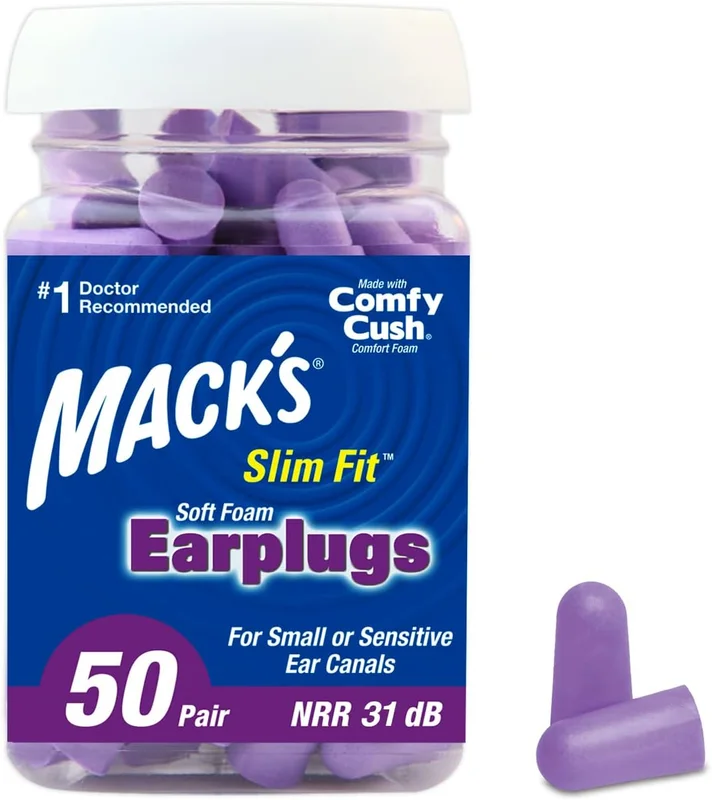
Mack's
Mack's Slim Fit Soft Foam Earplugs (50 Pair)
$13.49
Pros
- 29 dB NRR — among the highest for foam earplugs
- Slim profile designed for smaller ear canals
- Extremely affordable — pennies per pair
Cons
- Disposable — not reusable long-term
- Foam can feel warm in the ear canal
What it is
Mack's Slim Fit is a disposable polyurethane foam earplug with a tapered design and a narrower diameter than standard foam plugs. You roll each plug between your fingers to compress it, insert it into the ear canal, and it slowly expands to create a seal. Each pair is designed for single use, though many buyers reuse them for 2–3 nights before the foam loses its recovery properties.
The key specs:
- NRR: 29 dB (highest available for foam earplugs)
- Material: Slow-recovery polyurethane foam
- Diameter: Slim profile (~11mm compressed) — narrower than standard foam
- Quantity: 50 pairs per box (~$13.49)
- Cost per pair: ~$0.27
- Color: Beige/skin-tone
What buyers consistently like
1. 29 dB NRR — the maximum for foam
The Mack's Slim Fit delivers the highest noise reduction rating in the foam earplug category. In practical terms, this means a snoring partner producing 60 dB of noise is reduced to approximately 31 dB — quieter than a whisper. Verified buyers living with loud snorers, street noise, or shared-wall apartments consistently report that these plugs make the difference between waking repeatedly and sleeping through the night. The 29 dB rating is measured under controlled conditions, but even real-world performance (typically 20–25 dB with imperfect insertion) exceeds most competing products.
2. Slim diameter for smaller ear canals
Standard foam earplugs are approximately 13–14mm in diameter and are uncomfortable or impossible to insert for people with smaller ear canals — a group that disproportionately includes women and younger adults. The Mack's Slim Fit at ~11mm compressed addresses this directly. Verified buyer reviews from women and smaller-eared users consistently describe these as "the first foam plug that actually fits" and "comfortable where standard plugs caused pain." This is not a minor design tweak — it is the primary reason this specific product has a dedicated following.
3. Cost per pair is essentially zero
At $0.27 per pair, a full year of nightly use costs under $100, and most users stretch that further by reusing pairs for 2–3 nights. This makes the Mack's Slim Fit the cheapest noise-blocking solution available for sleep — dramatically less than reusable silicone options ($25–$35 per pair) and custom-molded earplugs ($100+). Verified buyers consistently cite the price as the reason they buy in bulk and don't stress about losing, dropping, or discarding pairs.
4. Effective for snoring partners
The most common use case in detailed reviews is blocking a partner's snoring. At 29 dB NRR, the Mack's Slim Fit reduces moderate-to-loud snoring to a barely perceptible background hum. Buyers who have tried multiple earplug types consistently rate these as the most effective for this specific purpose — the raw noise reduction outperforms reusable silicone alternatives by 5+ dB, which is perceptually significant.
5. Soft foam is gentle during insertion
The slow-recovery foam compresses easily between fingers and doesn't spring back aggressively during insertion. Buyers with sensitive ear canals describe the insertion as "gentle" and "non-irritating" compared to faster-recovery foams that expand before you can seat them properly. The slow expansion gives approximately 15–20 seconds to position the plug before it fills the canal.
What buyers consistently complain about
1. Disposable by design
Each pair is designed for single use, and foam quality degrades noticeably after 2–3 uses — the foam stops recovering fully, the seal weakens, and noise reduction drops. For environmentally conscious buyers, the waste generated by nightly disposable plugs is a genuine concern. A year of use produces 365–730 used foam plugs. Reusable silicone alternatives like the Loop Quiet generate essentially zero waste over the same period.
2. Foam can feel warm and pressured
Foam earplugs create a seal by expanding to fill the ear canal, which means they exert continuous outward pressure. Some buyers describe a sensation of warmth, fullness, or mild pressure after several hours of wear. This is inherent to how foam earplugs work — the expansion is what creates the seal — and it bothers some users more than others. Buyers who find the pressure uncomfortable typically switch to silicone alternatives that sit more passively in the canal.
3. Not ideal for side sleepers
Foam earplugs protrude slightly from the ear canal, which creates a pressure point when you press your ear into a pillow. Side sleepers consistently report that foam plugs — including the Slim Fit — can cause discomfort or work themselves loose during the night as the pillow pushes against them. This is the single biggest advantage of flush-fitting reusable plugs like the Loop Quiet over any foam option.
4. Insertion technique matters
Achieving the full 29 dB NRR requires proper roll-down and insertion technique. You need to roll the plug into a tight cylinder, pull the top of your ear upward to straighten the canal, and insert the plug deeply enough that it seals completely. Buyers who skip this step or insert the plugs too shallowly report significantly less noise reduction — sometimes as little as 10–15 dB. A 30-second technique adjustment makes a large difference in performance.
Understanding noise reduction ratings
The 29 dB NRR on the Mack's Slim Fit is measured under laboratory conditions per EPA standards. Real-world performance is typically 50–70% of the lab rating, meaning you can expect approximately 15–20 dB of actual noise reduction with average insertion technique. With practiced, proper insertion, some buyers approach the full 29 dB.
To put this in context: a reduction of 10 dB sounds roughly half as loud to the human ear. A 20 dB reduction sounds one-quarter as loud. A snoring partner producing 60 dB at your ear position would be perceived at approximately 40–45 dB through properly inserted Mack's Slim Fit plugs — about the volume of a quiet library. That is typically enough to prevent sleep disruption for most people.
The NRR difference between these plugs and reusable silicone alternatives like the Loop Quiet (24 dB NRR) is 5 dB in lab conditions and roughly 3–4 dB in practice. That gap may sound small, but because decibels are logarithmic, each 3 dB represents a doubling of sound energy. For severe noise environments, that extra attenuation matters.
Long-term use considerations
Verified buyer reviews from long-term foam earplug users (6+ months of nightly use) surface several practical considerations worth noting.
Ear canal health is the most frequently discussed topic. The majority of nightly users report no issues, but a meaningful subset mentions occasional ear canal dryness, mild itching, or increased wax production. These effects are generally mild and manageable with basic hygiene: using a fresh pair regularly, inserting with clean hands, and giving ears an occasional night off. Buyers who experience persistent discomfort or any hearing changes should consult a healthcare provider.
Dependency on earplugs for sleep is another common discussion point. Some long-term users report difficulty falling asleep without earplugs after months of nightly use — not because of any physical dependency, but because they've become accustomed to the quiet. This is a behavioral adaptation, not a medical concern, but it's worth being aware of if you travel frequently or anticipate situations where earplugs won't be available.
Storage and hygiene practices also come up regularly. Keeping a supply of fresh pairs near the bed, in a travel kit, and in a nightstand drawer ensures you never go without. Many buyers store pairs in small zip-lock bags to keep them clean before use. Used pairs should be discarded after 2–3 nights maximum, as the foam begins to harbor bacteria and loses its recovery properties.
Who should buy Mack's Slim Fit
Best for:
- Buyers who need maximum noise reduction and prioritize blocking power over comfort
- People with smaller ear canals who find standard foam plugs painful or impossible to insert
- Anyone living with a snoring partner at moderate-to-loud volume
- Budget-conscious users who want the cheapest effective noise-blocking option
- Back sleepers who don't have the pillow-pressure problem
Not great for:
- Side sleepers who press their ears into pillows (foam protrudes and causes pressure)
- Environmentally conscious buyers who want to minimize disposable waste
- Users who find the sensation of foam expansion uncomfortable or claustrophobic
- People who want to hear alarms, babies, or emergencies clearly (29 dB blocks a lot)
How it compares to alternatives
| Feature | Mack's Slim Fit | Loop Quiet 2 | Howard Leight Max | |---|---|---|---| | NRR | 29 dB | 24 dB | 33 dB | | Ear canal fit | Slim (~11mm) | Multiple tip sizes | Standard (~14mm) | | Side-sleeper comfort | Poor | Excellent | Poor | | Reusable | No (1–3 uses) | Yes (months) | No (1–2 uses) | | Cost per year | ~$50–100 | ~$50–100 | ~$40–80 | | Best for | Max blocking, small ears | Side sleeping, comfort | Extreme noise environments |
The practical advice: if you sleep on your back and want maximum noise blocking in a slim profile, the Mack's Slim Fit is the clear winner. If you sleep on your side, comfort matters more than raw dB — switch to the Loop Quiet and accept the lower noise reduction.
A hybrid approach that appears frequently in detailed reviews: keep both types on hand. Use the Mack's Slim Fit on nights when noise is the primary concern (partner snoring loudly, noisy neighbors, construction outside) and switch to Loop Quiet on quieter nights when comfort and staying asleep take priority over maximum blocking. The combined annual cost of both is under $150, and having the right tool for each situation means better sleep across all conditions.
For buyers deciding between the Mack's Slim Fit and the Howard Leight Max (33 dB NRR, the highest-rated foam earplug), the difference comes down to ear canal size. The Howard Leight Max achieves its higher NRR partly through a larger diameter that creates a more complete seal — but that larger diameter is uncomfortable or impossible to insert for people with smaller ear canals. The Mack's Slim Fit sacrifices 4 dB of maximum attenuation for a significantly more comfortable fit in smaller ears. For the target audience — primarily women and smaller-framed adults — this trade-off is overwhelmingly worthwhile based on verified buyer feedback.
Where to buy
Frequently asked
Can I reuse Mack's Slim Fit earplugs?+
Will I hear my alarm through 29 dB earplugs?+
Are these safe to wear every night?+
What's the difference between Mack's Slim Fit and regular Mack's foam plugs?+
How do I insert foam earplugs properly?+
Where to go next
Practical tips from verified buyer reviews
Several recurring recommendations from long-term Mack's Slim Fit users are worth consolidating.
Master the roll-down technique first. The single most impactful thing you can do is spend 30 seconds learning proper insertion. Roll the plug between your fingertips (not your palms) into the tightest possible cylinder. With your opposite hand, reach over your head and pull the top of your ear upward and slightly back to straighten the ear canal. Insert the plug and hold it gently in place for 20 seconds while it expands. The difference between a carelessly inserted plug (10–15 dB reduction) and a properly inserted one (25+ dB) is enormous.
Buy in bulk and distribute. At $0.27 per pair, the cost of keeping a stash in your nightstand, travel bag, gym bag, and office desk is negligible. Running out of earplugs when you need them — a loud hotel, an unexpected noisy neighbor — is entirely preventable with bulk purchasing. Many verified buyers purchase two or three 50-pair boxes at a time.
Pair with a white noise machine for layered masking. For environments where even 29 dB NRR isn't enough — a partner with severe sleep apnea snoring, a bedroom facing a highway, thin-walled apartment living — combining earplugs with a white noise machine provides layered sound masking. The earplugs attenuate the loudest peaks, while the white noise fills in the remaining ambient sound with a steady, non-disruptive background. Verified reviews from buyers in extreme noise environments consistently describe this combination as the most effective approach.
Discard worn-out pairs promptly. When a foam plug no longer springs back to full size after compression, its seal and noise reduction are compromised. The temptation to reuse a pair for a fourth or fifth night is understandable, but the performance degradation is real. At pennies per pair, there is no financial reason to stretch the life of a single pair beyond its effective use window.
Related findings.
 Lab Report
Zinus Green Tea Memory Foam Mattress Review: The $400 Mattress Most People Actually Need
A detailed review of the Zinus 12-Inch Green Tea Memory Foam Mattress — the most-reviewed budget mattress on Amazon, and why it satisfies 80% of sleepers at 25% of the premium price.
Yogasleep Rohm Travel White Noise Machine Review: The Pocket-Sized Sleep Saver
A detailed review of the Yogasleep Rohm — portability, battery life, sound quality, and how it compares to plug-in alternatives.
 Lab Report
Yogasleep Dohm Review: The 60-Year-Old Design That Still Wins
A detailed review of the Yogasleep Dohm — why a real-fan noise machine from 1962 still outsells digital alternatives, and who it's for.