LectroFan Evo Sound Machine Review: 22 Sounds and Zero Loops
A detailed review of the LectroFan Evo — sound variety, non-looping technology, timer, and how it stacks up against real-fan machines.
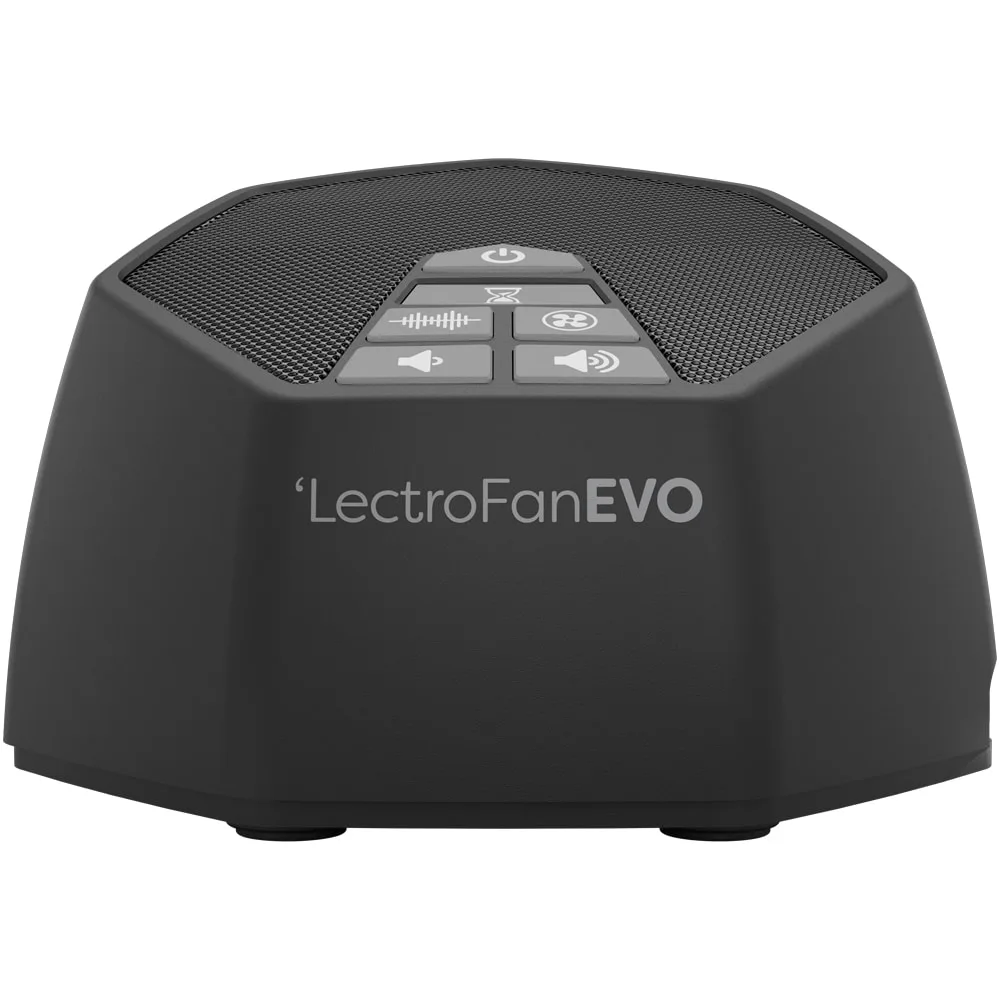
The LectroFan Evo from Adaptive Sound Technologies is a compact digital sound machine that offers 22 non-looping sounds — 10 fan variations and 10 ambient noise options, plus two ocean surf sounds. At $59.99, it occupies the middle ground between budget machines with looping recordings and premium smart devices with app ecosystems and subscription models.
This review covers what 5,000+ verified buyers consistently report about the LectroFan Evo — why the non-looping engine is its defining feature, how the speaker quality holds up, and where it falls short compared to both real-fan machines and high-end smart sound devices.
Adaptive Sound Technologies
LectroFan Evo Sound Machine
$59.99
Pros
- 10 fan sounds plus 10 ambient noise variations
- Non-looping digital — no audible repetition
- Compact size with sleep timer and headphone jack
Cons
- Digital generation lacks the texture of real-fan machines
- Speaker quality is good but not exceptional
What it is
The LectroFan Evo is a small, plug-in sound machine with a built-in speaker that generates sound digitally. Unlike machines that play recorded audio files on a loop, the Evo uses a proprietary algorithm to generate non-repeating sound patterns in real-time.
Key specs:
- Dimensions: 4.4 x 4.4 x 2.7 inches
- Weight: 7 oz
- Power: AC adapter (included) or USB
- Sounds: 10 fan variations, 10 ambient/white noise variations, 2 ocean surf sounds (22 total)
- Timer: Auto-off timer (30, 60, 120 minutes, or continuous)
- Volume: Wide adjustable range, louder than most competitors its size
- Headphone jack: 3.5mm output for pillow speakers or headphones
- Price: $59.99
What buyers consistently like
1. Non-looping sound engine
This is the LectroFan Evo's headline feature, and it is the most frequently praised aspect across detailed reviews. The machine generates sound algorithmically rather than playing a recorded clip on repeat. For light sleepers and people with acute hearing, this distinction is critical.
Verified buyers who previously used machines with looping recordings consistently describe the difference as night-and-day. Comments like "I can't hear the seam anymore," "no more clicking when the loop restarts," and "my brain finally stops noticing the background noise" appear across hundreds of reviews. The human auditory system is remarkably good at detecting repeating patterns, even during sleep — and the Evo eliminates this problem entirely.
2. Variety of sound options
Twenty-two sounds is a substantial library for a device with no app, no WiFi, and no subscription. The 10 fan variations range from a gentle desk fan to a heavy industrial blower, covering a wide spectrum of frequencies. The 10 ambient noise options span pure white noise through pink and brown noise variations, giving users control over the frequency balance.
Buyers who aren't sure which type of sound works best for them appreciate the ability to experiment without buying multiple devices. Patterns across reviews suggest that most people settle on 2-3 favorite sounds after the first week, but having the options helps them find the right match.
3. Volume range
The LectroFan Evo is consistently praised for getting louder than expected given its compact size. Buyers in noisy environments — apartments near busy roads, homes with thin walls, bedrooms adjacent to living spaces — report that the Evo can mask significant ambient noise at its upper volume settings.
At the low end, the Evo gets quiet enough for use in nurseries and offices without being obtrusive. This wide range makes it usable across different environments and preferences.
4. Built-in timer
The auto-off timer (30, 60, or 120 minutes) is a feature that several competing machines lack entirely. Buyers who prefer to fall asleep with sound but don't want it running all night consistently mention the timer as a deciding factor. The timer also appeals to energy-conscious buyers and those who find that continuous sound disrupts their deeper sleep cycles later in the night.
5. Headphone jack
The 3.5mm output is a niche feature that a specific audience loves: people who share a bed with a partner who doesn't want sound. By routing the Evo's output to a pillow speaker or sleep headphones, one person can enjoy white noise without affecting the other. This use case appears frequently in reviews from couples with different sleep preferences.
What buyers consistently complain about
1. Digital sound lacks real-fan texture
This is the most common criticism, and it comes almost exclusively from buyers who have also used a real-fan machine like the Yogasleep Dohm or SNOOZ. While the Evo's non-looping algorithm eliminates the loop problem, it doesn't fully replicate the acoustic texture of actual air moving through a fan housing.
Verified buyers describe the difference in various ways: "slightly synthetic," "clean but not warm," "missing the organic quality." For many buyers — particularly those who've never used a real-fan machine — this distinction is invisible. But for audiophiles and fans of the original Dohm sound, the Evo's digital fan simulations may feel like an approximation rather than the real thing.
2. Speaker quality is good, not exceptional
The Evo's built-in speaker is adequate for a device its size, but buyers who compare it to larger speakers or higher-end sound machines note limitations in the bass response and overall richness. At higher volumes, some reviewers report a slight tinniness or harshness that isn't present in machines with larger drivers.
This is partly a function of physics — a small speaker in a compact enclosure can only reproduce so much low-frequency content. For most buyers, the speaker quality is perfectly acceptable for sleep use. For those who want room-filling, rich sound, a larger machine or an external speaker via the headphone jack may be preferable.
3. Button interface takes getting used to
The Evo uses a minimal set of buttons on top of the device to cycle through sounds, adjust volume, and set the timer. In a dark room, it can take a few nights to build muscle memory for which button does what. Several reviewers mention accidentally changing the sound when they meant to adjust volume, or vice versa.
The lack of a display or visual indicator for the current sound means you're navigating by ear and memory. This is a deliberate design choice (no light pollution in the bedroom), but it has a learning curve.
4. No battery option
The LectroFan Evo requires wall power via its AC adapter or a USB connection. There is no internal battery. For home use, this is a non-issue. For travel, it means you need outlet access at your destination. Buyers who want portability often pair the Evo with the LectroFan Micro2 (the battery-powered travel version) or choose the Yogasleep Rohm instead.
Who should buy the LectroFan Evo
Best for:
- Light sleepers who have noticed loops in other sound machines and want non-repeating audio
- People who want variety and the ability to experiment with different sound types
- Tinnitus sufferers who benefit from customizable ambient sound masking (many buyers report using the Evo specifically for tinnitus relief, though this is not medical advice)
- Couples where one partner needs sound — the headphone jack enables private listening
- Apartment dwellers and urban sleepers who need effective noise masking at higher volumes
Not great for:
- Buyers who want the warmth and texture of a real mechanical fan — the Dohm or SNOOZ may be a better fit
- Travelers who need battery-powered portability
- People who want smart features, app control, sunrise alarms, or routines
- Buyers on a tight budget — the HoMedics SoundSpa offers basic functionality for less than half the price
How it compares to alternatives
| Feature | LectroFan Evo | Yogasleep Dohm | HoMedics SoundSpa | Hatch Restore 2 | |---|---|---|---|---| | Price | $59.99 | ~$50 | $24.99 | ~$200 | | Sound type | Digital (non-looping) | Real fan | Digital (looping) | Digital (non-looping) | | # of sounds | 22 | 1 (adjustable) | 6 | 30+ | | Timer | Yes (30/60/120 min) | No | Yes (15/30/60 min) | Yes | | Portable | No (plug-in) | No (plug-in) | No (plug-in) | No (plug-in) | | App control | No | No | No | Yes | | Headphone jack | Yes | No | No | No | | Best for | Variety + quality | Pure fan purists | Budget buyers | All-in-one smart |
The Yogasleep Dohm wins on acoustic authenticity — nothing digital sounds exactly like a real fan. The HoMedics SoundSpa wins on price but uses looping recordings that sensitive listeners may notice. The Hatch Restore 2 offers a full smart-device experience with routines and sunrise alarm but costs more than 3x the Evo's price.
The LectroFan Evo occupies a practical middle ground: better sound variety and quality than budget machines, non-looping technology that eliminates the biggest weakness of digital devices, and a reasonable price point that doesn't require justifying a $200 investment.
Where to buy
Frequently asked
Does it help with tinnitus?+
Can I use it with a pillow speaker?+
How does it compare to the original LectroFan?+
Is it loud enough for a noisy apartment?+
Does it remember settings after being unplugged?+
Where to go next
Related findings.
 Lab Report
Zinus Green Tea Memory Foam Mattress Review: The $400 Mattress Most People Actually Need
A detailed review of the Zinus 12-Inch Green Tea Memory Foam Mattress — the most-reviewed budget mattress on Amazon, and why it satisfies 80% of sleepers at 25% of the premium price.
Yogasleep Rohm Travel White Noise Machine Review: The Pocket-Sized Sleep Saver
A detailed review of the Yogasleep Rohm — portability, battery life, sound quality, and how it compares to plug-in alternatives.
 Lab Report
Yogasleep Dohm Review: The 60-Year-Old Design That Still Wins
A detailed review of the Yogasleep Dohm — why a real-fan noise machine from 1962 still outsells digital alternatives, and who it's for.