Sun Zero Cyrus Thermal Blackout Curtains Review: The Energy-Saving Darkhorse
A detailed review of Sun Zero Cyrus Thermal Blackout Curtains — the triple-weave thermal insulation, energy savings claims, and 30+ color options.
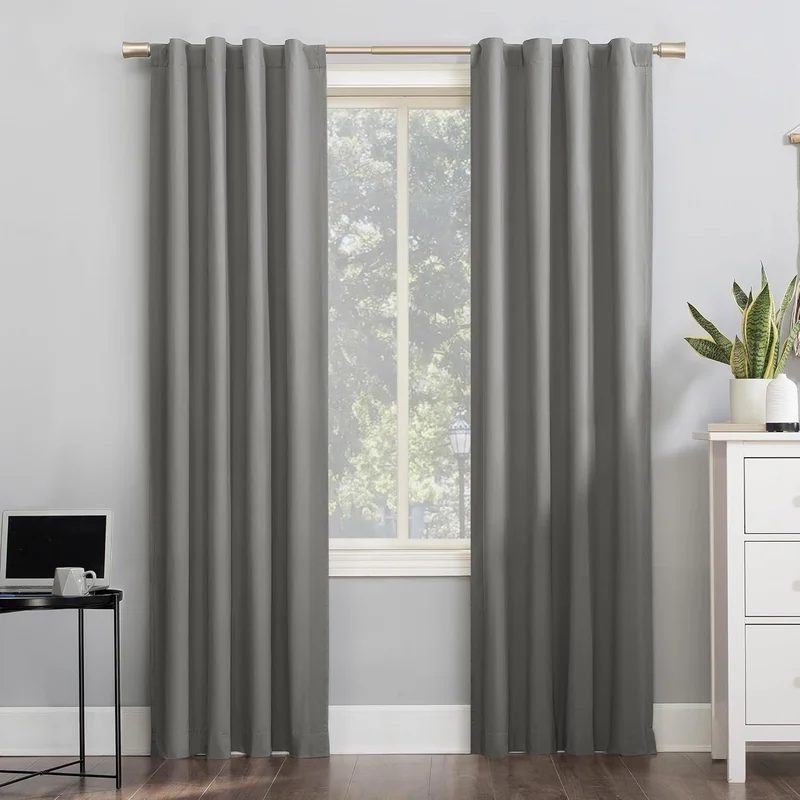
The Sun Zero Cyrus Thermal Blackout Curtains occupy an interesting position in the blackout curtain market — a triple-weave thermal curtain that emphasizes energy savings as much as light blocking. At $25.99 for a 2-panel set, they sit slightly below the NICETOWN in price while matching or exceeding on thermal performance. Sun Zero is a brand that most consumers haven't heard of, but it's backed by S. Lichtenberg & Company, a 100+ year-old textile manufacturer. The "Cyrus" is their best-selling model — and verified buyer reviews explain why.
This review covers what verified buyers consistently report about the Sun Zero Cyrus — the light-blocking performance, the thermal insulation that drives real energy savings, the fit and finish, and the specific scenarios where these curtains outperform the more famous competition.
Sun Zero
Sun Zero Cyrus Thermal Blackout Curtains (2 Panels)
$25.99
Pros
- Triple-weave thermal-insulated fabric
- Energy-saving — reduces heat transfer at windows
- Available in 30+ colors and 12 size options
Cons
- Top edge requires ceiling-mount rod for full blackout
- Wrinkles need steaming on first hang
What it is
- Construction: Triple-weave polyester with thermal insulating middle layer
- Light blocking: Marketed as up to 100% blackout (varies by color)
- Panels per set: 2 panels
- Mounting: Grommet top (fits rods up to 1.5 inches)
- Available sizes: 12 size combinations across 30+ colors
- Colors: 30+ colors including neutrals, earth tones, and rich darks
- Care: Machine washable cold, tumble dry low
- Price: $25.99 (2 panels, standard size)
- Thermal rating: Reduces heat transfer by up to 40% (manufacturer claim)
- Energy claim: Reduces heating/cooling costs (LEED-applicable)
The triple-weave construction is similar in principle to NICETOWN: a face layer, a dense middle layer for light blocking and thermal insulation, and a back layer. Where the Sun Zero Cyrus differentiates is in its emphasis on the thermal performance of that middle layer — Sun Zero specifically markets the energy savings angle and positions the curtains as a home efficiency upgrade, not just a sleep product.
What buyers consistently like
1. Thermal insulation that buyers can feel
The most distinctive positive in detailed reviews. Verified buyers consistently describe a noticeable temperature difference in the room when the curtains are closed — particularly on windows that face direct sun or exterior walls with poor insulation. Multiple reviewers in older apartments and homes describe the curtains as "the best $26 insulation upgrade" they've made.
The thermal benefit works in both directions: blocking summer heat from sun-facing windows and reducing winter heat loss through cold glass. Buyers in extreme climates — desert Southwest summers, Midwest winters — are among the most enthusiastic reviewers.
2. Effective light blocking
Dark-colored Sun Zero Cyrus panels block 95–99% of light through the fabric. Verified buyers consistently report room-darkening performance on par with NICETOWN and other triple-weave competitors. Night-shift workers, light-sensitive sleepers, and parents darkening nurseries all report satisfactory results.
The same caveat applies as with all grommet curtains: light leaks around edges, between panels, and above the rod. Complete blackout requires addressing these gaps with mounting solutions.
3. 30+ colors across 12 sizes
The combination of 30+ colors and 12 size options means most buyers find their exact match. Verified buyers frequently praise finding the right combination for oddly-sized windows or specific decor needs. The size range extends to extra-long (108 inches), which serves buyers with tall windows or cathedral ceilings that budget competitors don't always accommodate.
4. Quieter rooms
Like other triple-weave curtains, the Sun Zero Cyrus provides measurable noise reduction. The dense fabric absorbs ambient sound — traffic, AC units, neighborhood activity. Apartment dwellers consistently mention this as an unexpected benefit. The effect is modest (not soundproofing) but noticeable in buildings with thin walls and single-pane windows.
5. Affordable energy savings
At $25.99 per window, the energy payback is fast. Buyers who track utility bills report savings within the first season — particularly on air conditioning costs for sun-facing windows. The thermal insulation is the most cost-effective window upgrade available short of replacing the windows themselves.
What buyers consistently complain about
1. Full blackout requires ceiling mounting
The #1 complaint: achieving the "100% blackout" that Sun Zero markets requires mounting the rod at ceiling height and extending the curtain panels several inches past the window frame on each side. Standard wall-mounted rod placement leaves light gaps at the top and sides. Verified buyers who install at standard height report 85–95% darkening — effective, but not the total blackout the marketing implies.
For sleepers who need absolute darkness, this means either ceiling-mounting the rod (which may not be possible in rentals) or adding light-sealing strips along the edges.
2. Packaging wrinkles need steaming
The curtains arrive tightly folded with visible crease lines. Multiple verified buyers report that the wrinkles are stubborn — hanging alone doesn't remove them. A steamer or a tumble in the dryer on low heat for 15–20 minutes is needed before the panels hang smoothly. This is a common issue across all packaged curtains but feels more noticeable with the Sun Zero's slightly stiffer fabric.
3. Grommet-only mounting
Like most budget blackout curtains, the Sun Zero Cyrus only comes in a grommet-top design. Buyers who prefer rod-pocket, tab-top, or clip-ring hanging are limited. The silver grommets also create an aesthetic constraint — they look best with silver or chrome rods and can clash with brass, black, or wood hardware.
4. Slightly stiff drape
The triple-weave thermal construction creates a denser, stiffer panel than lighter curtains. Some buyers describe the drape as "rigid" or "not flowing" — the curtains hang straight and heavy rather than creating soft folds. This is a preference issue: the stiffness is what provides the thermal barrier, but it changes the aesthetic from "elegant drape" to "functional panel."
Who should buy Sun Zero Cyrus Curtains
Best for:
- Buyers who want both blackout and energy savings from one product
- Homeowners and renters with poorly insulated windows or sun-facing rooms
- Budget shoppers who want triple-weave quality under $26
- Anyone with tall windows who needs extra-long curtain options
- Sleepers in extreme climates (very hot summers or very cold winters)
Not great for:
- Buyers who need true 100% blackout without ceiling mounting
- Design-focused shoppers who want soft, flowing drape
- Anyone with non-grommet curtain hardware
- Renters who can't modify rod placement for optimal light sealing
How it compares to alternatives
Against the NICETOWN (~$29), the Sun Zero Cyrus offers comparable light blocking at $3 less, with a slight edge in thermal performance. The NICETOWN has a wider color selection and slightly softer fabric drape. Both are triple-weave and both deliver 90–99% light blocking. The choice between them is close — for most buyers, whichever has the right color and size wins.
Against the BGment (~$23), the Sun Zero is a clear upgrade: thicker fabric, better light blocking, superior thermal insulation, and longer durability for just $3 more. The BGment's coated single-layer can't compete with a genuine triple-weave construction.
For buyers who prioritize energy savings specifically, the Sun Zero Cyrus is the standout budget option. Its thermal layer is the thickest in the under-$30 category, and the manufacturer's energy claims are backed by the same textile engineering that produces commercial-grade thermal curtains at higher price points.
Where to buy
Frequently asked
Do Sun Zero curtains really save energy?+
How do I get true 100% blackout?+
Are Sun Zero and NICETOWN the same quality?+
How do I remove the wrinkles?+
Can I use these with a smart curtain rod?+
Where to go next
Related findings.
 Lab Report
Zinus Green Tea Memory Foam Mattress Review: The $400 Mattress Most People Actually Need
A detailed review of the Zinus 12-Inch Green Tea Memory Foam Mattress — the most-reviewed budget mattress on Amazon, and why it satisfies 80% of sleepers at 25% of the premium price.
Yogasleep Rohm Travel White Noise Machine Review: The Pocket-Sized Sleep Saver
A detailed review of the Yogasleep Rohm — portability, battery life, sound quality, and how it compares to plug-in alternatives.
 Lab Report
Yogasleep Dohm Review: The 60-Year-Old Design That Still Wins
A detailed review of the Yogasleep Dohm — why a real-fan noise machine from 1962 still outsells digital alternatives, and who it's for.