Hatch Rest Baby Sound Machine + Nightlight Review: The Pediatric Sleep Swiss Army Knife
A detailed review of the Hatch Rest — sound machine, nightlight, and ok-to-wake clock in one device, and whether the app and subscription are worth it.
The Hatch Rest is a combination sound machine, nightlight, and ok-to-wake clock designed specifically for babies and toddlers. At $59.99, it replaces three separate nursery devices with a single app-controlled unit that parents can manage from their phone without entering the room. It is one of the most recommended sound machines among pediatric sleep consultants and appears consistently on "nursery essentials" lists across parenting communities.
This review covers what 10,000+ verified buyers consistently report about the Hatch Rest — why parents love the combination format, where the app dependency creates friction, and whether the optional subscription is necessary or a cash grab.
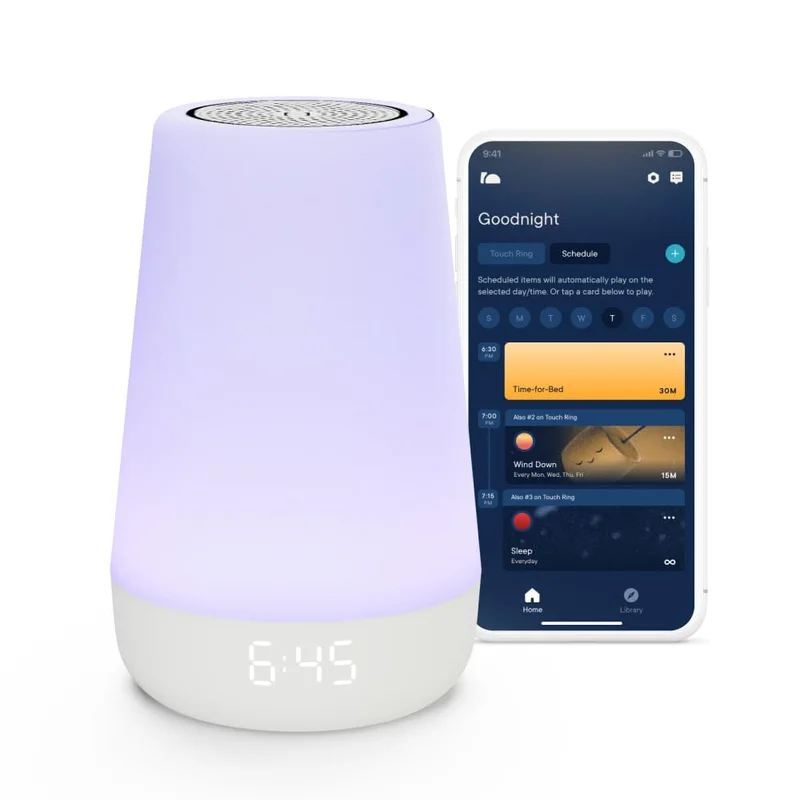
Hatch
Hatch Rest Baby Sound Machine + Nightlight
$59.99
Pros
- Combination nightlight, sound machine, and ok-to-wake clock
- Programmable colors and routines for kids
- Pediatric sleep consultant favorite
Cons
- App required for full feature set
- Premium content requires subscription
What it is
The Hatch Rest is a small, mushroom-shaped device that sits on a dresser or shelf in a nursery. It connects to a smartphone via Bluetooth and is managed entirely through the free Hatch app (iOS and Android). The device combines three functions:
- Sound machine: Multiple white noise, nature, and ambient sound options
- Nightlight: Adjustable color, brightness, and warm/cool tones
- Ok-to-wake clock: Programmable color change to signal when it's okay for toddlers to leave their room
Key specs:
- Dimensions: 5.6 x 3.5 x 3.5 inches
- Weight: 8 oz
- Power: AC adapter (always plugged in)
- Sounds: 8+ built-in options, additional content via Hatch+ subscription
- Light: Full RGB color spectrum, adjustable brightness
- Connectivity: Bluetooth (phone control)
- Timer/Programs: Fully programmable schedules via app
- Ok-to-wake: Yes, customizable
- Price: $59.99 (device); Hatch+ subscription $4.99/month or $49.99/year (optional)
What buyers consistently like
1. Three devices in one
The most consistently praised aspect of the Hatch Rest is the consolidation of separate nursery devices. Before the Rest, parents commonly bought a standalone sound machine ($25–$50), a separate nightlight ($10–$20), and an ok-to-wake clock ($25–$40) — three devices, three outlets, three things to manage. The Hatch Rest replaces all three for $59.99.
Verified buyers frequently cite the reduced clutter and simplified nursery setup as a primary benefit. One device, one cord, one app. For parents who are already overwhelmed with baby gear, this consolidation is genuinely valuable.
2. App-controlled operation (no entering the room)
This is the feature that separates the Hatch Rest from simpler sound machines, and parents describe it as transformative. Being able to adjust volume, change the light color, turn sound on or off, and modify the ok-to-wake schedule — all from a phone, without opening the nursery door — is a capability that traditional sound machines simply cannot match.
Use cases that buyers consistently highlight:
- Turning on white noise after placing the baby in the crib and closing the door
- Dimming or changing the nightlight color during the bedtime routine without getting up
- Adjusting sound volume if the baby is restless, without entering the room and risking a full wake-up
- Modifying the ok-to-wake time on weekends vs. school days
For families doing sleep training, the ability to manage the sound environment without physical presence in the room is frequently described as essential rather than merely convenient.
3. Ok-to-wake functionality
For parents of toddlers (ages 2–5), the ok-to-wake feature is often the primary reason they bought the Hatch Rest. The concept is simple: the device glows one color during sleep time (typically red or orange) and switches to another color (typically green) at a parent-set time, signaling that it's okay to get out of bed.
Verified buyers consistently report that this feature works remarkably well once the toddler learns the system — typically within 1–2 weeks. Patterns across reviews describe a common arc: initial confusion, then recognition, then the child genuinely waiting for the green light before leaving their room. For families struggling with 5 a.m. wake-ups and toddlers appearing in the parents' bedroom at dawn, the ok-to-wake function is frequently described as "life-changing" and "worth the price of the device alone."
4. Programmable schedules and routines
The Hatch app allows parents to create multi-step programs — for example, a bedtime routine that dims the light to warm orange at 7:00 p.m., starts white noise at 7:15 p.m., turns the light off at 7:30 p.m., and then switches to a green ok-to-wake light at 6:30 a.m. These routines run automatically, even if the phone isn't nearby (as long as the device has been synced).
Buyers who use the scheduling feature describe it as the backbone of their child's sleep routine. The consistency of automated timing — same light, same sound, same sequence, every night — is something that many pediatric sleep consultants recommend, and the Hatch Rest makes it effortless to maintain.
5. Pediatric sleep consultant endorsement
The Hatch Rest appears on recommended product lists from a significant number of pediatric sleep consultants and parenting experts. While endorsement doesn't guarantee effectiveness for every family, it does signal that the device's approach — consistent sound, controlled light, ok-to-wake signaling — aligns with mainstream pediatric sleep guidance.
Verified buyers frequently mention that their sleep consultant or pediatrician recommended the Hatch specifically, which gives them confidence in the purchase. This word-of-mouth network from trusted professionals drives a significant portion of Hatch Rest sales based on review data.
What buyers consistently complain about
1. App is required for everything
The Hatch Rest has no physical buttons for sound or light control (there is a button on the base, but it's limited to basic on/off). Virtually all functionality — changing sounds, adjusting volume, modifying light settings, setting schedules — requires the Hatch app on a smartphone.
This creates several friction points that buyers consistently mention:
- Babysitter and grandparent access: Anyone caring for the child needs the app installed and connected. This adds complexity for occasional caregivers.
- Phone dependency: If your phone is dead, lost, or in another room, you cannot adjust the device.
- Bluetooth range: The Bluetooth connection requires the phone to be within range (~30 feet). Some parents report connectivity issues when trying to control the device from a different floor of the house.
- App updates and bugs: Like any software product, the Hatch app occasionally has bugs after updates. Reviewers mention intermittent connection issues, sounds not starting on schedule, and settings not saving properly.
For tech-comfortable parents, the app dependency is usually manageable. For families where caregivers rotate or where tech simplicity is valued, it can be a genuine frustration.
2. Subscription model for premium content
The Hatch Rest works without a subscription — the built-in sounds and all core features (light, ok-to-wake, scheduling) are free. However, Hatch offers a paid subscription called Hatch+ ($4.99/month or $49.99/year) that unlocks additional sounds, sleep stories, meditations, and other content.
This is a polarizing feature in reviews. Some buyers appreciate the expanded library and feel the subscription is worth it. A larger group — based on the frequency and intensity of complaints — resents the subscription model on principle. Common sentiments: "I already paid $60 for the device, now I have to pay monthly for sounds?" and "It feels like they're holding content hostage."
The important clarification: the device is fully functional without the subscription. The free sounds are sufficient for most white noise needs. The subscription adds extras, not essentials. But the perception of being asked to pay more after an upfront purchase is a consistent source of negative sentiment.
3. Sound quality is good, not exceptional
The Hatch Rest is a jack-of-all-trades device — it does sound, light, and ok-to-wake. As a pure sound machine, verified buyers who compare it to dedicated machines like the Yogasleep Dohm or LectroFan Evo note that the Rest's speaker and sound quality are a step below. The sounds are digital and non-looping, which is good, but the speaker is sized for a multi-function nursery device, not optimized for audio quality.
For nursery use — where the primary goal is masking household noise for a sleeping baby — the sound quality is perfectly adequate. For parents who are also using the device in their own bedroom or who are particular about audio quality, a dedicated sound machine may be a better investment.
4. Bluetooth-only connectivity
The Hatch Rest uses Bluetooth rather than WiFi. This means the phone must be within Bluetooth range to control the device. Parents who want to check or adjust the device from work, from another floor of the house, or from outside Bluetooth range cannot do so. The Hatch Restore 2 (the adult version) uses WiFi, but the Rest does not.
This limitation particularly affects parents who want to adjust settings remotely during naps while they're in a different part of the house. Some parents report that Bluetooth connectivity is unreliable through walls and floors, requiring them to walk closer to the nursery to establish a connection.
Who should buy the Hatch Rest
Best for:
- Parents who want a single device that handles sound, light, and ok-to-wake signaling
- Families doing sleep training who need remote sound and light control without entering the nursery
- Parents of toddlers struggling with early wake-ups — the ok-to-wake function is the standout feature
- Tech-comfortable families who are happy managing a nursery device via smartphone app
- Parents who value programmable bedtime and wake-up routines with consistent timing
Not great for:
- Parents who want a simple, no-app, no-tech sound machine — simpler options exist at lower prices
- Households where multiple caregivers need easy access without app setup
- Families who object to subscription models on principle, even optional ones
- Parents who want the best possible sound quality — a dedicated sound machine will outperform the Rest
- Budget-conscious buyers — at $59.99 plus an optional subscription, it's not the cheapest way to get white noise in a nursery
How it compares to alternatives
| Feature | Hatch Rest | Yogasleep Rohm | HoMedics SoundSpa | Hatch Rest+ (2nd Gen) | |---|---|---|---|---| | Price | $59.99 | $34.95 | $24.99 | $69.99 | | Sound machine | Yes | Yes | Yes | Yes | | Nightlight | Yes | No | No | Yes | | Ok-to-wake | Yes | No | No | Yes | | App control | Yes (Bluetooth) | No | No | Yes (WiFi) | | Portable | No | Yes (battery) | No | No | | Subscription | Optional ($4.99/mo) | None | None | Optional ($4.99/mo) | | Best for | Nursery all-in-one | Travel | Budget | Upgraded nursery |
The Yogasleep Rohm is a better choice for parents who just want portable white noise for naps and travel — no light, no ok-to-wake, but battery-powered and simpler. The HoMedics SoundSpa is the budget option for parents who want basic white noise without smart features. The Hatch Rest+ (2nd Gen) upgrades to WiFi connectivity and improved speakers but costs more.
For the full nursery package — sound, light, ok-to-wake, and programmable routines in a single device — the original Hatch Rest remains the most popular option at its price point based on buyer review volume and ratings.
Where to buy
Frequently asked
Do I need the Hatch+ subscription?+
Can my partner also control it?+
What age is the ok-to-wake feature for?+
Is it safe to leave on all night in a nursery?+
How is it different from the Hatch Restore 2?+
Where to go next
Related findings.
 Lab Report
Zinus Green Tea Memory Foam Mattress Review: The $400 Mattress Most People Actually Need
A detailed review of the Zinus 12-Inch Green Tea Memory Foam Mattress — the most-reviewed budget mattress on Amazon, and why it satisfies 80% of sleepers at 25% of the premium price.
Yogasleep Rohm Travel White Noise Machine Review: The Pocket-Sized Sleep Saver
A detailed review of the Yogasleep Rohm — portability, battery life, sound quality, and how it compares to plug-in alternatives.
 Lab Report
Yogasleep Dohm Review: The 60-Year-Old Design That Still Wins
A detailed review of the Yogasleep Dohm — why a real-fan noise machine from 1962 still outsells digital alternatives, and who it's for.