The Best Pillows for Stomach Sleepers in 2026
Stomach sleepers need the opposite of everyone else: very thin, soft pillows that don't crank the neck upward. Our picks, plus the no-pillow option.
We earn a commission if you buy through links on this page, at no extra cost to you. Picks are based on buyer reviews and specs; we don't test products ourselves. How we work
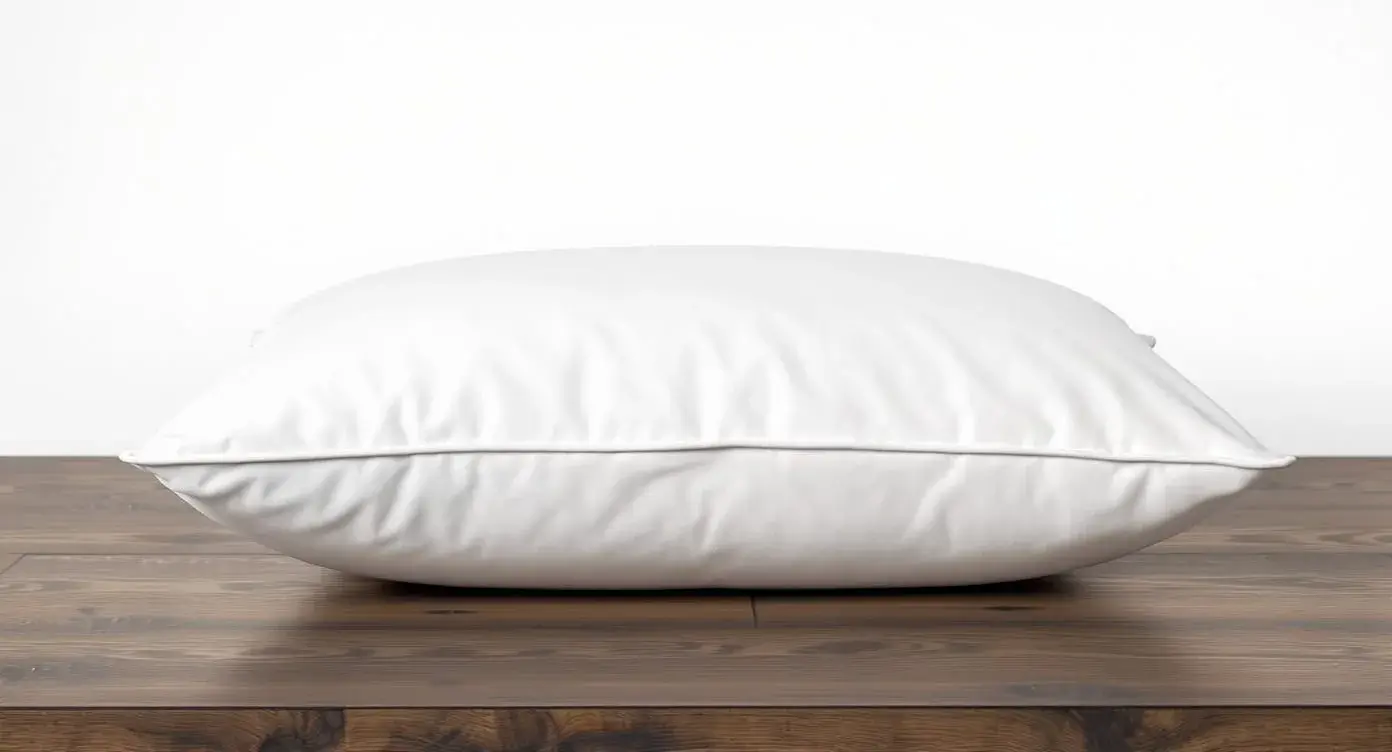
Physical therapists and sleep experts often discourage stomach sleeping, and they have a point. Lying face-down keeps the neck turned to one side for hours, which is rough on the cervical spine, and it tends to let the lower back sag. But "stop sleeping on your stomach" is like telling someone to "stop breathing through their mouth" — most stomach sleepers have been doing it since childhood and cannot fall asleep any other way. If you're going to sleep on your stomach despite the advice, the least you can do is use a pillow that minimizes the damage.
We recommend four pillows here, each chosen for low loft or softness based on their construction and how stomach sleepers describe them in reviews.
What stomach sleepers need (and what ruins stomach sleeping)
1. Very low loft. The most important rule. Most pillows are designed for back or side sleepers, with 3+ inches of loft. For stomach sleeping, the ideal is 1–2 inches or even no pillow at all. Higher loft forces your head up, which hyperextends the cervical spine.
2. Very soft fill. Firm pillows resist compression; soft pillows compress flat under the weight of your head. For stomach sleeping, you want flat. Down, down alternative, and thin shredded-fill pillows all work. Standard-height solid memory foam does not; the exception is a purpose-made slab under about 2 inches, which stays low because there is so little of it.
3. Breathability. Because your face is pressed directly into the pillow, airflow matters. Solid foam pillows can feel suffocating; breathable covers and fills don't.
4. Low resistance to compression. Pillows that "bounce back" when you press on them are wrong for stomach sleepers. You want a pillow that stays compressed under light pressure.
5. Affordability. The trade-off of using a very thin pillow is that it compresses and wears out faster than a thick one. Expect to replace it more often than a firmer pillow, so a pricey pillow is hard to justify.
1. Beckham Hotel Collection Bed Pillows — Best Overall

Beckham Hotel Collection
Beckham Hotel Collection Bed Pillows (2-Pack)
Pros
- Plush, hotel-style feel that owners consistently praise
- Gel fiber fill is hypoallergenic and machine washable
- Sold as a 2-pack
Cons
- Not adjustable — fixed loft may not suit all sleep positions
- Some buyers find it too soft for side sleeping
The Beckham Hotel Collection is our stomach-sleeper pick for one specific reason: it's soft enough and compresses flat enough that stomach sleepers don't feel propped up. It's not marketed as a stomach-sleeper pillow — Beckham sells it as a general hotel-style pillow — but stomach sleepers find it works where most "supportive" pillows fail.
Why stomach sleepers like the Beckham
- Compresses very flat under weight. The gel-fiber fill collapses easily under light pressure, which is exactly what stomach sleepers need — a pillow that doesn't prop the head up.
- Soft feel. Plush hotel-style loft that doesn't fight against you when you lie face down.
- Price. Sold in budget-priced pairs, which means you can use two (one for your head, one to hug or put under the hips) without financial strain.
- Breathability. The gel fiber is more breathable than solid foam, which matters because your face is pressing directly into it.
- Machine washable. Essential for a pillow you're breathing into.
- Wide availability. Easy to find on Amazon and easy to replace when it wears out.
What to expect over time
- Not the longest-lasting pillow. Stomach sleeping compresses pillows faster, so expect to replace the Beckham sooner than a denser pillow. At its low price, this is acceptable.
- Shifts during the night. Soft pillows compress but also move under pressure. You may need to reposition it once or twice per night.
- Too soft for side or back sleepers. If you share a bed and your partner is a side sleeper, they'll need a different pillow.
2. Bluewave Bedding Extra Slim Max Cool — Best Ultra-Thin
Bluewave Bedding
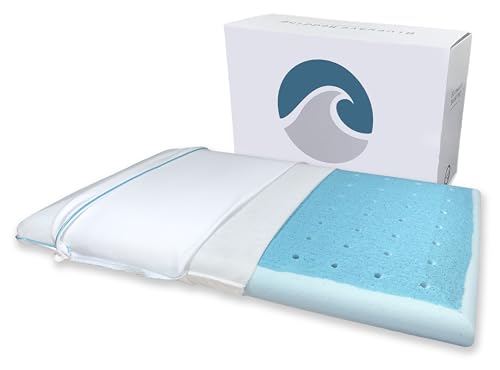
Bluewave Bedding Extra Slim Max Cool Gel Memory Foam Pillow (1.75 in, Standard)
Pros
- 1.75-inch height, Bluewave's thinnest, suits dedicated stomach sleepers
- 3.25 lb high-density gel memory foam with ventilation channels
- CarbonBlue phase-change coating and a removable, machine-washable cooling cover
Cons
- Solid foam doesn't breathe like loose fiber
- Some owners find it thinner than they expected
The Bluewave Extra Slim Max Cool is the opposite approach to the Beckham. Instead of a soft pillow that squashes down, it's a slab of gel-infused memory foam that is only 1.75 inches tall to begin with, the thinnest of the five heights Bluewave makes. It's the closest thing on this list to the "almost no pillow" position, with a bit of cushion under your cheek. This Max Cool version adds Bluewave's CarbonBlue phase-change coating on the sleep surface and a cooling-fiber cover, which matters when your face is pressed into foam all night.
Why stomach sleepers like the Bluewave
- Right in the 1–2 inch target. The loft is fixed, so it doesn't creep up as fill shifts or get re-fluffed in the wash.
- Holds its shape. Bluewave uses a 3.25 lb high-density foam, and owners often mention it stays put and doesn't flatten out unevenly the way fiber pillows do.
- Cooler surface, washable cover. The cover is cool to the touch, and it's removable and machine washable.
Bluewave caveats
- It's foam. Your face is pressed into a solid surface; ventilation channels help, but it won't breathe like loose fiber.
- Too thin for some. A recurring complaint is that it's thinner than people expected. Bluewave sells 2.25 and 2.75 inch versions if 1.75 feels like nothing.
3. Amazon Basics Down Alternative (Soft) — Best Budget

Amazon Basics
Amazon Basics Down Alternative Pillows, Soft Density (Standard, 2-Pack)
Pros
- Soft density labeled for stomach and back sleepers
- Two pillows per pack, one for the head and one for the hips
- Down alternative fill for people avoiding feathers
Cons
- Owner reports on loft and fluffiness are inconsistent
- Fiber fill flattens and clumps sooner than foam
Amazon Basics sells its down alternative pillows in firmness grades, and the soft density version is labeled specifically for stomach and back sleepers. It's a plain polyester-fill pillow with a polyester shell and piped edge, sold as a two-pack of standard 20 x 26 inch pillows.
Why it works for stomach sleepers
- Compresses easily. Soft polyester fill flattens under the weight of your head instead of pushing back, which is what the "low resistance" rule above is about.
- Two for the price of one cheap pillow. Use one under your head and the other under your hips, the setup we recommend further down.
- Hypoallergenic fill. Down alternative is a sensible choice if feathers bother you.
What to expect
- Inconsistent loft. Owner reviews split on thickness: some find them nicely flat, others say they never fluff up or are thinner than advertised. For a stomach sleeper, thin is usually fine.
- Short lifespan. Like any soft fiber pillow, expect it to clump and need replacing sooner than foam.
4. Casper Original Pillow — Best for Combination Stomach-Side Sleepers

Casper
Casper Original Pillow (Standard)
Pros
- Pillow-in-pillow design with breathable polyester microfiber
- Machine-washable cover
- Mid-range price for premium feel
Cons
- Loft may be too low for tall side sleepers
- Less customization than fully adjustable pillows
Many people who think they're stomach sleepers actually shift between stomach, side, and sometimes back during the night. If you start on your stomach but roll to your side a few hours in, a pure stomach-sleeper pillow leaves you unsupported for the rest of the night. The Casper Original is soft and low-loft enough for stomach sleeping while still providing enough support to handle occasional side-sleeping moments.
What the Casper adds
- Position versatility. The two-layer design — microfiber outer, denser polyester inner — provides light support without propping the head up. Works for face-down moments and for accidental side-sleep shifts.
- Breathable cotton cover. This matters when your face is pressed into it.
- Medium-low loft. Lower than most "standard" pillows — not as flat as the Beckham, but not high enough to strain the neck in stomach position.
- More durable than soft pillows. The denser inner layer holds shape longer than pure fiber fill, so it lasts longer than a typical stomach-sleeper pillow.
Casper caveats
- Slightly too lofty for dedicated face-down sleepers. If you never shift position, a flatter pillow is better.
- Price. More expensive than the Beckham — worth it only if you value the versatility for position shifting.
Stomach sleeper upgrade: try sleeping without a pillow
Here's advice stomach sleepers often hear but rarely take: try sleeping with no pillow under your head, and use a pillow under your hips instead. The no-pillow head position keeps the cervical spine neutral (no hyperextension), and the hip pillow prevents the lower back from arching downward.
Most stomach sleepers never try this because it feels weird for the first few nights. But stomach sleepers who stick with it often describe less morning neck pain once they adjust. If you have chronic neck pain from stomach sleeping, this is worth a week of experimentation before buying any pillow. If neck pain persists for weeks, or comes with numbness, tingling, or weakness in your arms, see a doctor or physical therapist rather than relying on a pillow swap.
How to reduce the damage of stomach sleeping
1. Use a very thin pillow — or none at all. Covered above.
2. Put a second pillow under your hips. This prevents the spine from arching downward into a U-shape, which is the other main source of stomach-sleeper back pain.
3. Alternate the side your head faces. Always turning the same way creates asymmetric strain. Consciously switching every few nights helps.
4. Strengthen your neck and core. Stomach sleeping stresses the cervical spine and lumbar spine — exercises that strengthen both muscle groups make you more resilient to the strain.
5. Consider a body pillow to encourage side sleeping. Many stomach sleepers who transition to side sleeping credit a large body pillow that they naturally hug — the embrace provides the same "enclosed" feeling that stomach sleeping does.
Frequently asked
Is stomach sleeping really bad for you?+
How thin should a stomach sleeper's pillow be?+
Can I just use no pillow?+
How do I stop sleeping on my stomach?+
Where to go next
Related findings.
 Edge Pick
The Best Cooling Pillows in 2026
Solid memory foam pillows trap heat. Five cooler pillows for hot sleepers who wake up flipping to the cool side, from latex and kapok to budget gel fiber.
 Edge Pick
The Best Pillows for Shoulder Pain in 2026
Shoulder pain from side sleeping is often a pillow-height problem. Our picks for pillows that relieve shoulder pressure, plus a simple multi-pillow setup.
 Edge Pick
The Best Pillows for Side Sleepers in 2026
Side sleepers need loft and shoulder support that back sleepers don't. What works, based on owner feedback and sleep ergonomics research on neck alignment.