The Best Pillows for Hip Pain in 2026
Hip pain at night is often side-sleeper pressure or pelvic misalignment, and support between the knees helps. Our picks for pillows that ease hip pain.
We earn a commission if you buy through links on this page, at no extra cost to you. Picks are based on buyer reviews and specs; we don't test products ourselves. How we work
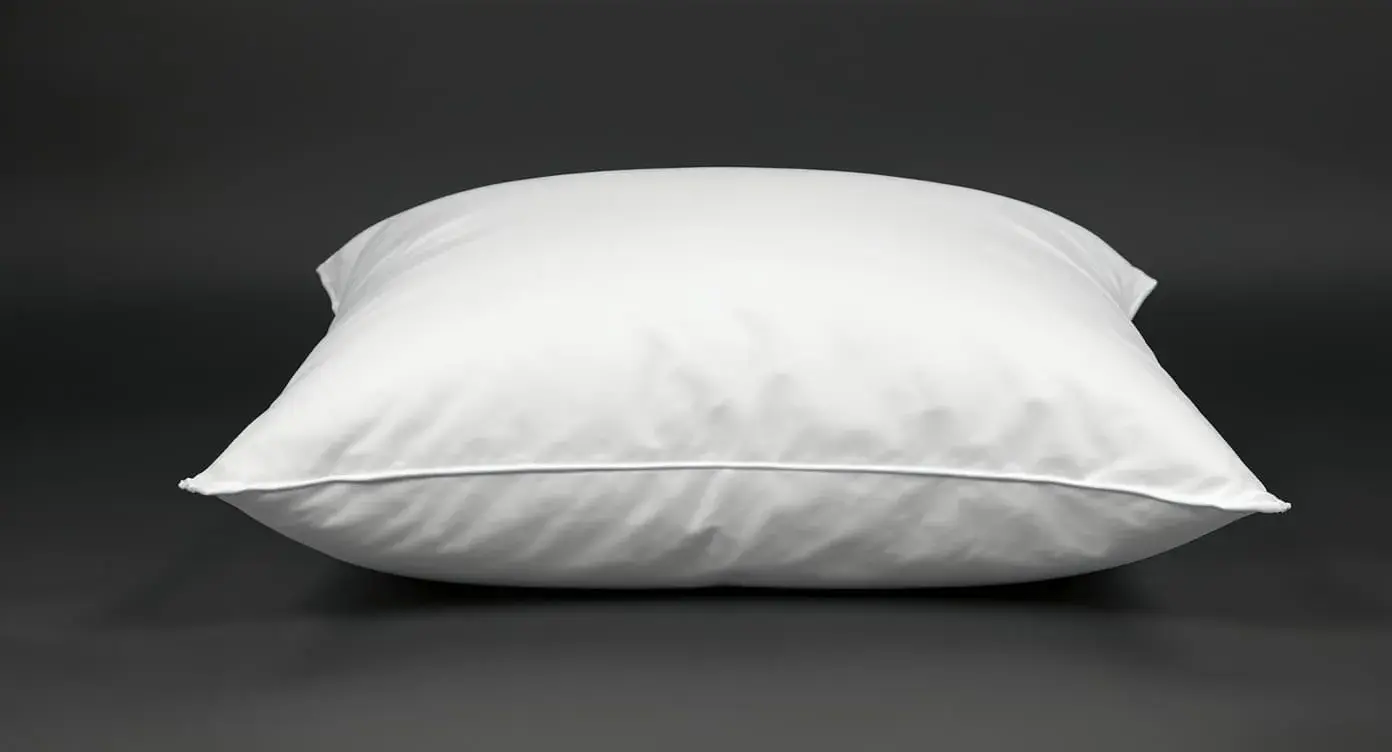
Waking up with hip pain is a common complaint among side sleepers. Sometimes the cause is mostly positional; sometimes it's a condition like bursitis or arthritis that sleeping position aggravates. When you sleep on your side, gravity pulls your upper leg forward, which rotates your pelvis and twists your lower spine — and that twist can produce or worsen the hip pain many side sleepers wake up with. The fix is putting something between your knees that keeps your legs parallel, which keeps the pelvis level and the spine aligned.
We picked five pillows for different parts of the problem, drawing on product specs and what owners with hip pain report: two shaped knee pillows for the between-the-knees fix, an adjustable head pillow for proper loft, a body pillow alternative, and a wedge for leg elevation when back sleeping.
Why hip pain happens when you sleep on your side
When you lie on your side without any support between your knees, three things happen:
- Your upper leg drops forward (gravity pulls it toward the mattress in front of your body)
- Your pelvis rotates to follow the leg, tilting the hip bone
- Your lower spine twists to compensate, creating strain on the sacroiliac joints and lumbar muscles
This twisted position is fine for 15 minutes of TV watching, but holding it for 6–8 hours every night creates cumulative strain. Positional pain often shows up as "wake up stiff, loosens up once I'm moving." Morning stiffness can also be a sign of arthritis, though, so if it lasts a long time each morning or keeps getting worse, get it checked.
What fixes hip pain during side sleeping
1. A pillow between your knees. The single highest-impact intervention. It keeps your legs parallel, which keeps your pelvis level, which keeps your spine neutral. For many side sleepers, this alone makes a noticeable difference.
2. Correct head pillow loft. If your head pillow is too low or too high, your neck bends sideways and the rest of your body tends to twist to compensate. A correctly lofted head pillow keeps your whole spine in line, which supports the knee pillow's work at the hips.
3. A slightly softer mattress (or a topper). Very firm mattresses concentrate pressure on the hip bone, which sits at the widest point of the torso. Medium-firm cushions the hip without letting it sink.
4. Occasional position changes. Sleeping on the same side every night puts repeated stress on the same hip. Alternating sides spreads the load.
1. Contour Legacy Leg & Knee Pillow — Best Knee Pillow

Contour
Contour Legacy Leg & Knee Foam Support Pillow
Pros
- Hourglass shape supports thighs and knees to keep the hips level
- Ventilated memory foam for airflow
- No strap needed; contours around the legs
Cons
- Some owners find it too firm or too small
- Can slip out of place for restless sleepers
Since support between the knees is the single biggest fix, a pillow shaped for that job is the place to start. Contour Living's Legacy is the hourglass-style leg pillow that Contour says it first designed in the early 1990s. It runs from the thighs down past the knees, so it holds the whole upper leg level rather than just separating the kneecaps.
Why it works for hip pain
- Supports the thigh, not only the knee. The longer crescent shape keeps the top leg from dropping forward, which is what rotates the pelvis.
- Ventilated memory foam. Air holes through the foam help it run cooler than a solid block.
- No strap. The shape tucks around your legs so you can roll over without unbuckling anything.
Contour Legacy trade-offs
- Fit is personal. Owner reviews often credit it with easing back and hip pain, but opinions on size and firmness are mixed: some find it too firm or too small, and some say it slips out overnight.
- Foam only. If you like a softer cushion, see the Everlasting Comfort below.
2. Everlasting Comfort Knee Pillow — Best Knee Pillow With a Strap

Everlasting Comfort
Everlasting Comfort Memory Foam Knee Pillow with Strap
Pros
- Removable leg strap keeps it in place overnight
- Dual concave shape cradles both knees
- Removable, machine-washable cover
Cons
- Supports knees more than thighs
- Some owners find the foam too squishy
The Everlasting Comfort is a shorter, dual-concave memory foam knee pillow with a removable elastic strap that loops around one leg. If you move a lot and wake to find your knee pillow on the floor, the strap is the reason to choose this one.
What it does well
- Stays in place. Owners frequently mention it staying put all night, and the strap is optional if you find it confining.
- Cradles both knees. Each side has a concave cutout so the knees sit in it rather than sliding off.
- Washable cover. The breathable cover is removable and machine washable.
Everlasting Comfort trade-offs
- Knee-only support. It's more compact than the Contour, so it supports the knees more than the thighs.
- Softer foam. Some owners find it too squishy to keep the legs fully separated, especially taller or heavier sleepers.
3. Coop Home Goods Eden Pillow — Best Head Pillow for Side Sleepers

Coop Home Goods
Coop Home Goods Eden Pillow (Queen)
Pros
- Adjustable fill — add or remove to match your loft preference
- Gel-infused memory foam for cooling
- CertiPUR-US certified foam, OEKO-TEX shell
Cons
- Off-gassing smell for first 24–48 hours
- Adjustable design requires trial and error
The head pillow is the other half of side-sleeper alignment. The Coop Eden is a common recommendation for side sleepers because you can dial in the exact loft that keeps your cervical spine parallel to the mattress, so your neck and upper back stay in line with your hips.
What makes the Coop work for side sleepers
- Adjustable fill. Ships with extra shredded memory foam so you can add or remove filling to match your shoulder width. This matters a lot for side sleepers — because shoulder widths vary, a fixed-loft pillow is often too high or too low.
- Medium-firm when properly filled. Firm enough to hold shape, soft enough to conform.
- Shredded foam breathability. Doesn't trap heat the way solid foam does.
- Machine-washable cover. Long-term hygiene.
- Long lifespan. Long-term owners often say the fill still holds loft after years with occasional fluffing.
Small hassles
- Learning curve. You'll need 1–2 nights of adjustment to find your ideal loft.
- Off-gassing. Mild chemical smell for the first 24–48 hours.
4. Bearaby Cotton Napper — Best Body Pillow Alternative for Between the Knees

Bearaby
Bearaby Cotton Napper (15 lb)
Pros
- Organic cotton — no beads, no plastic fill
- Chunky-knit design is breathable and machine washable
- Evenly distributed weight without shifting
Cons
- Premium pricing for the weight class
- Limited color options
A body pillow is the standard recommendation for between-the-knees support during side sleeping. The Bearaby Cotton Napper isn't technically a body pillow — it's a chunky-knit weighted blanket — but it can be folded or rolled between the knees for a combination of physical support and the calming effect of gentle weight. For sleepers who don't want a dedicated body pillow, this is the multipurpose option.
Bearaby strengths
- Multi-use flexibility. Unlike a dedicated body pillow that's only useful for one thing, the Bearaby can be used as a blanket, a between-knees roll, a lumbar support, or a hip cushion depending on the night.
- Breathable knit. Unlike polyester-stuffed body pillows that run hot, the open knit structure lets air through.
- Gentle weight. Some owners find the weight calming when it's used as a blanket.
- Premium hand-feel. Looks and feels more premium than a typical body pillow.
Why it isn't for everyone
- Not the most efficient support. A dedicated body pillow has more structure and more between-the-knees stability than a folded blanket. If your hip pain is severe and you need maximum support, consider a dedicated U-shaped body pillow instead.
- Price. Significantly more expensive than a basic body pillow.
- Needs folding. You'll need to fold or roll it for between-knees use, which means it won't stay in place the way a shaped pillow does.
5. InteVision Wedge Pillow — Best for Leg Elevation

InteVision
InteVision Foam Bed Wedge Pillow
Currently unavailable on Amazon (checked 2026-10-15)
Pros
- Helps with acid reflux, snoring, and post-surgery recovery
- Memory foam top layer for comfort
- Removable, washable bamboo cover
Cons
- Off-gassing smell on first unboxing
- Fixed height may not suit all body sizes
Some hip pain isn't mainly from misalignment. With conditions like bursitis on the outer hip, lying on the sore side can be painful, and some people find back sleeping with the legs supported more comfortable. The InteVision Wedge Pillow can be flipped and used under the legs or knees when you sleep on your back, which takes pressure off the side of the hip entirely. This is a different use case from the between-knees approach; if you have a diagnosed hip condition, ask your clinician which positions they recommend.
Note: at the time of writing, this wedge is listed as currently unavailable on Amazon, so check stock or consider a similar firm foam wedge.
Where the wedge helps
- Firm foam that holds elevation. Unlike soft pillows that compress under the weight of your leg, the wedge maintains the elevation angle all night.
- Dual-purpose. Also works for acid reflux (upper body elevation), pregnancy, and general leg elevation.
- Removable washable cover. Essential for any pillow you're using for medical support.
- Long lifespan. Foam holds shape for years, not months.
Wedge limitations
- Takes adjustment. The first 2–3 nights feel awkward before your body adapts.
- Bed partner considerations. A wedge on one side of the bed can impact a partner's sleeping space.
- Not the between-knees fix. If your hip pain seems positional, the between-knees approach with a knee pillow is a better starting point.
How to use these pillows for hip pain relief
Standard side-sleeper setup (the place to start for positional hip pain):
- Head pillow: Coop Eden, adjusted to match your shoulder width. Your head should be parallel to the mattress, not tilted up or down.
- Between-the-knees support: A shaped knee pillow like the Contour Legacy or Everlasting Comfort, a folded Bearaby, a dedicated body pillow, or even just a regular pillow. The goal is keeping your knees roughly hip-width apart with support that doesn't compress flat.
- Mattress firmness check: If the mattress is too firm, add a 3-inch memory foam topper to cushion the hip bone.
If lying on your side hurts (for example, with outer-hip bursitis):
- Sleep on the pain-free side using the standard setup above, or
- Sleep on your back with the wedge under your legs or knees to keep pressure off the side of the hip. Ask your clinician which positions suit your condition.
Frequently asked
Why does my hip hurt when I sleep on my side?+
Do I really need a special pillow, or will a regular one work?+
Should I sleep on the same side every night?+
Can a firm mattress cause hip pain?+
How long until I notice improvement?+
Where to go next
Related findings.
- TEMPUR-Neck vs. Coop Eden
- Bearaby Cotton Napper vs. Luna Weighted Blanket
- Coop Eden vs. Beckham Hotel Collection Pillow
- Bearaby Cotton Napper vs. YnM Cooling Bamboo
 Edge Pick
The Best Pillows for Shoulder Pain in 2026
Shoulder pain from side sleeping is often a pillow-height problem. Our picks for pillows that relieve shoulder pressure, plus a simple multi-pillow setup.
 Edge Pick
The Best Pillows for Side Sleepers in 2026
Side sleepers need loft and shoulder support that back sleepers don't. What works, based on owner feedback and sleep ergonomics research on neck alignment.
 Buyer Report
Coop Home Goods Eden Pillow Review: An Adjustable Pillow You Tune to Your Shoulders
A detailed review of the Coop Home Goods Eden Pillow: why adjustable loft matters, how it compares to fixed-loft alternatives, and who it's worth it for.