The Best Mattress Protectors in 2026
A good mattress protector helps your mattress last longer and protects the warranty. What to look for in a waterproof, breathable, quiet protector, plus four picks.
We earn a commission if you buy through links on this page, at no extra cost to you. Picks are based on buyer reviews and specs; we don't test products ourselves. How we work
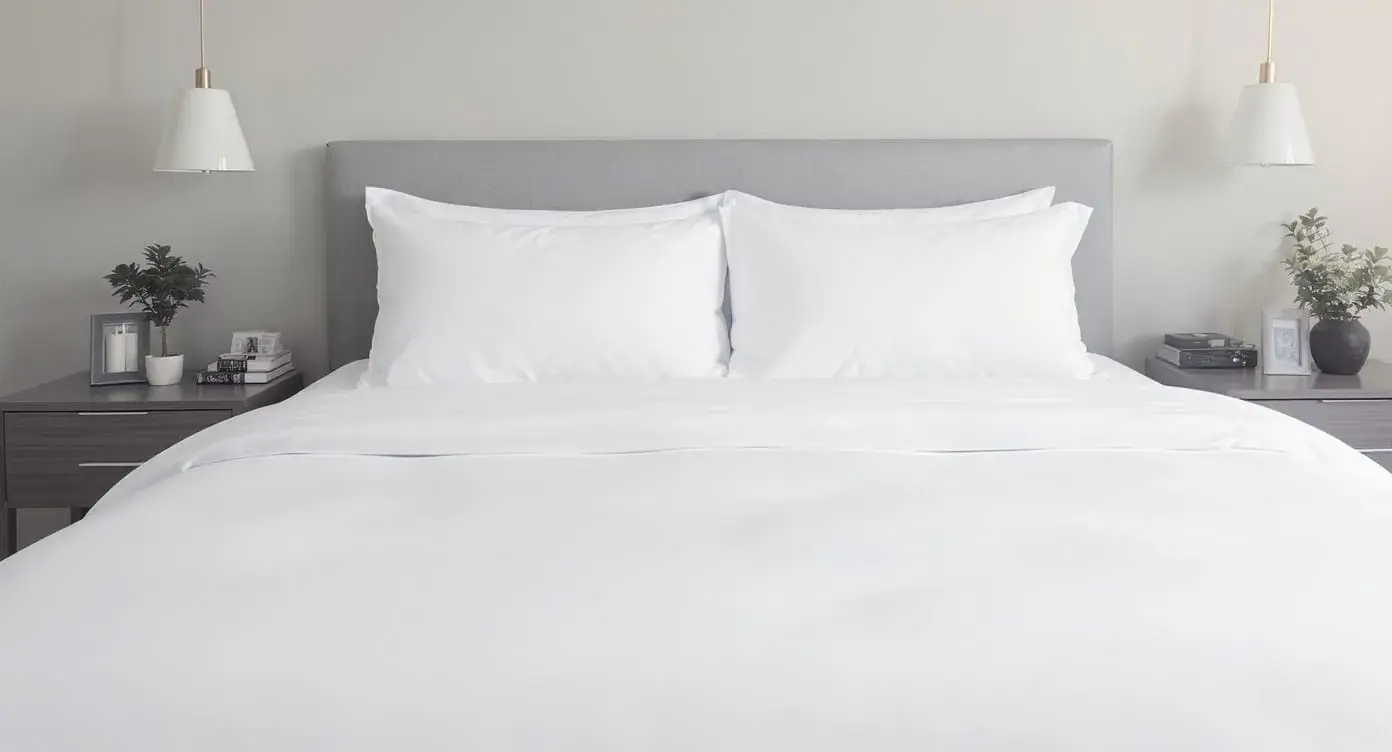
A mattress protector is the single most important accessory for a new mattress, and almost nobody buys one until after something spills. A good protector does three jobs: blocks liquid from penetrating the mattress (which is how warranties get voided), blocks dust mites and bed bugs (which is how allergies get worse), and keeps sweat and spills out of the foam (which helps the mattress last longer). Relative to what a mattress costs, an inexpensive protector is one of the best-value purchases in bedding.
This guide focuses on what matters in a protector (noise, breathability, fit) rather than marketing buzzwords, drawing on product specs and owner feedback, and names four protectors worth buying: an all-round pick, a full encasement, a budget option, and one for hot sleepers.
What to look for
1. Truly waterproof backing. There are two common waterproofing technologies: polyurethane (quiet, breathable, standard) and vinyl (crinkly, cheaper, retains heat). Polyurethane is the right choice — avoid vinyl unless price is the only consideration.
2. Noise level. A frequent complaint about cheap mattress protectors is "it sounds like a plastic bag when you move." A quality polyurethane protector is essentially silent. If the reviews mention "crinkly," it's vinyl.
3. Breathability. Waterproof without breathability means you sleep hot. Cotton or cotton-blend face fabrics with polyurethane backing is the industry standard for protectors that breathe.
4. Fitted sheet style and pocket depth. Look for deep pockets if your mattress is thick (pillow-tops, hybrids). Fitted-sheet style protectors stay in place; flat-sheet-style "covers" shift around.
5. Machine washability. Essential, since you'll need to clean it after an incident. Check the care label: most polyurethane-backed protectors call for moderate wash temperatures and low dryer heat to protect the waterproof layer.
1. SafeRest Premium Mattress Protector — Best Overall
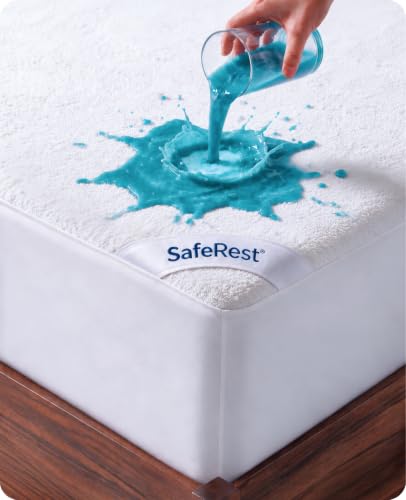
SafeRest
SafeRest Premium Mattress Protector (Queen)
Pros
- 100% waterproof yet breathable terry cotton surface
- Hypoallergenic — protects against dust mites and allergens
- Fits mattresses 6-22 inches deep
Cons
- Slight crinkle sound during the first few nights
- Adds a thin layer that can affect mattress feel slightly
The SafeRest Premium is a long-standing, widely recommended protector. It's a terry cotton surface over a polyurethane waterproof backing: the standard formula executed well, without the deal-breaker complaints common in this category.
Why SafeRest owners stick with it
- Quiet. The benefit owners mention most. It doesn't crinkle or rustle when you move, so there's no plastic-bag sound.
- Waterproof. Reviewers describe it handling spilled drinks, incontinence, pet accidents, and toddler emergencies without liquid reaching the mattress below.
- Breathable. The terry cotton surface breathes well, and many reviewers say they don't sleep noticeably hotter with it.
- Fits deep mattresses. Pockets go up to 18 inches, which handles most mattresses including pillow-tops and hybrids.
- Machine washable. Standard wash cycle, tumble dry low. Owners generally report the waterproofing holds up through repeated washing.
- Allergen barrier. SafeRest markets it as a barrier against dust mites and common allergens on the sleeping surface, another reason people buy it.
Minor annoyances
- Adds some texture to the mattress. The terry surface has a slightly cottony feel that can be noticeable through thin sheets. Most people don't notice it after a week; a small minority find it too textured.
- Not a full encasement. This is a fitted-sheet-style protector covering the top and sides, not a full zip-up encasement. For bed bug protection, a zip-up encasement is more complete. For everyday liquid and allergen protection, fitted-sheet style is sufficient and easier to put on.
- Some tension on very thick mattresses. At the upper limit of the pocket depth (16–18 inch mattresses), the fit can be tight. Measure before buying.
2. SureGuard Mattress Encasement — Best for Bed Bugs and Allergies
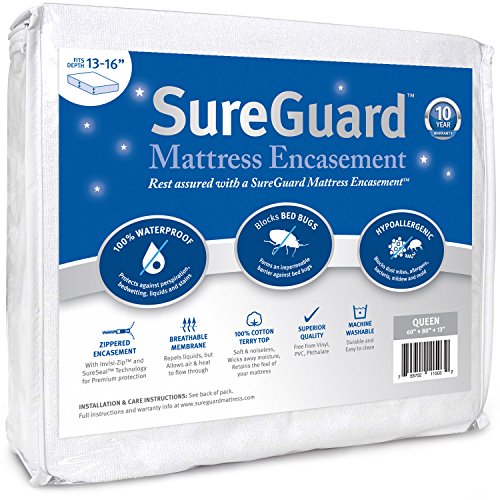
SureGuard
SureGuard Zippered Mattress Encasement (Queen, 13-16 in.)
Pros
- Six-sided zippered encasement designed to seal out bed bugs
- Cotton terry top with polyurethane waterproof backing
- 10-year quality guarantee; GREENGUARD Gold certified
Cons
- Harder to remove for washing than a fitted protector
- Mixed owner reports on zipper durability
The SureGuard is the full zip-up encasement mentioned in the SafeRest's limitations above. Instead of covering the top and sides like a fitted sheet, it wraps all six sides of the mattress and closes with a fine zipper that SureGuard says seals off the mattress from bed bugs. The top is 100% cotton terry, the other five sides are polyester, and the whole thing has a polyurethane waterproof backing rather than vinyl.
That makes it the right choice if bed bugs are a concern (after travel, in an apartment building, or in a rental), or if you have dust-mite allergies and want a complete barrier rather than top-only coverage. The queen is sized for mattresses 13 to 16 inches deep, so measure first. SureGuard offers a 10-year quality guarantee, and the encasement is GREENGUARD Gold certified for low chemical emissions.
Owners often say the fabric doesn't feel like plastic, that it fits deep mattresses well, and that it holds up through repeated washing. The trade-off is convenience: an encasement is more work to take off and wash than a fitted protector, and SureGuard itself suggests adding a fitted protector on top if accidents are frequent. Opinions on the zipper's sturdiness are mixed.
3. Linenspa Waterproof Mattress Protector — Best Budget

Linenspa
Linenspa Waterproof Mattress Protector (Queen)
Pros
- Very low price
- Thin, smooth brushed-polyester top changes the mattress feel very little
- 10-year limited warranty
Cons
- Fits mattresses only up to 14 inches thick
- Some owners report leaks or a plastic-like sound
The Linenspa is the low-cost option for a guest bed, a kid's room, or anyone who wants basic spill protection without spending much. It's a fitted-sheet-style protector with a smooth, brushed polyester surface over a polyurethane waterproof backing. Unlike the SafeRest's terry top, the smooth surface is thin, so it changes the feel of the mattress very little, which matters if you dislike a textured layer under your sheets.
It covers only the top of the mattress and fits mattresses from 8 to 14 inches thick, which rules out many thicker hybrids and pillow-tops. It's machine washable and dryer safe on low heat, and Linenspa backs it with a 10-year limited warranty against manufacturer defects.
Owners often say it fits snugly and stays in place. The weak spots are the ones this guide warns about: reports on waterproofing and noise are mixed, with some owners describing it as silent and leak-free and others reporting leaks or a plastic-like rustle. For heavy-duty use, such as incontinence or a toddler's bed, the SafeRest or an encasement is the safer bet.
4. Tempur-Pedic TEMPUR-Protect — Best for Hot Sleepers

Tempur-Pedic
Tempur-Pedic TEMPUR-Protect Waterproof Mattress Protector (Queen)
Pros
- Lightweight ThermalSense fabric designed for airflow
- Stretchy fabric and mesh sides for a snug fit on deep mattresses
- Machine washable and dryer safe, with a 10-year limited warranty
Cons
- Costs more than basic protectors
- Some owners question its long-term waterproofing
The TEMPUR-Protect is a lightweight waterproof protector built around Tempur-Pedic's ThermalSense fabric, which the brand says is designed for continuous airflow. Stretchy fabric and mesh sides with deep pockets adapt to the mattress, which helps it fit snugly on deeper beds. It's machine washable and dryer safe, and comes with a 10-year limited warranty.
It's best for hot sleepers who find terry-topped protectors warm, and for memory foam mattress owners who want a thin protector that doesn't add a layer of texture between them and the foam. Owners often mention its softness and describe it as cool to sleep on.
The trade-offs: it costs more than the other fitted protectors here, and owner reports are mixed on long-term waterproofing, with some saying it holds up and others saying it stopped being fully waterproof over time. Some also found it too wide for their mattress. If maximum liquid protection is the priority, the SafeRest is the more proven choice.
How they compare
| Protector | Style | Top surface | Best for |
|---|---|---|---|
| SafeRest Premium | Fitted, up to 18 in. | Cotton terry | Most mattresses |
| SureGuard | Six-sided zip encasement, 13-16 in. | Cotton terry | Bed bugs, allergies |
| Linenspa | Fitted, 8-14 in. | Brushed polyester | Budget, guest beds |
| TEMPUR-Protect | Fitted, mesh sides | ThermalSense fabric | Hot sleepers |
Why a mattress protector is the best ROI purchase
Three reasons to buy one:
1. Warranty protection. Many mattress warranties can be voided if the mattress is stained. A single coffee spill without a protector can put your warranty at risk; with a protector, the mattress stays clean.
2. Lifespan extension. Sweat, skin oils, and moisture gradually degrade mattress foam and fabric. A protector keeps those out, which helps the comfort layers hold up longer and keeps the surface clean.
3. Allergy reduction. Dust mites feed on dead skin cells. A protector puts a barrier between you and the mattress surface, which can cut down on the skin cells and allergens that reach it. Studies of mite-proof covers used on their own show mixed results for allergy symptoms, so if you have dust-mite allergies, combine a protector (ideally a full encasement) with regular hot washing of bedding and follow your allergist's advice.
A note on price
The SafeRest Premium is moderately priced. The cheapest protectors do technically work, but they're the ones reviewers tend to describe as crinkly, sweaty, or failing after months of washing. The small price gap between a good protector and a bad one is not where you want to save money.
Frequently asked
Do I really need a mattress protector?+
Will a mattress protector make me hotter at night?+
Does a mattress protector prevent bed bugs?+
How often should I wash a mattress protector?+
Can I put the mattress protector in the dryer?+
Where to go next
Related findings.
Buyer ReportSafeRest Premium Mattress Protector Review: Waterproofing That Still Feels Like a Sheet
SafeRest Premium Mattress Protector review: waterproof, hypoallergenic, cotton terry top, and whether it changes how your mattress feels or sounds.
 Buyer Report
Beckham Hotel Collection Bed Pillows Review: A Budget Hotel-Style Pillow, Examined
A detailed review of the Beckham Hotel Collection Bed Pillows: the soft gel fiber feel, how long the loft lasts, who they suit, and where they fall short.
 Buyer Report
Bedsure Bamboo Sheets Review: The Budget Cooling Sheets That Actually Deliver
A detailed review of Bedsure Bamboo Sheets: how cool bamboo viscose sleeps, the wide color range, the pilling question, and who should spend more instead.